 Cre8Travel
CRE8TRAVEL · MAINE PLACES
Thorndike Mill
Thorndike Mill: A Village Gathering Place Renewed
Discover
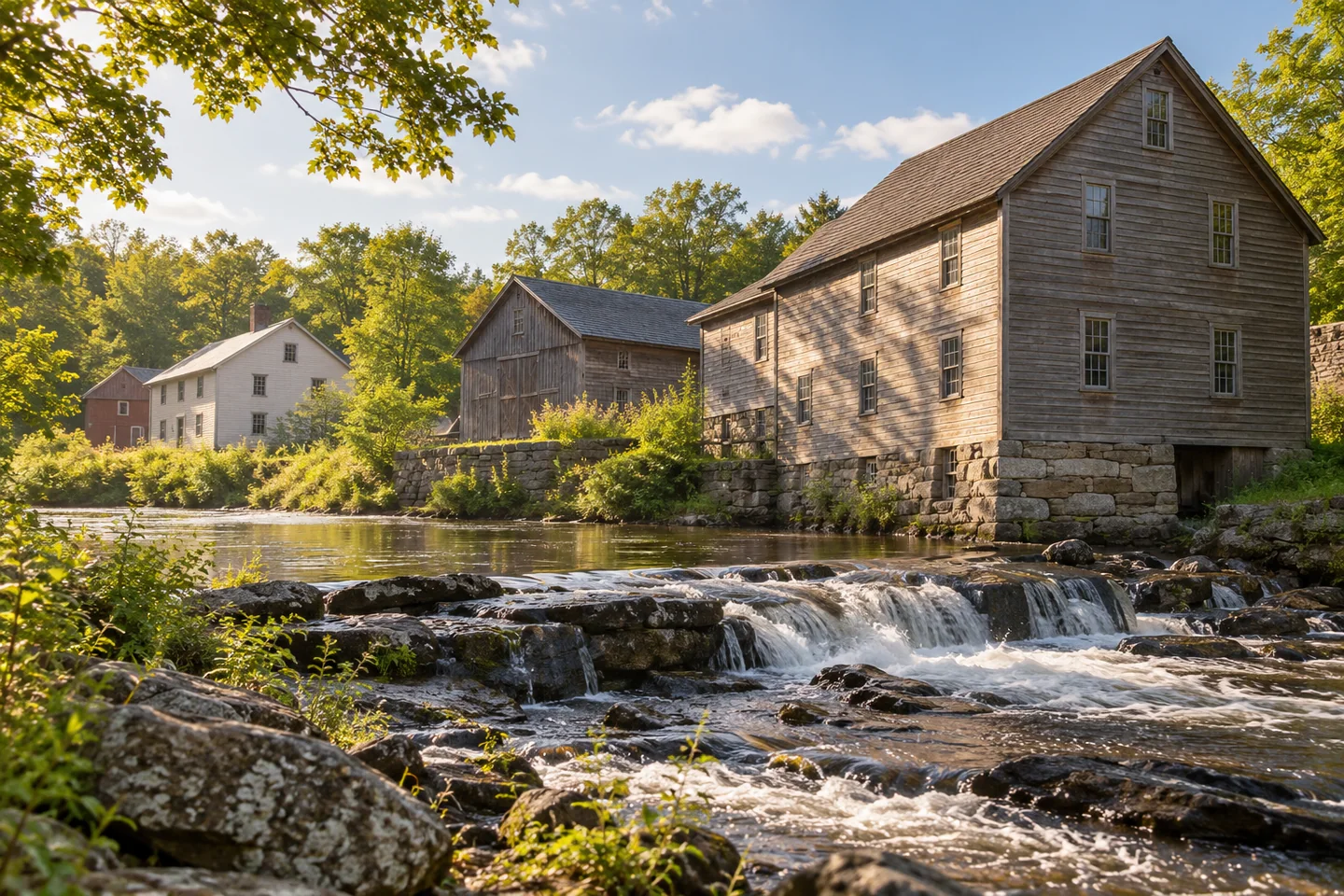
Thorndike Mill and Meeting Place brings a former commercial center into the life of a rural village again. Its Farwell's Museum and Store opens seasonally, with other visits organized around events. Check the current calendar before coming. The operator's invitation includes tours, shopping, and community gatherings, making this a place where preserving old buildings and giving people reasons to use them develop together.
The Maine Historic Preservation Commission identifies the Farwell Brothers Store as a related group of commercial buildings beside the Belfast and Moosehead Lake Railroad. Groceries, farm implements, feed, and general merchandise moved through this complex. Farmers also sold or traded their own products here. The store, mill, and lumber shed therefore explain a network of exchange: goods arrived, crops changed hands, and local work connected with a much wider market.
The commission distinguishes the buildings' functions and construction periods. The store dates to around 1872, with the mill and lumber shed added later. Looking for those different purposes gives the visit a useful focus. A store arranged for transactions and a building organized around processing grain had different jobs, even when both supported the same agricultural community. Their survival together helps make those relationships understandable.
Reporter Kay Stephens visited in 2017, when the restoration was still taking shape. She found a vintage cash register on the dusty store counter, old stock remaining on shelves, and tools and an apothecary collection in the mill. Her photographs and account capture a particular stage of the project, including a kitchen furnished with older appliances. Some ambitions she reported were still proposals, a reminder that this revival has proceeded through many separate steps.
Writer Greg Rössel adds a story about the Farwell family's role beyond selling goods. Despite signs stressing cash payment, the brothers extended credit to farmers. His account describes loans eventually forgiven through Dick Farwell's estate, alongside support for civic improvements and education. That history complicates a simple picture of a country store: the business could also help neighbors establish a livelihood and sustain a community.
Rössel's reporting follows later work on the buildings, from repairing the collapsed cellar to finding people able to tackle carpentry and other tasks. Students and volunteers became part of that process. Reading this history before looking around changes the emphasis from an untouched time capsule to a place deliberately rescued and adapted. What survives has required choices, labor, and support.
Holly Zadra's original reported visit explored another part of this wider setting: Boxcar Books. She described meeting its owner among books and oddities in a stationary railcar and noticing the range of writing on offer. Her account, first published in 2022 and republished the following year, places conversation alongside browsing. It also follows people with differing backgrounds finding ways to remain neighbors and collaborate.
The operator describes the larger project as including Boxcar Books, Garden Variety, Farwell's Mill and Store, the Dented Can, and the Lumber Shed. Think of that shared setting as a living village project, with individual opening arrangements to confirm. Choose a museum visit, a gathering, or a conversation as your starting point, then leave room for the particular activity happening when you arrive.
Before you go
- Check current seasonal opening and the event calendar before arranging a visit.
- Treat early restoration reports as a history of the project, rather than a list of completed facilities.
Visitor perspectives
- Zadra visited Boxcar Books and interviewed its owner, exploring how browsing and conversation connect with village life.
- Stephens photographed and described old store stock and mill objects during an early stage of restoration.
Capture
- Look for how each building’s form relates to its former commercial function.
- Ask permission before photographing interior collections or people working on the project.
 Burnt Island Light
 Fort St. Georges Historic Site
 Mill Island Park
Social
Thorndike Mill and Meeting Place combines preservation with community use.
Farwell’s connected local farm products with a wider railroad market.
A 2017 reporter found old store stock and tools amid restoration work.
The Farwell story includes credit, philanthropy, and community support.
An original visitor account finds conversation inside Boxcar Books.
What makes a building useful to a village across generations?
Follow one object from its everyday purpose into its historical meaning.
A conversation can become the most memorable part of looking around.
Hashtags