 Cre8Travel
CRE8TRAVEL · MAINE PLACES
The Ticonic Sculpture
The Ticonic: A Sculpture That Rewards a Pause
Discover
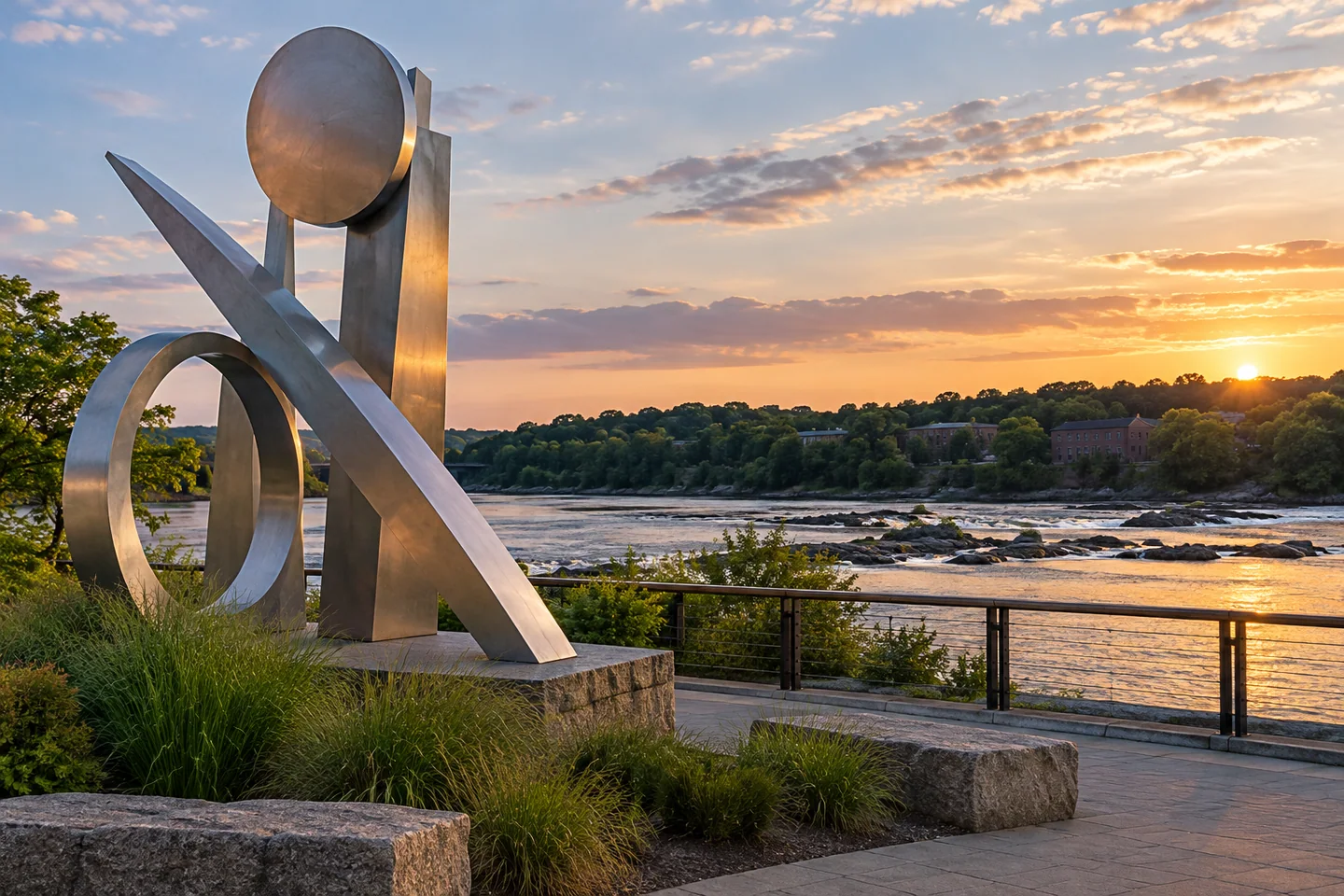
The Ticonic sculpture makes a particular kind of invitation on Waterville's riverfront: stop moving long enough to watch a work designed around movement. Roger Majorowicz created the large abstract composition for the city, originally installing it on The Concourse in 1997. Its later home at Head of Falls places it beside the Kennebec, where an outdoor art stop can begin with the relationship between the sculpture and its surroundings. Give the work a little time before deciding what its shapes mean to you.
Majorowicz supplied an interpretation that makes the composition more than a collection of metal forms. In a statement reproduced in Amy Calder's reporting, he connected its diagonal element with waterfalls, wheels with Waterville's railway history, and vertical forms with mill stacks. The silver finish was intended to suggest moving river water through reflected light. These are the artist's associations, useful to read after a first look of your own. They offer several ways into the work without requiring every viewer to experience the same response.
Its move was an engineering event as well as a change of address. WABI's May 2018 on-site report records the crown being removed before crews lifted the post and base and carried them from the downtown traffic circle to Head of Falls. City public-works staff worked with specialist contractors. The practical difficulty helps explain why a public sculpture is also an object with weight, joints and a demanding relationship to the ground. What seems effortless from a bench has depended on careful work that most visitors never see.
The riverside setting was deliberately designed, too. Landscape architect Sashie Misner's project account describes a former mill site becoming a public Riverwalk, with colored pavement suggesting water movement and railings responding to the nearby pedestrian bridge. It identifies the relocated sculpture as a riverbank landmark. Think about the difference between an artwork placed in any convenient clearing and one seen within a designed sequence of walking, sitting and looking. You need not follow every path to appreciate how the open space lets the sculpture occupy a larger scene.
Calder's October 2018 personal column gives that change a candid response. Initially doubtful about moving the work, she became convinced after sitting beside it on a sunny afternoon. The rotating top, river, old mill across the water and sound of a passing train came together in her account. Her pleasure is an individual reaction, with the conditions of one day attached. It suggests giving the new setting a chance rather than expecting a photograph to communicate everything the visit can offer.
Choose a comfortable public viewpoint and watch whether light or breeze changes what you notice. A closer frame can isolate intersecting shapes, while a wider one can explain why they belong beside this river. Keep paths open and follow any posted boundaries; looking closely does not require climbing or handling the work. The most interesting outcome may be a revised first impression. At the Ticonic, industrial references, physical movement and the ordinary pace of a riverside pause can meet in one distinctly Waterville composition.
Fun facts
- Roger Majorowicz created The Ticonic for Waterville in 1997.
- The work moved from The Concourse to Head of Falls in May 2018.
- The artist connected wheel forms with Waterville’s railway history.
Before you go
- Allow time to view the composition before reading its interpretation.
- Keep public paths clear and observe any posted boundaries.
- Look without climbing or handling the work.
Visitor perspectives
- Amy Calder’s October 2018 column changed from doubt about the move to appreciation after sitting beside the work, with moving forms, river scenery and a passing train contributing to her experience.
Capture
- Compare a close frame of intersecting forms with a broader riverfront image; make both from comfortable public ground.
 Kennebec Arsenal Historic District
 Hammond Forest
 Tyler Pond Wildlife Management Area
Social
The Ticonic offers an outdoor art pause on Waterville’s riverfront.
Majorowicz associated its forms with railways, mills and waterfalls.
The silver finish was intended to suggest light moving across water.
Moving a large sculpture required disassembly and specialist lifting.
The Riverwalk’s landscape design gives the work a setting as well as an address.
Amy Calder’s first doubts changed after a sunny afternoon beside the sculpture.
Try looking first and reading the artist’s interpretation afterward.
How often does a second look change your reaction to public art?
Hashtags