 Cre8Travel
CRE8TRAVEL · MAINE PLACES
Saddleback Island Preserve
Saddleback Island: Granite, Woods and the Water Between
Discover
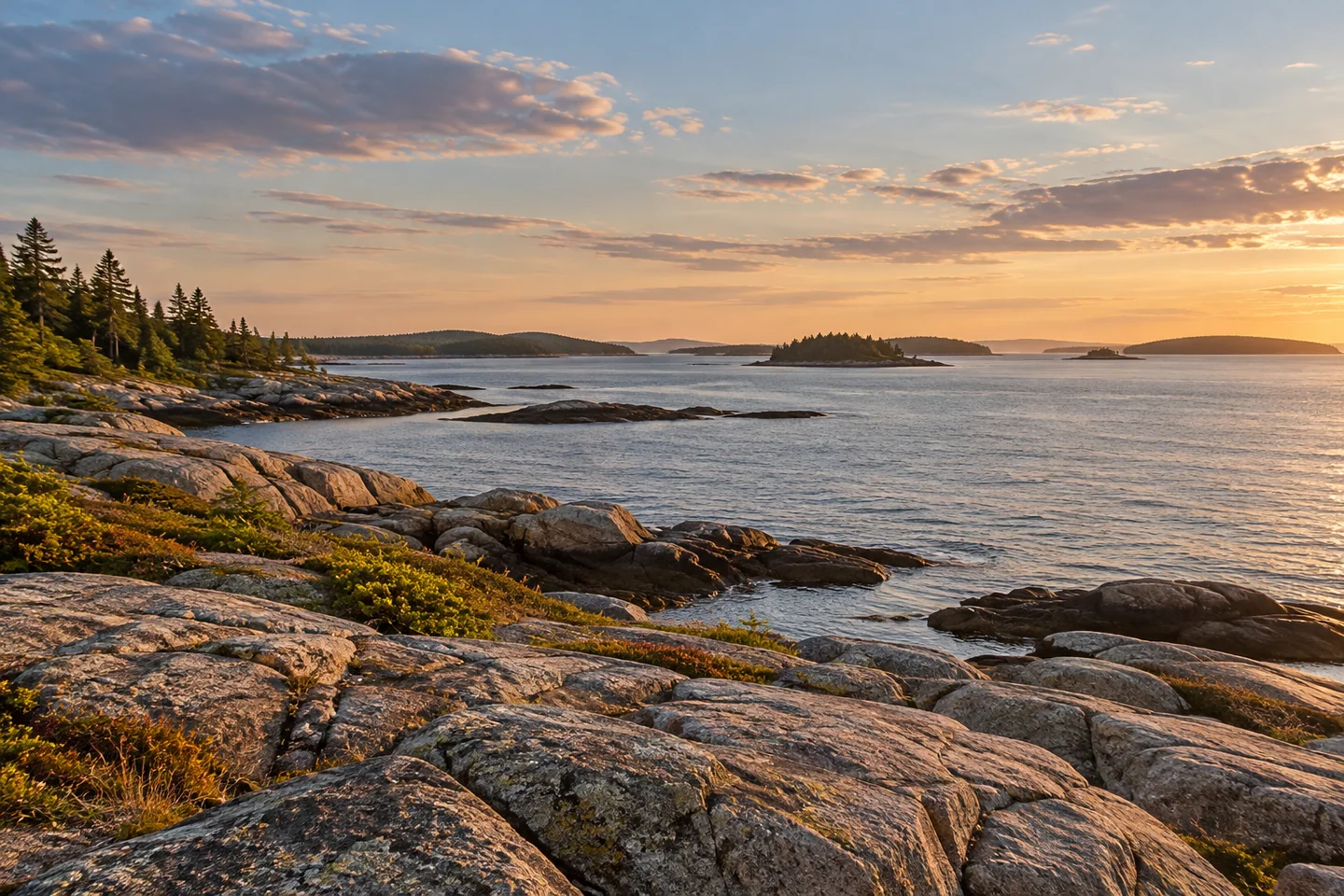
Saddleback Island brings together two different kinds of Maine coastline: the close, intricate world of Merchant Row and the more exposed water toward Jericho Bay. This is the Stonington island, not the western Maine mountain. Maine Coast Heritage Trust manages its 78 acres, where granite shorelines and woodland walking give visitors a reason to get out of the boat rather than simply circle another shape on the chart. The northern beach is the usual starting point for exploring on foot.
The rock under that outing has a much longer story. The trust's history of Merchant Row places the archipelago's granite formation in the Devonian Period, roughly 365–405 million years ago. Saddleback retains prominent granite domes, while other islands were transformed by quarrying. The regional stone industry expanded around 1870 and sent granite to building markets including Boston and New York. Reading the scenery against that history changes the view: smooth, continuous rock and visibly worked stone tell different stories, even when both look picturesque from the water. Saddleback is particularly interesting as part of that contrast, rather than as an interchangeable island beach.
A firsthand account by Tim Plouff in Points East adds an appealing sense of scale. On a late-August visit, his group moved between granite shore, a northern beach, an interior path and Clammers Cove. He described a route that let them give the occupied cabin its privacy, and noticed old waterfront structural remnants. Those are the details to borrow from his experience: look closely, connect the shore and woods, and leave room for other people. He also encountered spray and choppier water than the initial forecast might have suggested, making the comfortable island ramble only one part of a day that demanded attention well before the landing. His boating route and anchorage decisions belonged to that day's particular wind and water conditions; they are not a ready-made itinerary for another crew.
The Wild Outsiders offer a different perspective in their spring paddling narrative. Wind altered their intended progress through the archipelago and brought them to Saddleback for the night. After exploring the wooded interior and rocky coast, they attempted to leave the next morning, turned back from rough water, and waited for conditions to improve. Their enthusiasm for the island sits alongside the inconvenient part of the experience. That combination is more useful than a promise of effortless solitude: the island may be the destination, but the weather still gets a vote on the journey.
Plan around that distinction. Confirm a suitable marine approach, return options and the trust's current guidance before committing to the trip. Once ashore, follow the available marked route and respect any nesting-season restriction. The cabin should not be treated as a public attraction to inspect. Choose a shore composition that layers nearby granite against the distant islands, then make a second, tighter image of texture and water. Neither photograph needs a person posed on an exposed edge. A thoughtfully paced visit can move from regional geology to small shoreline details without adding another stop merely to make the day feel busier.
Fun facts
- Saddleback is a 78-acre preserve in the Merchant Row archipelago.
- Merchant Row granite formed during the Devonian Period.
- Regional granite quarrying expanded around 1870.
Before you go
- Arrange an appropriate marine approach and return plan before traveling.
- Follow posted nesting restrictions and respect cabin occupants’ privacy.
- Use historic boating accounts as perspectives, rather than navigational directions.
Visitor perspectives
- In Points East, Tim Plouff described enjoying beach and woodland exploration on a late-August visit, with a route that respected the cabin occupants’ privacy. This is one boating party’s account.
- The Wild Outsiders enjoyed Saddleback’s rocky shore and interior woods, but strong wind disrupted their onward paddle. They turned back and waited before departing.
Capture
- Use a granite foreground to give the island-filled horizon depth; choose a stable position within permitted access.
- Try a close study of the meeting between rock and water, keeping equipment clear of the shore edge.
 Jo-Mary Lakes
 Pool Preserve
 Piper Stream Preserve
Social
Saddleback Island sits where Merchant Row opens toward Jericho Bay. Think shore and woodland together.
Devonian granite gives this island story a very long first chapter.
Merchant Row’s stone industry linked these islands with distant city building projects.
Tim Plouff’s Points East account follows beaches, woods and small waterfront details.
The Wild Outsiders’ spring trip included a wind-driven change of plan. Coastal itineraries need flexibility.
Give nesting birds and cabin occupants their space.
A wide island view and a close rock study can tell two different stories from the same visit.
Would you begin with the shoreline or the woods? #Cre8Travel
Hashtags