 Cre8Travel
CRE8TRAVEL · MAINE PLACES
Pool Preserve
Pool Preserve: A River, a Canal and a Closer Look
Discover
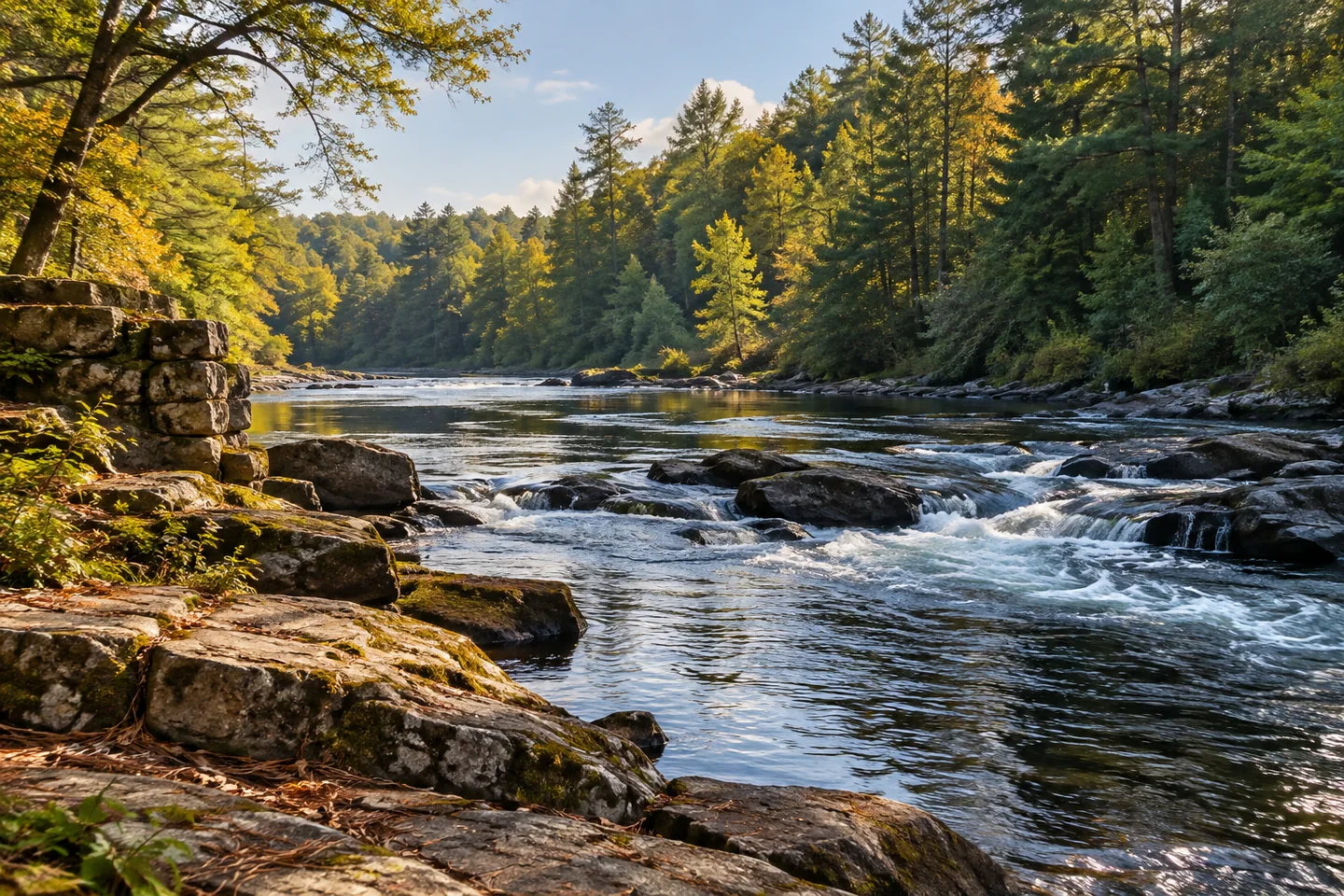
At Pool Preserve in Union, a short riverside walk opens onto a surprisingly complicated story. The three-acre property follows the St. George River below Sennebec Pond, with wooded banks, moving water and remnants of a former working landscape. Georges River Land Trust describes old-growth hemlocks and more than 1,500 feet of river frontage. Its compact size makes this a place for close observation: the interest is in how water, habitat and earlier engineering occupy the same small stretch of river.
The historic connection reaches far beyond the preserve. Warren Historical Society traces the Georges River Canal to Charles Barrett's work in 1793. Supplies could move upstream toward settlers, while agricultural products and timber traveled toward markets. After damage and mounting expense, Barrett sold the undertaking to Henry Knox in 1795. Later efforts repeatedly tried to make the river serve a larger transportation system. The society records an 1846 authorization for renewed construction and the steamer Sennebec reaching Sennebec Pond in 1848. The economics of maintaining dams and locks remained difficult. With that background, the remnants beside the Pool become more than mysterious metal: they belong to an ambitious attempt to turn a natural river into a dependable commercial route.
There is another reason to look carefully without disturbing the riverbed. The land trust identifies brook floater mussels here. The U.S. Fish and Wildlife Service describes this small freshwater species as dependent on clean, flowing water and stable material in which to anchor while filter feeding. Its young use fish as hosts before developing into mussels on the stream bottom. That life cycle links creatures that a casual visitor might otherwise think of separately. A fish moving through the system and a mussel sitting almost invisibly below the surface are part of the same living network. No wildlife sighting is necessary to appreciate that connection, and searching by moving stones would defeat the purpose of protecting the habitat.
Rebecca Goldfine's Maine by Foot account provides a useful visitor-scale view. She preferred the eastern side for a short stroll and described walking toward a quieter pool in one direction and old dam equipment in the other. Her account also makes clear that the property has two sides, rather than one continuous trail that visitors should assume they can follow across the water. Use the land trust's directions for the approach you select; the western access involves private land, where remaining on the designated route matters.
Give the visit two different kinds of attention. First, follow the river's visible changes in texture: broken water, smoother water, dark reflections beneath trees. Then consider what the surviving structures reveal about people trying to manage those same changes. A photograph can place the water in the foreground and woodland beyond it, while a tighter frame can isolate an accessible historic detail without touching or climbing it. Check seasonal access before setting out; the operator specifically identifies a winter road closure. Pool Preserve works well when treated as a small, complete encounter with a river, rather than as a promise of a long hike or a guaranteed swimming stop.
Fun facts
- The preserve protects three acres beside the St. George River.
- The canal’s early development involved Charles Barrett and Henry Knox.
- Brook floater larvae spend part of their development attached to fish.
Before you go
- Check the operator’s seasonal access guidance before choosing this outing.
- Remain on the designated western approach through private land.
- Observe river life without shifting stones or entering the water to search for mussels.
Visitor perspectives
- Rebecca Goldfine preferred the eastern side for a short walk and enjoyed the contrast between a quiet pool and remnants of old dam equipment. This is one walker’s assessment.
Capture
- Frame changing water textures against the wooded bank from a stable, permitted place.
- Photograph an accessible historic remnant in relation to the river; avoid climbing or moving anything.
 Saddleback Island Preserve
 Piper Stream Preserve
 Stephenson Preserve and Pendleton Park
Social
Pool Preserve connects a small woodland walk with the St. George River’s working past.
Three acres can hold more than one story.
Barrett and Knox were among the figures behind the river’s early canal ambitions.
In 1848, the steamer Sennebec reached Sennebec Pond during a renewed canal effort.
Brook floater mussels depend on flowing water and a connection with fish hosts.
Rebecca Goldfine’s account favors the eastern side for a short stroll.
Observe historic structures and river life without disturbing either.
Would you notice the water first, or the traces of engineering? #Cre8Travel
Hashtags