 Cre8Travel
CRE8TRAVEL · MAINE PLACES
Pemadumcook Chain of Lakes
Pemadumcook Chain: Five Basins, One Water Landscape
Discover
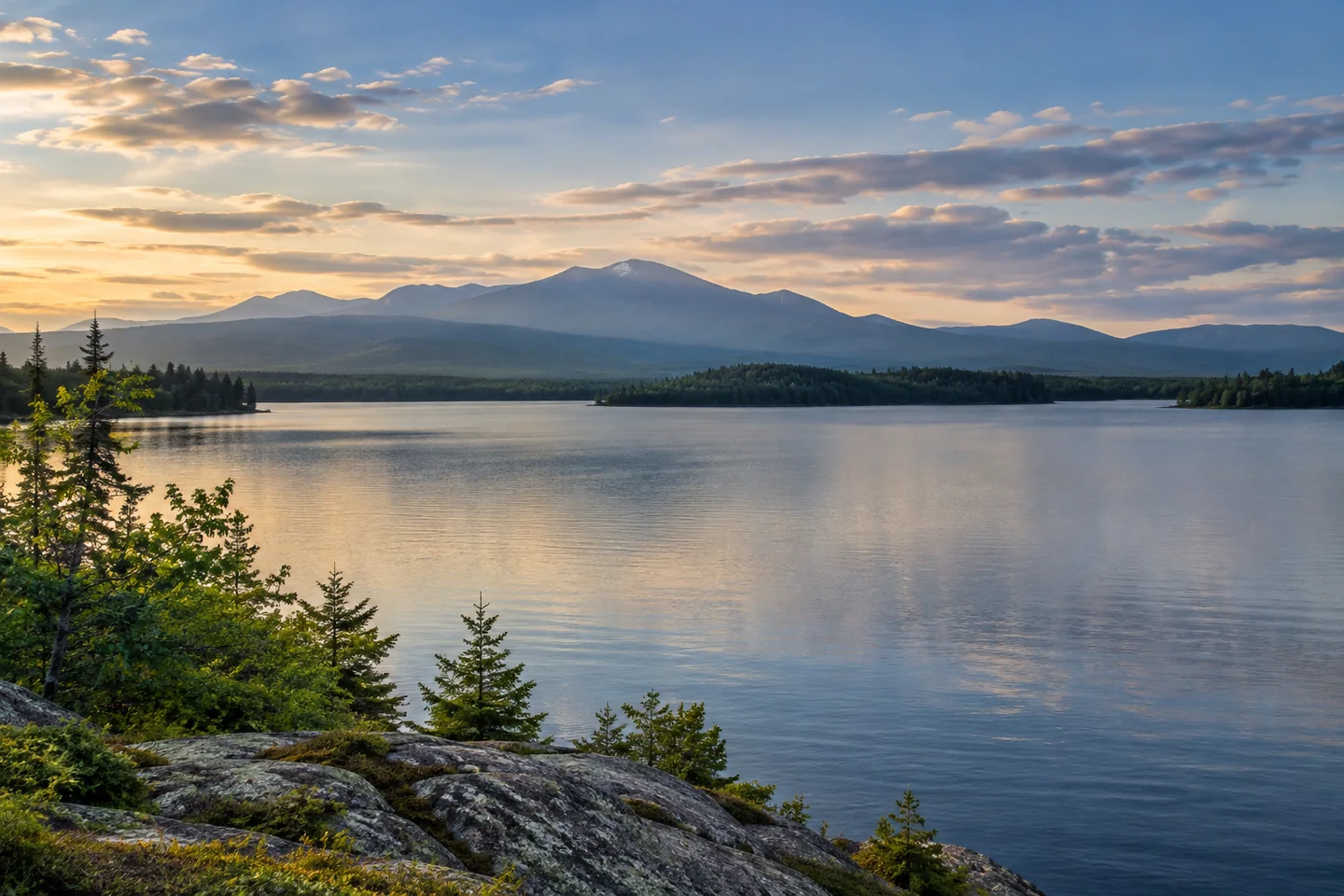
The Pemadumcook Chain of Lakes is a large connected water landscape south of Baxter State Park. A state fisheries description treats its five basins as essentially one water body: Pemadumcook, Ambajejus, North Twin, South Twin and Elbow. Together they cover roughly 18,300 acres across the Piscataquis and Penobscot county line. Choose a particular basin and a manageable outing within it; the whole chain provides context without becoming a distance that must be covered in one trip.
Public launches serve both Ambajejus Lake and South Twin Lake.
The state’s biologist identifies approaches off Millinocket Lake Road and Route 11/157. These entrances offer different starting points for experiencing the chain, so decide on the launch and return before committing to an itinerary. The fisheries description also distinguishes Pemadumcook’s deep coldwater habitat from the shallower neighboring basins. This difference gives the connected system ecological variety: continuity at the surface does not mean every part provides the same underwater conditions.
Navigation here has its own story of practical work. Clarke Canfield’s report on Maine’s inland buoy team describes the effort needed to mark the Pemadumcook chain. The crew consulted people who knew the waters, surveyed the large system, identified hazards and plotted locations before placing markers. Those visible signs therefore represent knowledge gathered and maintained, rather than objects that simply appeared on the lake. Consult current navigation resources as part of preparing for an outing, and give the water’s scale appropriate respect.
The lake has carried very different kinds of boats. A photograph held by Norcross Heritage Trust and published through Maine Memory Network shows the side-wheel steamer F.W. Ayer towing a boom of pulpwood near the foot of Pemadumcook around 1920. The archive identifies it as Great Northern Paper Company’s first large steamboat. That small historical record changes how one might imagine the open water: the view once included timber moving toward industry as well as people traveling through a striking landscape.
An original 2012 paddleboarding account on 100 Maine Lakes supplies a personal counterpoint. Amanda began with smooth water and the pleasure of seeing Katahdin, then encountered stronger winds and whitecaps after entering the broader lake. She ultimately accepted a fisherman’s offered ride back rather than completing the intended return under her own power. Her reflection emphasizes how a large lake can exceed a solo paddler’s comfortable limits. The account is a reason to plan conservatively, with alternatives, rather than a route to repeat.
The buoy team’s work continues after a lake is marked. Canfield describes repeated checks, repairs and replacement of components that wear while exposed to waves and weather. Thinking about that maintenance adds another layer to an ordinary day afloat. The water may offer a sense of space and escape, but people’s detailed, recurring work helps visitors understand and negotiate it.
Let the visit bring those perspectives together: the basin you chose, the history of boats crossing it and the care required by its present use. There is pleasure in completing an outing that leaves everyone comfortable and still curious about what lies beyond the next point.
Fun facts
- The chain comprises Pemadumcook, Ambajejus, North Twin, South Twin and Elbow lakes.
Before you go
- Consult current navigation resources and choose a basin suited to your group.
- Keep a practical alternative ready if wind exceeds your comfortable limits.
Visitor perspectives
- Amanda enjoyed early calm and Katahdin views before stronger winds and waves led her to accept a fisherman’s ride back.
Capture
- Photograph a distant mountain view only from a stable position that permits safe camera use.
 Lower Wilson Pond
 Sebec Lake
 Pleasant Pond
Social
Five connected basins give the Pemadumcook chain its varied geography.
Local knowledge helped the state’s team identify hazards before installing buoys.
An archival photograph records F.W. Ayer towing pulpwood near Pemadumcook.
A 2012 paddleboard journal contrasts calm beginnings with a challenging exposed lake.
Navigation markers depend on repeated checks and maintenance.
A comfortable outing can leave the larger lake for another day.
The story of a lake includes the work done on its waters.
Choose a return plan before choosing the next distant point.
Hashtags