 Cre8Travel
CRE8TRAVEL · MAINE PLACES
Lower Wilson Pond
Lower Wilson Pond: Mountain Views and Waterway Care
Discover
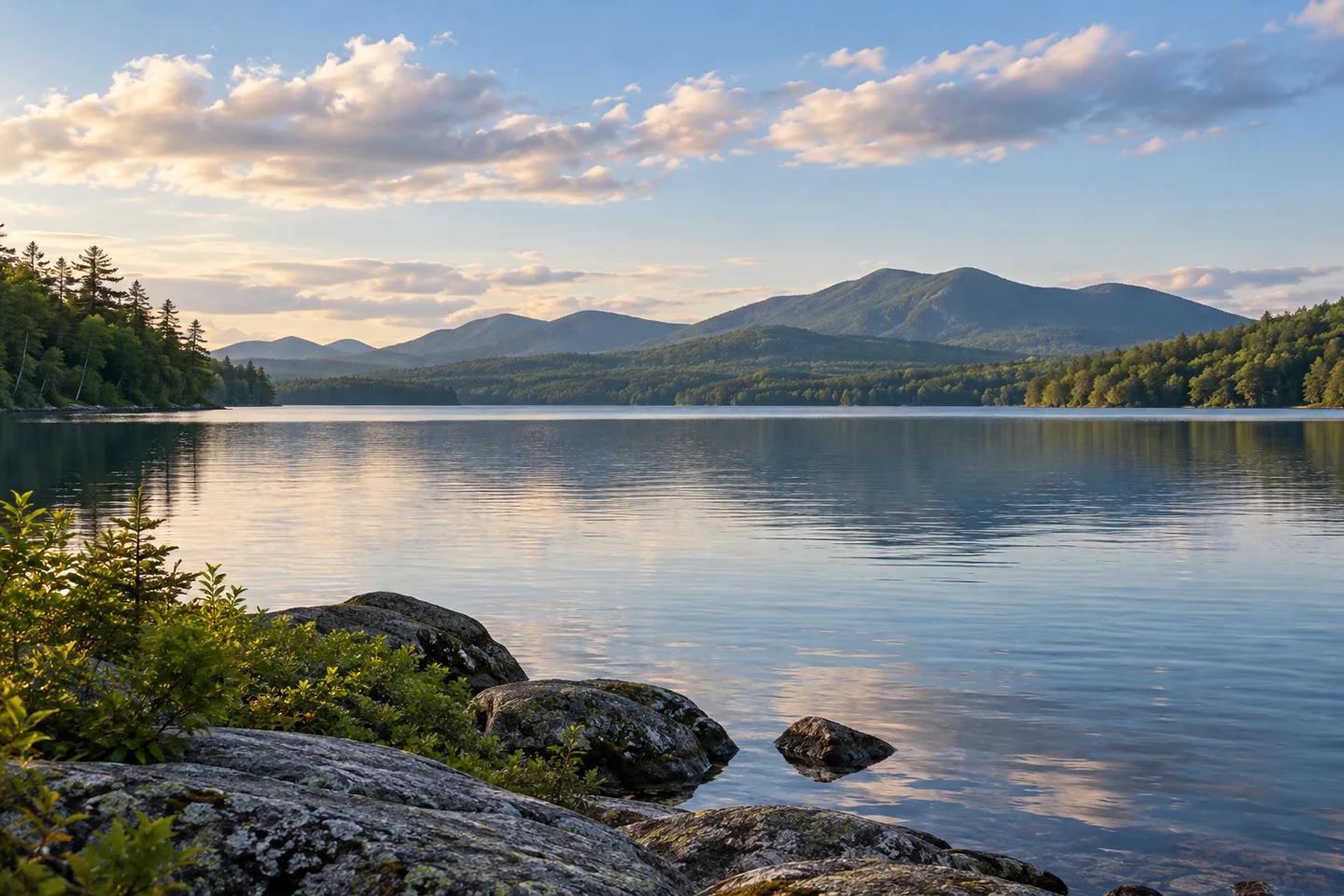
Lower Wilson Pond offers mountain-backed water close to Greenville, with enough shoreline to reward a focused outing. Boston Kayaker’s July 2012 account describes distant mountain views and a circuit exploring the lower pond. His proposed outing begins at the Outer Pleasant Street boat ramp, while his photographs place the outlet dam near the launch. Start with the public entrance and choose a route suited to your experience, leaving room to change it as conditions develop.
The state’s historical fisheries survey gives the scenery a more precise geography. Forested hills enclose the pond, with views toward Baker and Elephant Mountains to the northeast. The basin reaches 106 feet deep. The survey also describes camps along much of the shoreline, a reminder that this attractive water has long drawn people to live and vacation beside it. Enjoy the lake from its established public access and respect the distinction between open water and private camp frontage.
Friends of Wilson Ponds maintains five rustic campsites reached by water. Their descriptions offer different possibilities, including Birch Point’s view toward Scammon Ridge and Teasdale Island and the wooded setting at Rum Cove. Sites operate on a first-come basis, with waste carried out and wag-bags required for the primitive toilet arrangements. Read the association’s current information before planning an overnight visit, including the equipment needed to leave the site clean.
The pond’s coldwater habitat has a management history as well as a scenic one. The fisheries survey records lake trout being introduced in 1956, followed by attention to shallow spawning areas and the effect of water levels on reproduction. It also explains the limited spawning opportunities available to salmon in tributaries and the barriers created by outlet dams and natural falls downstream. Those details show why the water’s depth alone cannot explain the fishery; connections, shorelines and the timing of management decisions also matter.
Today the local conservation community continues to observe the water closely. Friends of Wilson Ponds describes monitors returning every two weeks to both Upper and Lower Wilson Ponds and reporting their observations to Lake Stewards of Maine. Its loon count adds another repeated activity to the calendar. Such projects give a lake community continuity between one summer visit and the next, keeping attention on changes that a traveler may miss during a single afternoon.
Boston Kayaker’s journal offers a useful scale for enjoying this setting. His photographs follow a succession of water and shoreline views, and his notes distinguish a circuit of Lower Wilson from a longer outing extending into Upper Wilson. Let that distinction help with planning: there is no need to add more water simply because it appears nearby. A comfortable return can leave more time to appreciate the scenery already around you.
Before departing, bring the different impressions together: the mountain backdrop, the inhabited shore and the work of people watching over the pond. Consider recording one thing you noticed and one question you would like to understand better. Returning to a lake can then become more than repeating a route; it can deepen an acquaintance begun with a simple day on the water.
Fun facts
- The historical survey records lake trout being introduced in 1956.
Before you go
- Read current campsite information and bring the required waste-handling equipment for an overnight stay.
Visitor perspectives
- Boston Kayaker enjoyed distant mountain views on a Lower Wilson Pond outing and distinguished it from a longer extension into Upper Wilson.
Capture
- Frame a mountain-backed lake view from a stable public shoreline position.
 Pleasant Pond
 Pemadumcook Chain of Lakes
 Sebec Lake
Social
Lower Wilson Pond combines mountain views with an inhabited shoreline.
Birch Point’s campsite looks toward Scammon Ridge and Teasdale Island.
Lake monitors return to the Wilson Ponds every two weeks.
The local loon count adds another repeated observation to the year.
Boston Kayaker’s 2012 circuit focused on the lower pond.
Choose a lake outing with time to enjoy the return.
A small observation can be the beginning of a longer acquaintance.
Let curiosity travel with you as well as the camera.
Hashtags