 Cre8Travel
CRE8TRAVEL · MAINE PLACES
Orrington Town Pound
Orrington Pound: A Stone Circle for Wandering Livestock
Discover
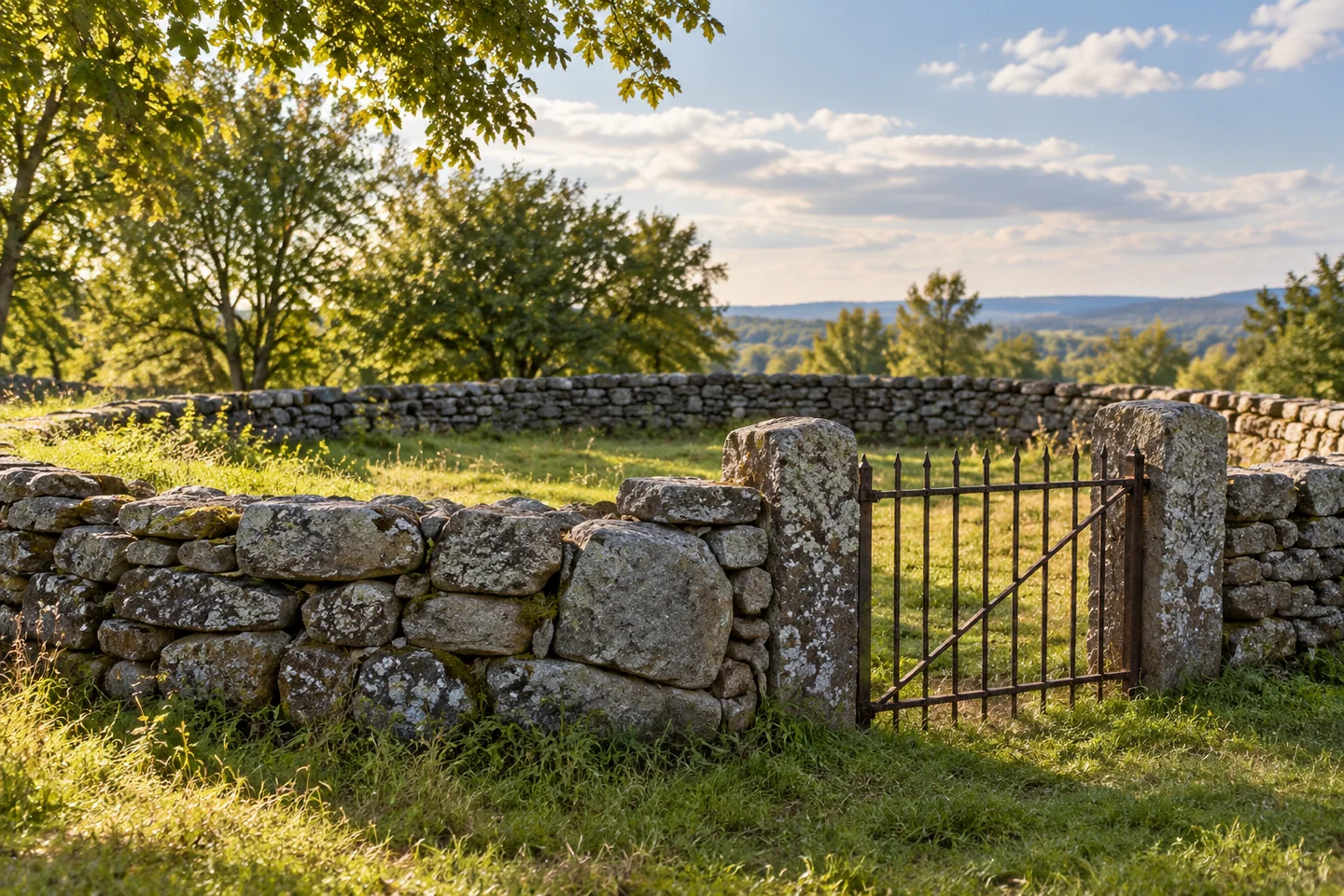
Orrington Pound is a stone circle with an unusually practical explanation. Beside River Road, also Route 15, it preserves part of a system for dealing with wandering farm animals. Before planning a stop, ask the town about an authorized viewing position and safe, legal parking. The location's closeness to traffic makes a roadside glimpse different from a considered visit. Do not stop in a travel lane, climb the wall or assume that a visible gate authorizes entry. The history can be understood from outside without turning the enclosure into a place to explore physically.
An original 2022 interview with Orrington Historical Society president Judith Frost Gillis distinguishes two construction dates. A wooden pound occupied the site from 1807; Edward Pomeroy of Brewer built the stronger stone version in 1843. The distinction prevents the date on a sign from becoming a mistaken claim about every surviving stone. Gillis explained that farmers could recover animals from an insecure wooden enclosure without paying, whereas an iron gate and lock made the stone pound more effective. Material choice belonged to a civic task, not simply a preference for an attractive circular wall.
That task joined property, food and responsibility. Loose cattle, sheep or horses could damage another family's crops. The poundkeeper cared for impounded animals while owners were identified, with charges reflecting the animals and the time spent. Reading the structure through that purpose changes its meaning: a narrow entrance controlled movement, while the enclosing wall separated a temporary animal holding place from neighboring land. The circle is a piece of local administration made visible. It can be appreciated without inventing an ancient ritual, a military use or a dramatic escape story.
Written evidence survives alongside the structure. Maine State Library's digital catalogue identifies Orrington Town Pound records covering 1836–1885, contributed by the historical society. Its description notes an image of the old stone cattle pound inside the cover. The catalogue and the wall provide different starting points for inquiry: one records an object preserved in a collection, while the other remains in the landscape. Consult the records through their stated arrangements rather than expect an archive on display at the roadside. A question about one animal or one fee can become a separate research visit.
The site also acquired a commemorative life. A historical-society photograph catalogued in the state repository documents the 1938 sesquicentennial pageant performed beside the pound. The description does not make the enclosure a theater or establish what every scene portrayed. It does show a community placing a public celebration next to a surviving reminder of its past. A functional place could become useful again as a setting for remembering, without losing the earlier story of farming and local government.
In her 2025 photo account, Orrington resident Cindy Campbell described the circle as a memorable local landmark and noticed nearby stone memorials. Her response belongs to one observer, not a current access guarantee. For your own visual record, concentrate on the relationship between an arc of stone and the iron entrance from a permitted position, using a longer lens if needed. Keep present road conditions and boundaries ahead of the photograph. The reward is a small but concrete piece of rural history: the work of a town once depended on a wall strong enough to keep somebody else's animals inside.
Fun facts
- The first wooden pound dates to 1807; the stone replacement dates to 1843.
- A 1938 pageant was performed beside the pound.
Before you go
- Ask the town about an authorized viewpoint and legal parking before stopping.
- Keep outside the enclosure and leave the wall and gate untouched.
- Consult archival records separately from viewing the landmark.
Visitor perspectives
- Cindy Campbell’s 2025 original photo account called the pound a distinctive landmark in her own town and noted the neighboring stone memorials.
Capture
- From an authorized position, relate the arc of the wall to the iron entrance; use a longer lens without moving into traffic or climbing.
 Katahdin Lake
 Long, Caribou and Egg Ponds, Lincoln
 Fighting Black Bear Statue, Orono
Social
Orrington’s stone circle once answered a practical farming problem.
Loose livestock could damage neighboring crops.
A wooden pound preceded the stronger 1843 stone enclosure.
The iron gate helped control access to impounded animals.
A state catalogue preserves a separate trail of written evidence.
A 1938 community pageant took place beside the pound.
Plan a lawful viewing position before making a roadside stop.
How would a simple wall change meaning once you knew the job it performed?
Hashtags