 Cre8Travel
CRE8TRAVEL · MAINE PLACES
Monhegan Wildlands
Monhegan Wildlands: Between Woods and Ocean
Discover
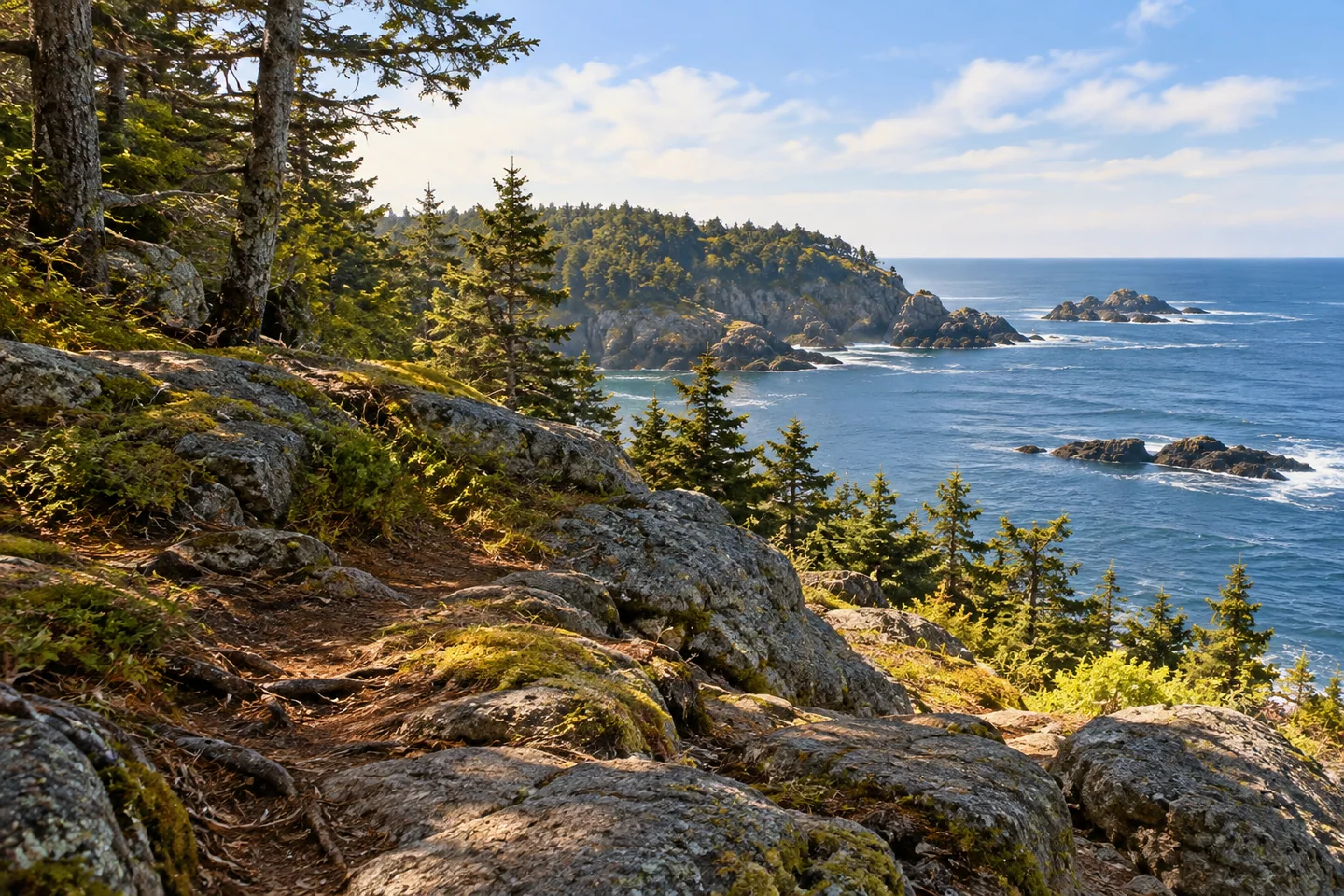
Monhegan's Wildlands invite a walk between a wooded interior and an exposed ocean edge. Nearly 400 acres are privately owned and managed by Monhegan Associates, a land trust committed to keeping them accessible to visitors. Its idea of wildlands gives natural processes room to prevail, making this an outing in a protected living landscape rather than a succession of constructed attractions.
Start with the current Monhegan Associates trail map, available through ferry ticket booths and on the island. Its routes carry numbers, names, and difficulty information. Small green blocks with white numbers mark junctions and trail ends. Choose a route for the group's ability, leaving time for the return boat; the network includes both shorter possibilities and demanding, uneven walking.
Rebecca Goldfine's original Maine by Foot account records a day trip that became a 6.6-mile exploration. She particularly enjoyed Pulpit Rock, Whitehead, and Gull Cove. Her account places the pleasure in the contrast between interior woods and bright coastal ledges, rather than treating the entire perimeter as a compulsory circuit. A selective walk can still include that change of atmosphere.
Goldfine describes shaded, closely wooded stretches alternating with lighter, more open growth. On Fern Glen Trail she noticed mossy rocks and ferns; Red Ribbon Trail impressed her through its pine scent and dark atmosphere. Those individual observations suggest paying attention to the journey between viewpoints. The approach through trees can be as memorable as the destination on a bluff.
Horticulture intern Carrington Flatness brought another perspective to a 2013 staff visit from Coastal Maine Botanical Gardens. Expecting a gentler outing, she encountered large boulders, steep inclines, exposed roots, and slippery rock. Her colleagues kept a brisk pace, but her honest surprise gives a useful sense of the physical work that an appealing island photograph can leave out.
The same account turns from effort to botanical curiosity. The group found Cathedral Woods evocative of a fantasy landscape and compared the island's vegetation with the cultivated plantings they tended at work. Flatness recorded fireweed, rabbit's foot clover, purple fringed orchis, and eyebright during that particular visit. They are historical observations, an invitation to look carefully rather than a checklist of flowers guaranteed today.
Artist Polly Castor's September 2022 account follows a long loop toward White Head and Burnt Head, continuing through Lobster Cove to town. Carrying plein-air equipment made the rocks and roots especially demanding; she remembers substantial steps and a welcome dinner afterward. Her photographs also became possible painting references, showing how a walk can continue to generate ideas after the physical journey ends.
Treat the headlands with the caution the landowner requests. Stay well above the high-tide line and black rocks, especially along the Green Point–Lobster Cove stretch, and keep out of the surf there. Rescue resources are limited and mainland help can be delayed by weather. Build the day's route around sure footing and comfortable turnaround choices.
At the end of the walk, compare the experience you expected with the one you actually chose. Perhaps one sheltered passage held your attention longer than a distant prospect, or a demanding section changed the day's rhythm. Allowing that adjustment gives the outing a personal shape without making distance its only measure.
Before you go
- Use the current land-trust map and select routes for your ability.
- Keep well above black rocks and surf on the exposed headlands.
- Allow for roots, steep sections, and uneven rock underfoot.
Visitor perspectives
- Rebecca Goldfine recalls a 6.6-mile day walk and particularly enjoyed Pulpit Rock, Whitehead, and Gull Cove.
- Carrington Flatness found the hike more strenuous than expected and enjoyed comparing wild vegetation with cultivated garden plantings.
- Polly Castor enjoyed a demanding loop with plein-air backpacks and kept photographs as possible painting references.
Capture
- Use a chosen view as a possible study for a later drawing or painting.
- Compare a wooded passage with the brighter view when the path opens.
 Sebec Lake
 Green Lake National Fish Hatchery
 Preble-Marr Historical Museum
Social
Monhegan’s protected Wildlands remain welcoming to visitors under land-trust care.
A numbered trail map helps turn an island day into a suitable route.
Pulpit Rock, Whitehead, and Gull Cove were highlights of one walker’s visit.
A horticulture team found both demanding terrain and botanical curiosity.
Polly Castor’s hiking photographs became ideas for future paintings.
Let attention, time, and energy shape the walk you choose.
Which transition stays with you after the journey?
A memorable outing can leave room to change its pace.
Hashtags