 Cre8Travel
CRE8TRAVEL · MAINE PLACES
Preble-Marr Historical Museum
Preble-Marr Museum: Island Lives at Cranberry House
Discover
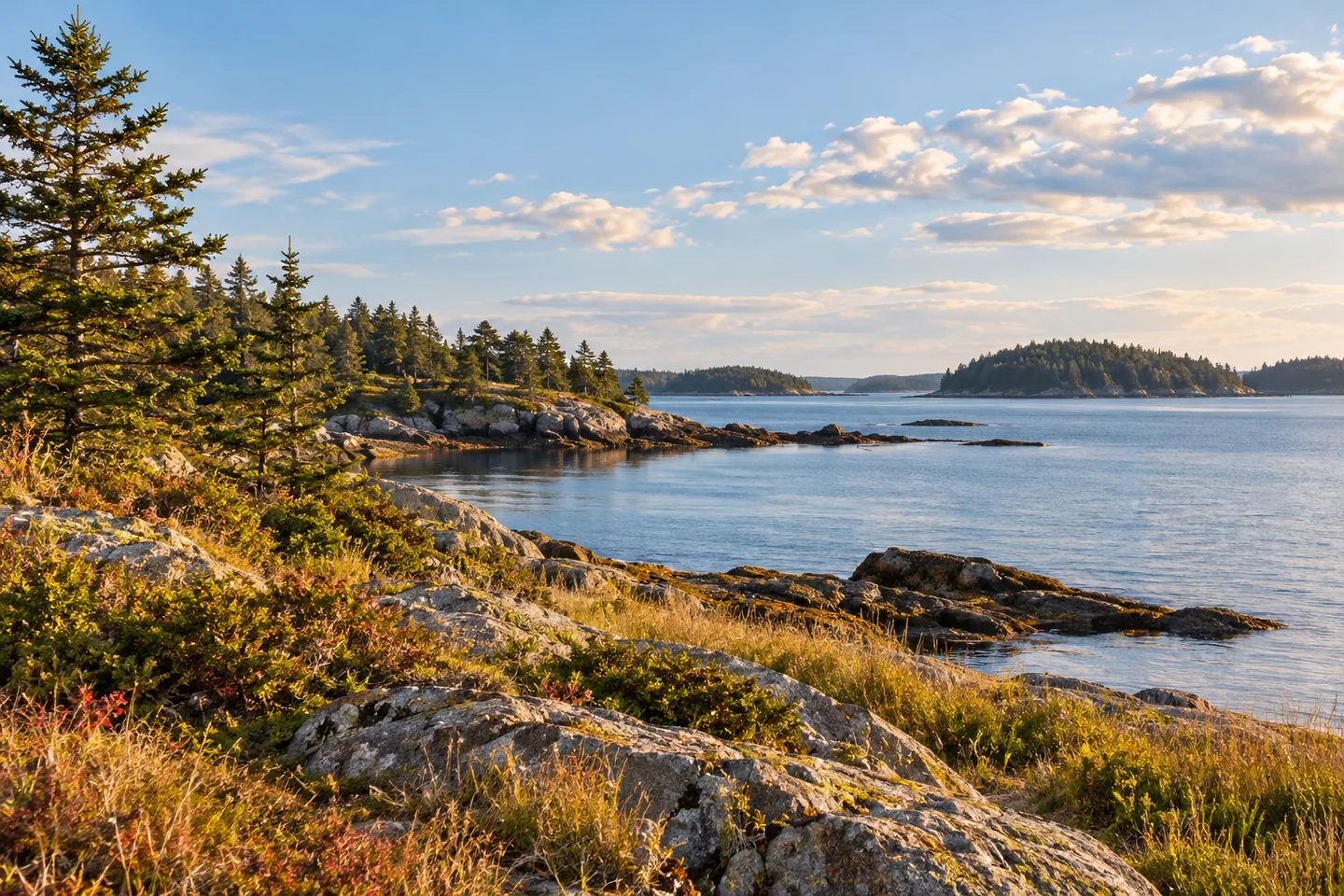
The Preble-Marr Historical Museum makes Great Cranberry Island's history part of an ordinary walk from the town dock. It occupies Cranberry House, about a third of a mile along Cranberry Road. Plan for the museum's seasonal opening and arrange a ferry or hired boat from Mount Desert Island, checking the return journey before setting off. The visit belongs to a living island community as well as its past.
The historical society's own story begins with a 1993 gathering of islanders concerned about preserving local memories. Early work centered on photographs, oral histories, and occasional publications. Exhibition rooms opened in the former Longfellow School in 2000. The institution grew from people collecting and recording what they knew, giving the museum a particularly close connection with individual island lives.
Cranberry House itself has a history of adaptation. Formerly the Mountain View Inn, the building later served for repairing lobster buoys and storing equipment. It was moved onto a new foundation in 2004 and opened as the historical society's permanent home in 2008. Knowing that sequence makes the building part of the interpretation: a structure associated with island work and hospitality found another community purpose.
The museum's exhibition history shows the breadth of its interests. Past projects have examined farming, school life, early photographs, and the voyages of Meltiah and Carrie Richardson through surviving charts and a journal. A later project gathered contemporary islanders' photographs and stories into fabric panels. Check the current displays on arrival; these examples describe the collection's changing questions rather than a permanent exhibition list.
An article by archivist Anne Grulich in the June 2019 Cranberry Chronicle gives a more intimate example. Seven letters to Fannie Preble, written between 1865 and 1874, connect the island with brothers living elsewhere. Samuel Spurling wrote from mining country in California and Nevada, recalling a younger sister he had last known as a baby. Distance is the subject as much as geography.
The letters preserve the uneven timing of family news. Grulich describes Samuel learning of his mother's illness while facing a difficult winter in Nevada, and another brother receiving news too late to return home. Read as part of the society's documented research, the correspondence offers a way to understand what separation could mean to one island family. The archive gives that experience names and voices.
The writer of My Maine's original account combined Cranberry House with nearby shore walks during a birthday outing. Arriving early, the couple first found the museum closed and explored outside before returning. They later described the house and museum as charming, but missed their intended café lunch because their timing did not match its opening. Their experience makes planning around the museum, meal, and boat more useful than assuming all three will align automatically.
Inside, choose one object or account that prompts a concrete question. Who used it, who saved it, and what allowed its story to survive? Following that question through a label or conversation can make a small collection feel substantial. Leave with a particular person's experience in mind, then consider how it changes the island landscape you pass on the way back.
Before you go
- Check the seasonal museum opening and arrange the return boat in advance.
- Coordinate a planned café meal separately from museum access.
Visitor perspectives
- My Maine’s writer returned after an early shore walk to enjoy the charming museum, but the café timing did not fit their departure.
Capture
- If photography is permitted, show the context around an object rather than isolating it from its label.
- Consider the building’s earlier uses when composing an exterior view.
 Green Lake National Fish Hatchery
 Hadley Point Beach
 Holt Mill Pond Preserve
Social
Changing exhibitions connect island artifacts with individual lives.
A former inn became the historical society’s permanent home.
Family letters link Great Cranberry with nineteenth-century journeys west.
One birthday outing paired shore walks with a return to the museum.
Which saved object makes you want to know its owner?
A local collection can begin with a very personal question.
Let one remembered voice change the way you see the journey home.
A small museum rewards time spent with a particular story.
Hashtags