 Cre8Travel
CRE8TRAVEL · MAINE PLACES
Merryspring Nature Center
Merryspring: Where Gardens Meet the Woods
Discover
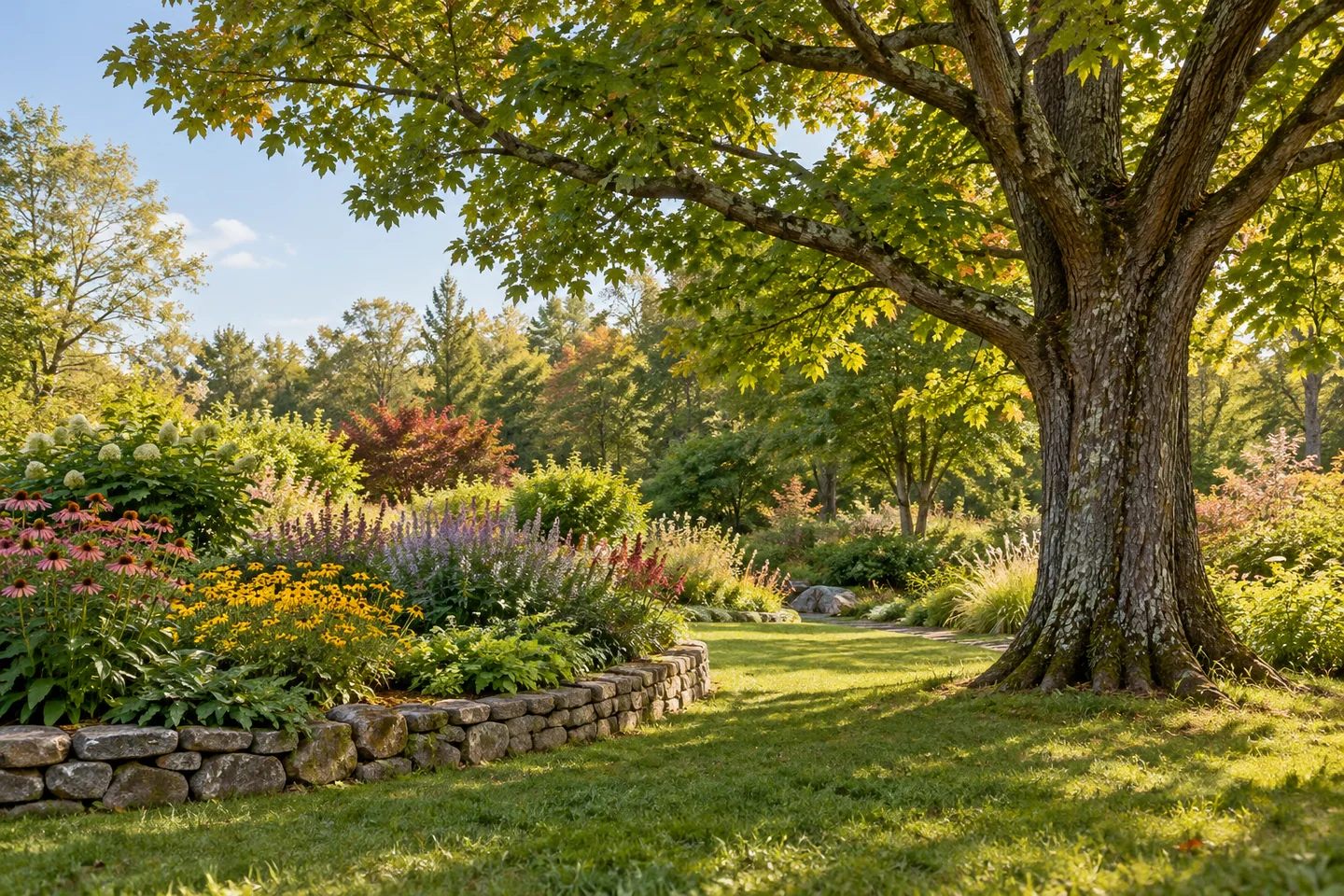
Merryspring Nature Center brings cultivated gardens, meadows, and woodland together on the Camden–Rockport boundary. The gardens near the Ross Center can be a visit in themselves, or the beginning of a walk into the larger property. Start with the current map and choose whether plants, trees, or the changing habitats will give the outing its main thread.
Local horticulturist Mary Ellen Ross founded Merryspring in 1974 after building a nationally recognized mail-order plant business. Her ambition was a place where nature and horticulture could be studied firsthand. That combination remains a helpful way to understand the center: a garden bed and the woods beyond offer related opportunities to notice growth, care, and change.
The gardens reflect successive gardeners' interests. The operator describes a semicircular Ring Garden that developed from annual planting into a mixed border, and an Herb Garden including culinary, medicinal, and dye plants. The daylily collection includes varieties raised by society members. Compare the purpose of a bed with its visual arrangement, letting the planting suggest questions beyond the name of a flower.
The Kitty Todd Arboretum provides another kind of plant collection. Its labeled trees introduce visitors to a range of Maine specimens, with signs explaining names, leaves, bark, and other features. A large red maple stands off a spur from the Birch Loop. Use the current arboretum map to find the intended route, then compare one tree's outline with the details that help identify it.
A former quarry hole gives the vernal pool an industrial origin and a seasonal life. The center explains that its rock bottom retains water from snowmelt and runoff, while surrounding trees provide shade. Leaf litter and fallen material contribute shelter and nutrients. The pool's changing water and amphibian activity make it a place to revisit thoughtfully, rather than expect the same scene every month.
The Interpretive Trail connects several of these themes, including the Merry Spring and the American chestnut restoration orchard. The spring gives the center its name and once supplied water for livestock when surrounding ground was grazed. The orchard belongs to a restoration effort, making the walk an encounter with both inherited land use and deliberate work toward a different future.
Aislinn Sarnacki's original account of a May 2016 visit starts with a conversation with the head gardener, then moves onto the trails. Her attention settled on small subjects: a wood frog, a chipmunk, a spider on a flower, and a bee collecting pollen. These were encounters from one day, illustrating the rewards of looking closely without establishing an animal checklist for another visitor.
Visitor responses also show why expectations matter. Tripadvisor contributor terri 1106 enjoyed the garden's color combinations in July 2019 despite flowering that seemed delayed. In an April 2021 review, Bre found the walking less rewarding than expected and the route confusing. These individual reactions suggest choosing a clear interest and a current route, rather than judging the whole property by a promised floral peak or distant view.
Merryspring welcomes the public during daylight throughout the year. Dogs are excluded except permitted service animals. Separate the grounds visit from any event or indoor program that needs its own arrangements, and allow the chosen route to remain manageable for the group.
Before leaving, connect two observations: a cultivated plant and a tree, a seasonal pool and a sign of former work, or a question answered by the map and one still open. The most satisfying result may be a more precise curiosity about a landscape you have begun to understand.
Before you go
- Choose a route from the current interpretive or trail map.
- Expect the vernal pool’s appearance to vary with the season.
- Plan a grounds visit without a pet, except permitted service animals.
Visitor perspectives
- Aislinn Sarnacki describes a garden conversation followed by a woodland walk attentive to small animals and flowers.
- Tripadvisor contributor terri 1106 enjoyed the garden’s color pairings despite flowering that seemed delayed.
- Tripadvisor contributor Bre found the April walk less rewarding than expected and the route confusing.
Capture
- Compare a specimen tree’s overall form with a detail explained on its label.
- Use the curve of a mixed border to organize a garden composition.
 Wild Acadia
 Craig Brook National Fish Hatchery
 Fort Madison
Social
Merryspring grew from a horticulturist’s idea of studying nature firsthand.
Its garden beds express different purposes as well as different colors.
Tree labels give an arboretum walk a specific question to follow.
An old quarry hole now supports a seasonal pool habitat.
A spring and a restoration orchard connect past uses with future possibilities.
One May visitor found plenty to notice at a small scale.
Visitors’ differing responses make a clear interest and current map worthwhile.
What two observations would you connect before leaving?
Hashtags