 Cre8Travel
CRE8TRAVEL · MAINE PLACES
Fort Madison
Fort Madison: Earthworks beside Castine’s Waterfront
Discover
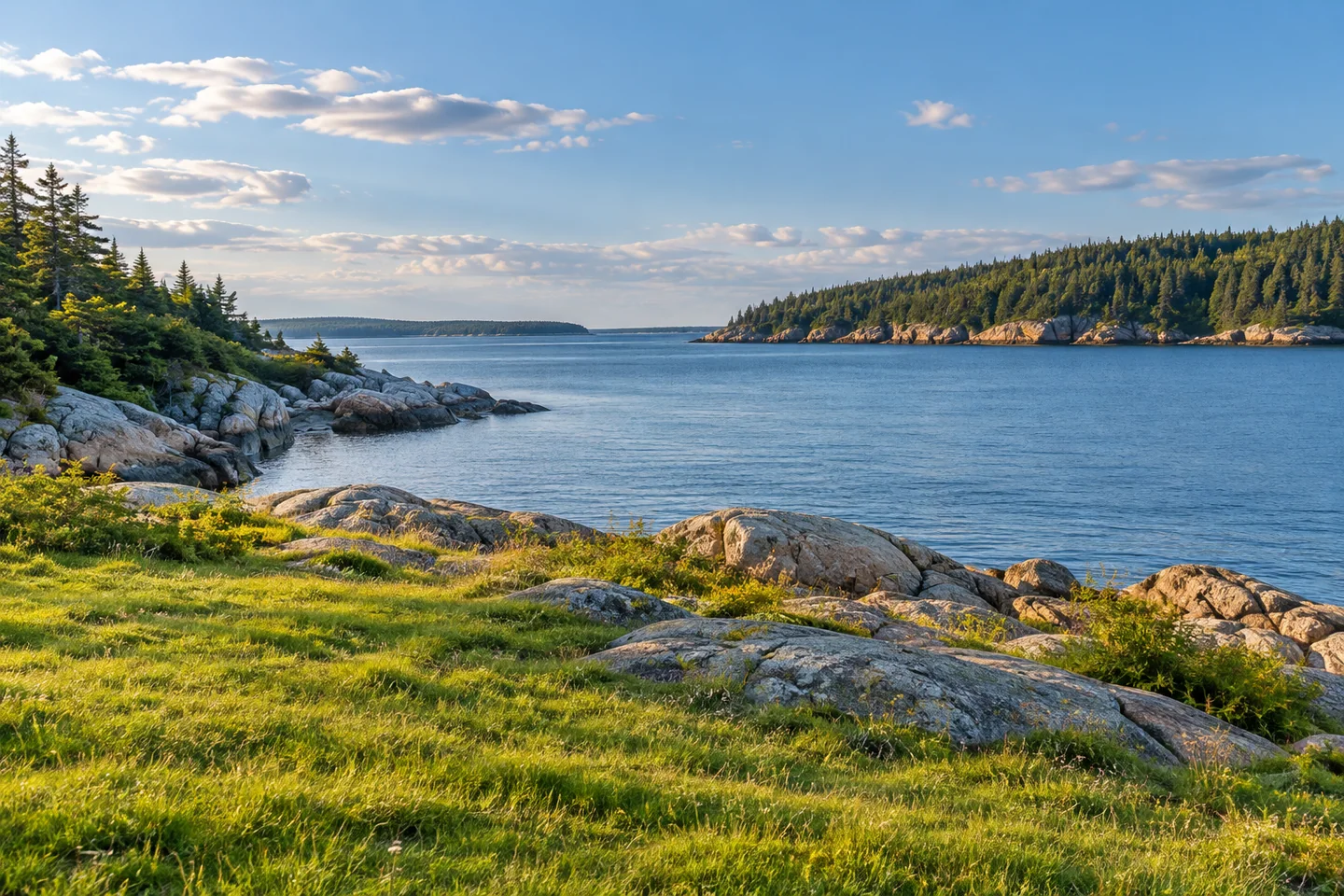
Fort Madison in Castine is a waterfront park whose open ground preserves the outline of a military position. On Perkins Street, the public site invites a short historical stop, a picnic, or time looking across the bay. Begin with the surviving shape of the place, letting its relationship with the water give the history a physical setting.
Castine Historical Society places Fort Madison within the town's renewed defenses during the War of 1812. British forces occupied Castine again in 1814, meeting no resistance from a community that lacked resources and was divided over the war. The story complicates the expectation that every fort visit must center on a dramatic battle at the surviving site.
The society follows the occupation into an unexpected consequence: customs duties collected by the British left with them after the war and later helped form the basis for Dalhousie University's library in Nova Scotia. Read that connection as part of Castine's wider history of borders, trade, and competing authority. A small coastal position belonged to a much larger network.
An older historical account describes the British name Fort Castine during the 1814–1815 occupation and distinguishes it from a tribute to the Baron de Saint-Castin. Names attached to the position changed with the people occupying it. Keep those layers in mind when reading the interpretation, rather than assuming that a familiar name summarizes the site's entire use.
The same account records rebuilding during the Civil War and a garrison of United States troops. Its description of a square fort, magazine, well, and guns belongs to that historical configuration. The useful exercise today is to compare the surviving ground with the earlier account, appreciating how modest remains can carry evidence of repeated military investment.
The Apron Archives writer visited during a summer 2015 research trip through Castine. After exploring the town, the writer noticed the display cannon, earthworks, and outward coastal views at Fort Madison. The account's enthusiasm comes from a combination of small historical features and the pleasure of the setting, rather than an elaborate reconstructed military complex.
Tripadvisor contributor Russell W had a similarly interested response during a June 2026 visit, enjoying the views and the chance to walk around the earthworks. Finding the driveway took help after passing the entrance twice. The experience makes looking up the current public approach worthwhile before arriving, especially when the street itself offers few clues to what lies beyond.
A September 2019 review by sujocaha sets a more restrained expectation, describing very small remnants and suggesting a look when already in Castine. Both responses can help shape a visit: come with an interest in reading surviving ground, and allow the stop to suit that interest. The value need not depend on a long list of facilities.
The town identifies outward views toward the Brooksville shore and islands across the bay. Give that open setting time after reading the history. From a suitable public position, compare the enclosing earthwork with the water beyond, considering why control of a coastal approach mattered. Use current site instructions when choosing where to walk or stop.
Before leaving, ask which mattered more to understanding the place: the surviving form, the historical explanation, or the view. A photograph and a short note can answer different parts of that question, with the image recording the visible ground and the words preserving the connection that made it interesting.
Before you go
- Locate the current public entrance before approaching on Perkins Street.
- Use the interpretation to distinguish historical features from surviving remains.
- Leave time to understand the site’s relationship with the bay.
Visitor perspectives
- The Apron Archives writer enjoyed Fort Madison’s cannon, earthworks, and coastal view during a summer research visit.
- Tripadvisor contributor Russell W enjoyed walking around the earthworks and the view, but initially missed the driveway.
- Tripadvisor contributor sujocaha found the remains small and suggested a brief look when already in Castine.
Capture
- Keep an earthwork in the foreground of a broader water view.
- Consider a permitted view that places the display cannon within its landscape.
 Craig Brook National Fish Hatchery
 Camden Amphitheater
 Curtis Island Park
Social
Fort Madison belongs to Castine’s War of 1812 story.
Changing names and rebuilding add layers to a small coastal site.
An older account helps separate the historical fort from the remains visible today.
One writer enjoyed the combination of earthworks, cannon, and coastal view.
Visitor responses differ on how much time this modest site rewards.
Look outward after reading the interpretation.
What makes a small historical remain meaningful to you?
Let the visible ground and the background story share the visit.
Hashtags