 Cre8Travel
CRE8TRAVEL · MAINE PLACES
Craig Brook National Fish Hatchery
Craig Brook: Salmon Conservation and a Lakeside Walk
Discover
Craig Brook National Fish Hatchery in Orland combines conservation exhibits with public lakeside trails. Check the visitor center's access separately from the outdoor routes, then plan an outing that connects the work inside with the setting beyond.
The U.S. Fish and Wildlife Service describes a hatchery maintaining seven river-specific Atlantic salmon brood populations. Their distinct origins matter to the recovery effort: this is work intended to preserve genetic resources and provide future generations of fish. The exhibits offer a way to connect an individual salmon with a much larger story of rivers, habitat, and continuing intervention.
The Downeast Fisheries Trail places the beginnings here in 1871, when Charles Atkins established a station at a former sawmill site on Alamoosook Lake. Federal operation followed in 1889. That sequence helps explain the long relationship between water, industry, and fish culture in this corner of Maine, without confusing the early station with the later federal institution.
The Friends of Craig Brook's museum interpretation follows Atlantic salmon from tributaries into the ocean and back toward spawning waters. Begin with that journey, considering how an animal's needs explain a facility whose work might otherwise remain behind the scenes.
The museum also presents Maine's angling history through rods, reels, boats, and art. Its account of makers Hiram Leonard and Fred Thomas introduces the craft behind split-bamboo rods. A display of double-ended river boats gives equipment a larger scale, while the development of spinning reels offers another example of tools changing over time.
These objects can be read alongside the museum's discussion of conservation problems, including dams and pollution. The relationship is more interesting than a simple progression toward better equipment: people have pursued fish with increasing ingenuity while also confronting the effects of their activities. Let one chosen object lead to a question about the waters in which it was used.
Todd Mercer's original Horizon Line Adventures essay recalls visiting the hatchery as a nine-year-old in May 1980. He remembers the excitement of seeing large salmon, then catching a brook trout along the lakeshore. The centerpiece of the memory became a wooden outline made to commemorate that fish, an object whose meaning deepened over the following decades.
Mercer's account is a personal recollection, with a child's expectations and a long view backward. Its value for another visitor lies in the connection between curiosity and memory. A small encounter can remain important long after its immediate details have faded; a present-day outing need not imitate his fishing or rely on the access arrangements of 1980.
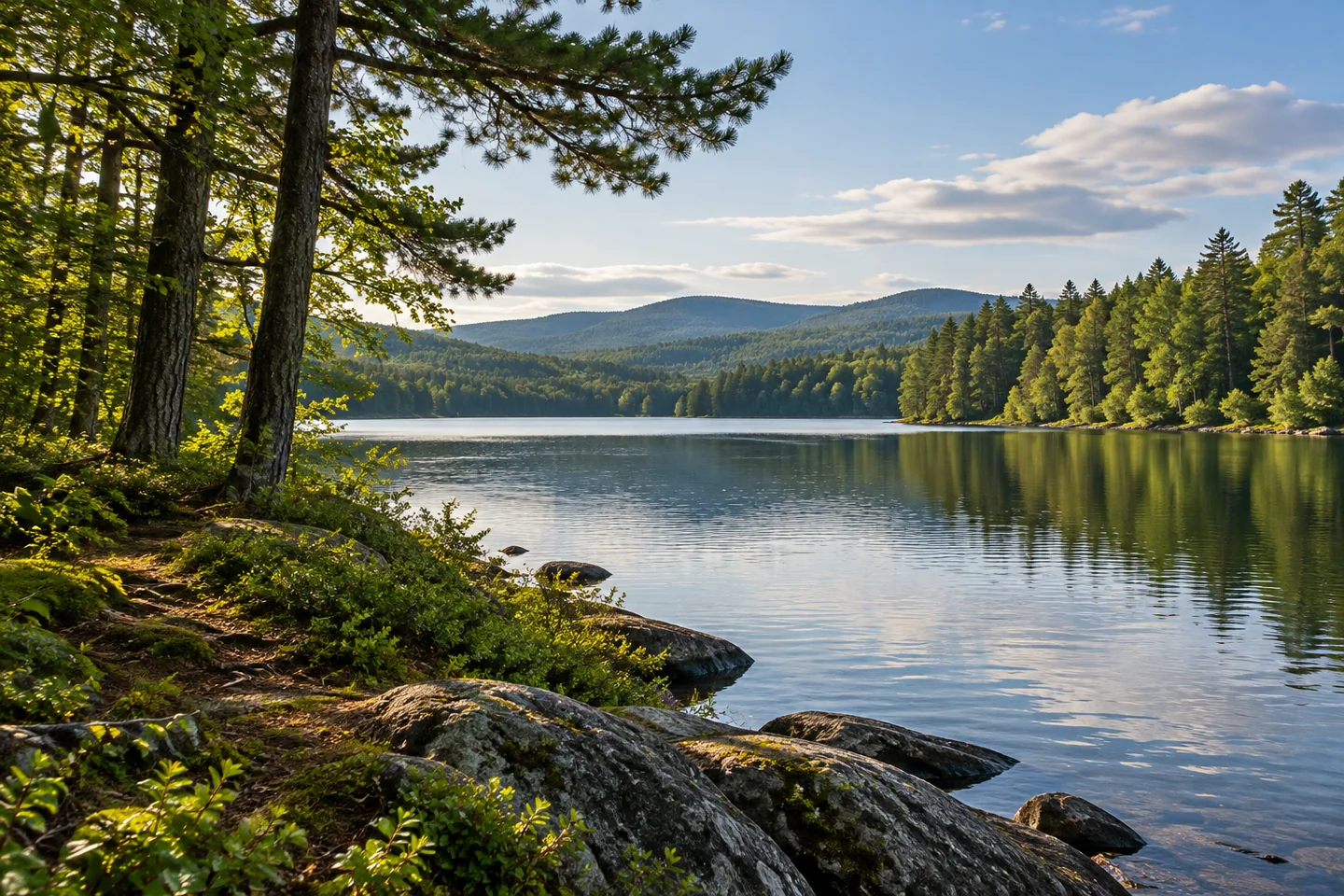
The agency identifies woodland and brookside trails, with public-use areas at Alamoosook Lake and Craig Pond. Use the current map and remain clear of staff-only or closed areas. A walk provides a change of scale after considering the recovery work and exhibits.
Before leaving, bring the two parts together. Which exhibit changed the question you took outdoors, and which observation made you want to return to the interpretation? A visit can be rewarding without resolving every question, especially when it makes the work of caring for a living river system more tangible.
Before you go
- Check visitor-center access and the current outdoor trail map separately.
- Remain within designated public areas and respect closed-area signs.
- Choose one museum object to connect with its river setting.
Visitor perspectives
- Todd Mercer recalls a childhood hatchery visit, a first independently caught brook trout, and the wooden fish silhouette that preserved the memory.
Capture
- From an authorized stopping place, connect the brook or lakeshore with surrounding woodland.
- Let a caption distinguish a question learned indoors from an observation made outside.
 Merryspring Nature Center
 Fort Madison
 Camden Amphitheater
Social
Seven river-specific brood populations give Craig Brook’s recovery work a precise purpose.
The early station and later federal hatchery belong to different chapters of the site’s history.
Rods, reels, boats, and art can tell more than a story of catching fish.
An exhibit object can begin a question about the water where it was used.
One childhood visitor remembered a wooden fish silhouette for decades.
What makes an encounter stay with you?
Carry one question from the exhibits into the outdoor walk.
Look for the relationship between an experience and the work that supports it.
Hashtags