 Cre8Travel
CRE8TRAVEL · MAINE PLACES
Long Pond
Long Pond in Denmark: Springs beneath a Modest Lake Day
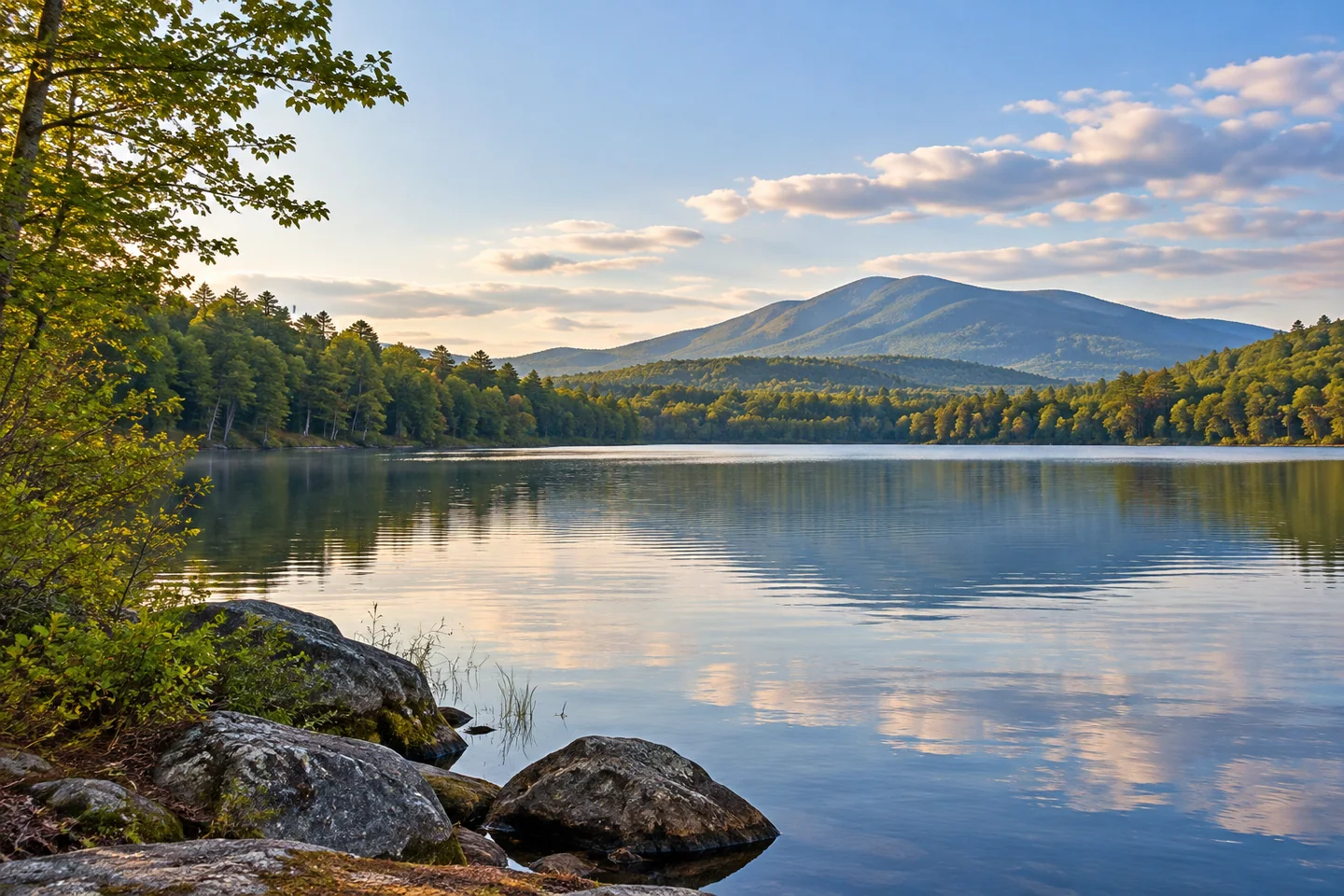
Discover
Long Pond in Denmark offers a small-boat outing whose modest surface conceals an interesting story about water beneath it. Lakes Environmental Association describes it as spring-fed, with carry-in access through a town lot on the southern shore. Identify the Denmark pond carefully when preparing directions; Maine has several waters called Long Pond. Bring a craft you can carry and confirm the present landing conditions before setting out. The scale invites attention to one manageable piece of water rather than a plan organized around covering a great distance.
The association places Long Pond between larger Pleasant Pond and smaller Beaver Pond. Its profile gives the basin a maximum depth of about twenty feet and identifies a watershed several times larger than the water surface. Those relationships are useful to hold together: a shallow pond is a visible part of a broader drainage landscape, not a self-contained bowl. Study its outline and surrounding ground before entering the water. The most interesting detail may be the way an apparently simple view belongs to a connected local setting.
A historical fisheries survey, revised in 1984, describes spring seepages near the northern end as places where some brook trout reproduce. It also records the importance of stocking in supplementing that reproduction. The account gives an ecological meaning to the word spring-fed. Water entering through the ground can matter to fish even when its source is not visible to someone looking across the pond. Appreciate the habitat without entering protected areas or disturbing the bottom to look for a spring; consult current rules before any fishing trip.
The same report records a changing fish community. A 1958 treatment removed competing species as part of a brook-trout management program, while smelt and banded killifish were documented in 1984. The biologists noted uncertainty about what that renewed competition would mean. Read this as a dated history of management decisions and observation, not a current fish list or a prediction of what you will catch. It makes the pond a place where a quiet surface sits above a history of interventions, discoveries, and questions that required repeated visits to understand.
Stan's original account of a May 2017 canoe-fishing outing adds a more immediate view. He admired Pleasant Mountain from the rough landing and found a moderately developed shoreline, clear water, and a sandy bottom. Wind changed his choice of fishing method, and black flies became a memorable part of the afternoon. He nevertheless enjoyed the scenery and relative quiet, landing trout after several missed opportunities. His experience supplies a specific day rather than a promise about weather, insects, catches, or the number of other boats. Use the view as inspiration and let conditions govern your own route.
The association's continuing monitoring gives another reason to look beyond that single account. It identifies Long Pond as a waterbody sampled by its staff, connecting an occasional recreational visit with repeated observation over time. A photograph can preserve the mountain relationship or a small arrangement of water and shore; it cannot tell you everything about habitat or water quality. Keep the craft stable, leave private shores outside the landing plan, and inspect equipment before moving to another waterbody. A rewarding visit can remain small while bringing the pond's springs, fishery history, surrounding landscape, and individual experiences into one thoughtful picture.
Fun facts
- Long Pond in Denmark is spring-fed.
- The historical fisheries report identifies northern spring seepages as brook-trout habitat.
- Carry-in access is through a town lot on the southern shore.
Before you go
- Confirm the Denmark location and present carry-in landing before bringing equipment.
- Consult current fishing rules and avoid disturbing spring habitat.
- Keep private shorelines outside the landing plan and inspect equipment between waters.
Visitor perspectives
- Stan’s May 2017 canoe-fishing account enjoyed Pleasant Mountain views and the pond’s relative quiet. Wind and black flies complicated the outing, but he still appreciated the scenery and landed trout.
Capture
- From a stable permitted position, relate the water to the mountain backdrop when visible.
- Compare a wide shoreline view with a small composition of water and shore.
 Hamilton Pond
 Clough Meeting House
 John Hancock Warehouse
Social
Denmark’s Long Pond gives a small-water outing a spring-fed setting.
A town lot provides a carry-in approach on the southern shore.
The surrounding drainage area is larger than the visible water surface.
An older fisheries report records reproduction near northern spring seepages.
Its management history includes interventions and later uncertainty about competing fish.
Stan’s 2017 outing enjoyed the scenery while dealing with wind and black flies.
A photograph records a view; repeated monitoring asks a different set of questions.
What part of a pond’s story would you notice from the surface, and what would remain hidden?
Hashtags