 Cre8Travel
CRE8TRAVEL · MAINE PLACES
John Hancock Warehouse
The Donnell–Hancock Warehouse: York’s River as a Commercial Route
Discover
The Donnell–Hancock Warehouse in York makes a compact exterior subject with a commercial story larger than its footprint. Old York Historical Society identifies John Donnell as its builder in the 1740s and dates John Hancock's acquisition of an interest to 1787. Establish permitted viewing arrangements with the society and use public pedestrian space; the building's historical museum descriptions do not establish present walk-in interiors. Begin by separating the merchant's name from the earlier building. Hancock became associated with an existing working structure, rather than creating every part of the place that now bears his name.
The original National Register nomination describes rough, open timber construction with mortise-and-tenon beams and pegged joints. It also records a second floor reached by an exterior ramp and interior stairs, and a wheel used to lift goods. These are documented features of the building, not an invitation to test equipment or enter an unattended doorway. They suggest a useful question for an exterior visit: how did the arrangement support moving and storing cargo? A warehouse can be read through work and circulation rather than through ornament or domestic comfort.
The nomination places that work within coastal commerce. Its account describes exchanges involving fish, oil, molasses, leather, fabrics, furniture, and other goods, connecting merchants' ships, wharves, and storage buildings. Consider the warehouse as one link in a sequence rather than a self-contained historic object. Goods needed somewhere to wait between arrival and departure, and the shoreline mattered because movement by water made that exchange possible. The scale of a surviving structure need not match the reach of the trading relationships that used it.
The historical record also retains uncertainty. Researchers preparing the nomination found competing explanations of how Hancock acquired his share and could not establish that he personally visited the warehouse. Keep those questions open rather than imagining a famous signer standing in a particular doorway. Ownership, representation by an agent, and physical presence are different historical claims. The documented co-ownership with Joseph Tucker is enough to connect the building with Hancock's business without requiring an invented scene to make the association feel tangible.
A later state record gives the adjacent wharf a continuing commercial dimension. The Land for Maine's Future program lists John Hancock Wharf among completed working-waterfront projects, dated 2010. That is a different preservation purpose from arranging a historic interior for spectators. Protecting the ability to work at a waterfront can preserve a relationship with the water as well as an old building. Leave operational areas and equipment outside your route unless permission is explicit; a picturesque view does not turn a working dock into an unrestricted promenade.
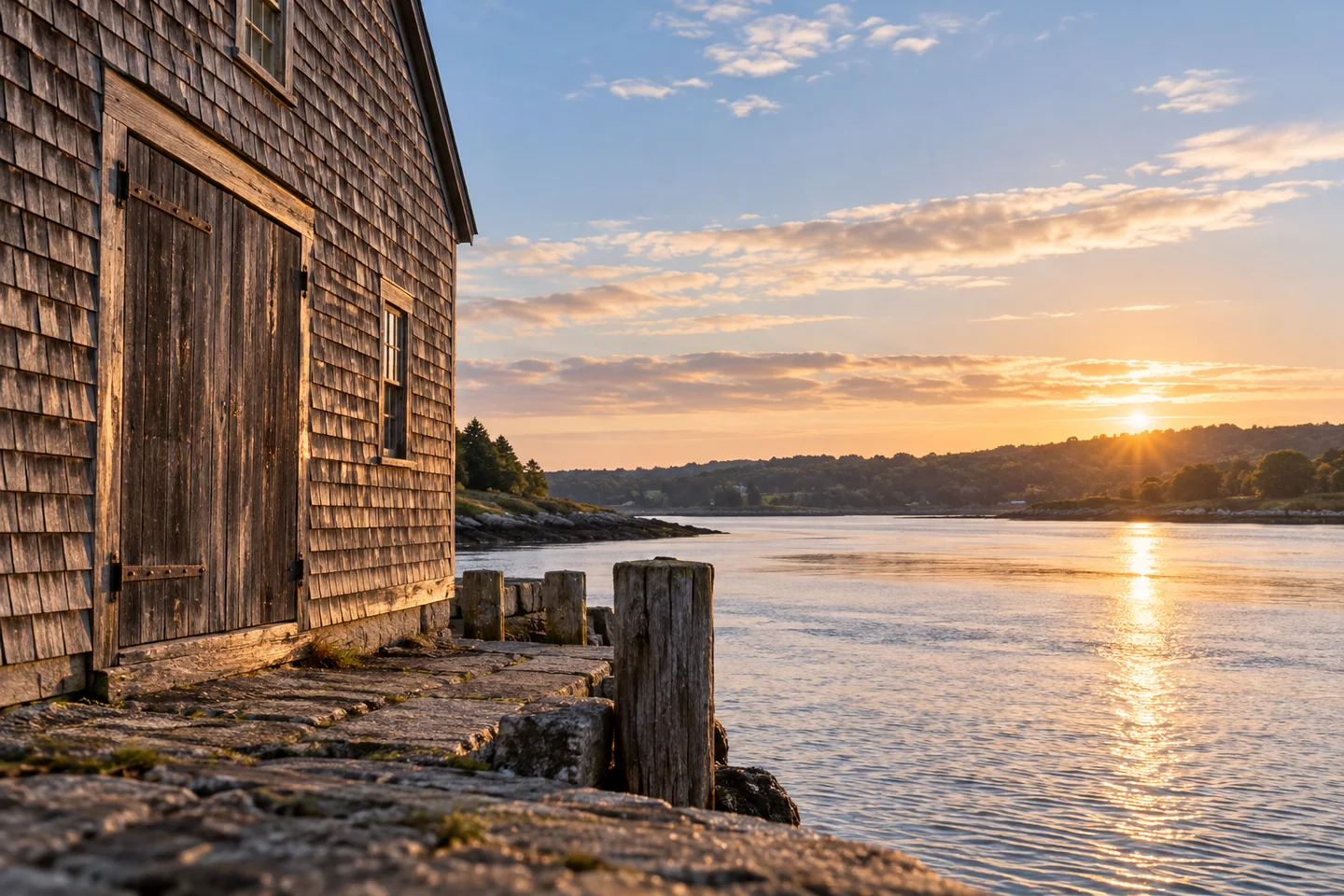
Russell W's October 2023 Tripadvisor account found the building interesting from outside while being unable to enter. The reviewer enjoyed the river setting and nearby historical surroundings. That individual response supports a modest expectation: a rewarding look need not depend on an interior tour. For photographs, compare the whole building within its riverside setting with a closer permitted study of weathered shingles or a doorway. Keep entrances and workers' routes clear. The visit becomes more distinctive when a famous name leads toward the less celebrated subjects of storage, handling, trade, and the people whose work made a waterfront useful.
Fun facts
- The warehouse predates Hancock’s documented acquisition of an interest in 1787.
- The nomination records pegged timber joints and equipment for moving goods upstairs.
- John Hancock Wharf appears in the state’s completed working-waterfront project record for 2010.
Before you go
- Confirm any grounds or interior arrangements with Old York before traveling.
- Use permitted pedestrian space and leave working-dock areas clear.
- Distinguish documented ownership from an unproven personal visit by Hancock.
Visitor perspectives
- Russell W’s October 2023 Tripadvisor account found the warehouse historically interesting from outside despite not finding a way to enter. The reviewer also enjoyed the riverside setting and neighboring historical surroundings.
Capture
- Relate the warehouse to the river from an authorized standing position.
- Study a doorway or shingled surface without blocking work or entering the building.
 Clough Meeting House
 Bethel Historical Society Regional History Museum
 Grace
Social
York’s Donnell–Hancock Warehouse connects a small building with a larger trading world.
John Donnell’s warehouse existed before Hancock acquired an interest.
A warehouse’s useful details include how cargo moved between levels.
Ships, wharves, and storage buildings performed different parts of commerce.
Historical uncertainty about a personal visit need not become an invented scene.
A working-waterfront project preserves more than an attractive view.
A 2023 visitor appreciated the building from outside.
What does a warehouse reveal when you follow the movement of goods rather than a famous name?
Hashtags