 Cre8Travel
CRE8TRAVEL · MAINE PLACES
Hamilton Pond
Hamilton Pond: An Island Wetland with a Human History
Discover
Hamilton Pond, opposite Salsbury Cove on Mount Desert Island, offers a small-boat and shoreline alternative to the island's deeper lakes. The state fisheries account identifies a carry-in entry off the Crooked Road causeway, also used for bank fishing. Its ecological story begins with the damming of Stony Brook for agriculture in the early twentieth century. A cold, spring-fed brook holding trout became a shallow pond with aquatic vegetation and submerged stumps, favoring warm-water fish. The report also records an unusual 1993 project: fisheries biologists and children from the Bar Harbor YMCA youth camp collected sixty young largemouth bass from Lily Pond in Gouldsboro and moved them here. Later checks documented reproduction. These historical findings explain a transformed habitat, rather than promising today’s catch.
A Mount Desert Island birding account in the June 2022 Bird Observer identifies the western public landing and public access along Norway Drive on the east. It describes different uses of the pond across seasons: fall ducks on the water, spring migrants stopping over, and summer nesting birds in the western wetland shrubs. Its examples include ring-necked ducks, buffleheads and pied-billed grebes on the water, with yellow warblers and cedar waxwings among the shrubland birds. Treat these as possibilities arising from habitat, not a checklist a visit must fulfill. The interesting comparison is between open water and the thicker vegetation beside it. Watch each area for a while rather than assuming that all bird activity will occur in the center of the pond.
The Acadia water-resources plan published in 2000 places Hamilton among ponds whose water is colored by dissolved organic matter. It explains that poorly drained soils and nearby wetlands can contribute to that color. The same plan distinguishes Hamilton from Bar Harbor's other great ponds because it lies outside the national park. These details help avoid judging its appearance against an image of a clear mountain lake. Water color has a watershed context, while location on Mount Desert Island does not by itself establish park ownership or identical recreation arrangements. Use the identified public approaches and current guidance for your chosen activity. The scientific account invites looking beyond the surface and considering the soils and wetland edges that influence it.
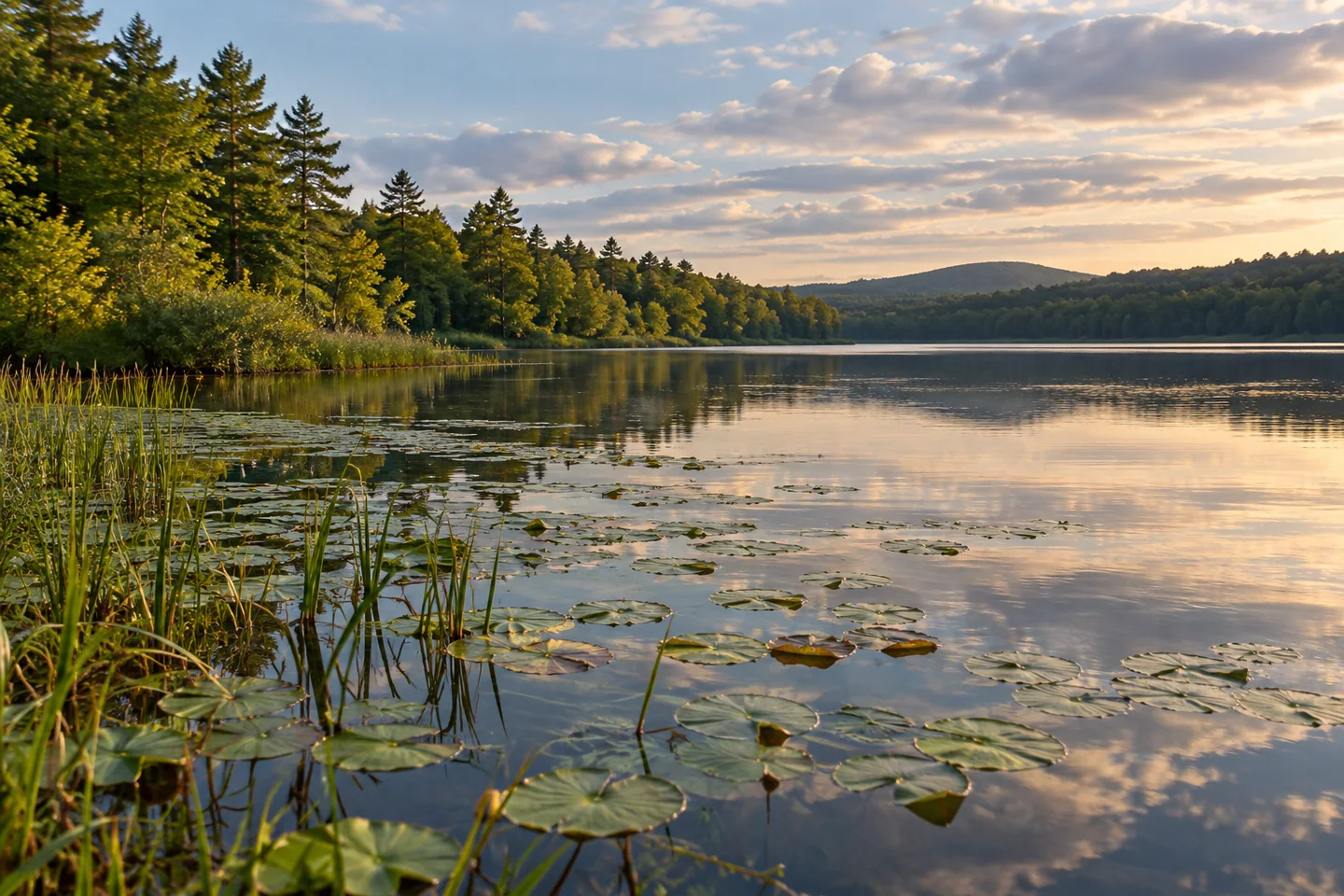
Jeff and Kristie, the couple behind Take the Trek, include a personal discovery of Hamilton Pond in their Maine lighthouse journey. They describe coming upon it on Norway Drive during their island stay and noticing lily pads and a calm surface that invited photographs. Their account is a recollection of what they found, not a guarantee of a particular flower display or water conditions. It adds a different perspective to the scientific and birding descriptions: a place can become memorable through an unplanned pause, even when it was not the main purpose of the trip.
For photographs, choose a lawful shore position and frame a near patch of surface vegetation against more distant water. Keep the road and access clear while composing. A second view concentrating on reflections can convey the pond's atmosphere without approaching wildlife or stepping into the wet margin.
Fun facts
- Hamilton Pond formed when Stony Brook was dammed for agriculture.
- A 1993 fish-transfer project involved biologists and local youth campers.
Before you go
- Use the identified public access and keep approaches clear.
- Consult current fishing rules rather than the historical survey’s management account.
Visitor perspectives
- The Take the Trek couple recalled discovering Hamilton Pond on Norway Drive and appreciating its lily pads and calm photographic setting.
Capture
- From a lawful stable shore position, put near surface plants against distant water and keep roads and access clear.
 Kirby Lake (The Muck)
 Coastal Maine Botanical Gardens
 Duckpuddle Pond
Social
Hamilton Pond lies opposite Salsbury Cove.
Its shallow habitat followed the damming of Stony Brook.
A state account records a youth-assisted fish transfer in 1993.
Wetland shrubs and open water support different birding possibilities.
Bird Observer identifies western and eastern public approaches.
Organic matter helps explain the pond’s water color.
One travel couple valued an unplanned pause by the lily pads.
Frame surface plants against water without entering the wet margin. #Cre8Travel
Hashtags