 Cre8Travel
CRE8TRAVEL · MAINE PLACES
Jones Pond and Recreation Area
Jones Pond: Fresh Water beside the Working Coast
Discover
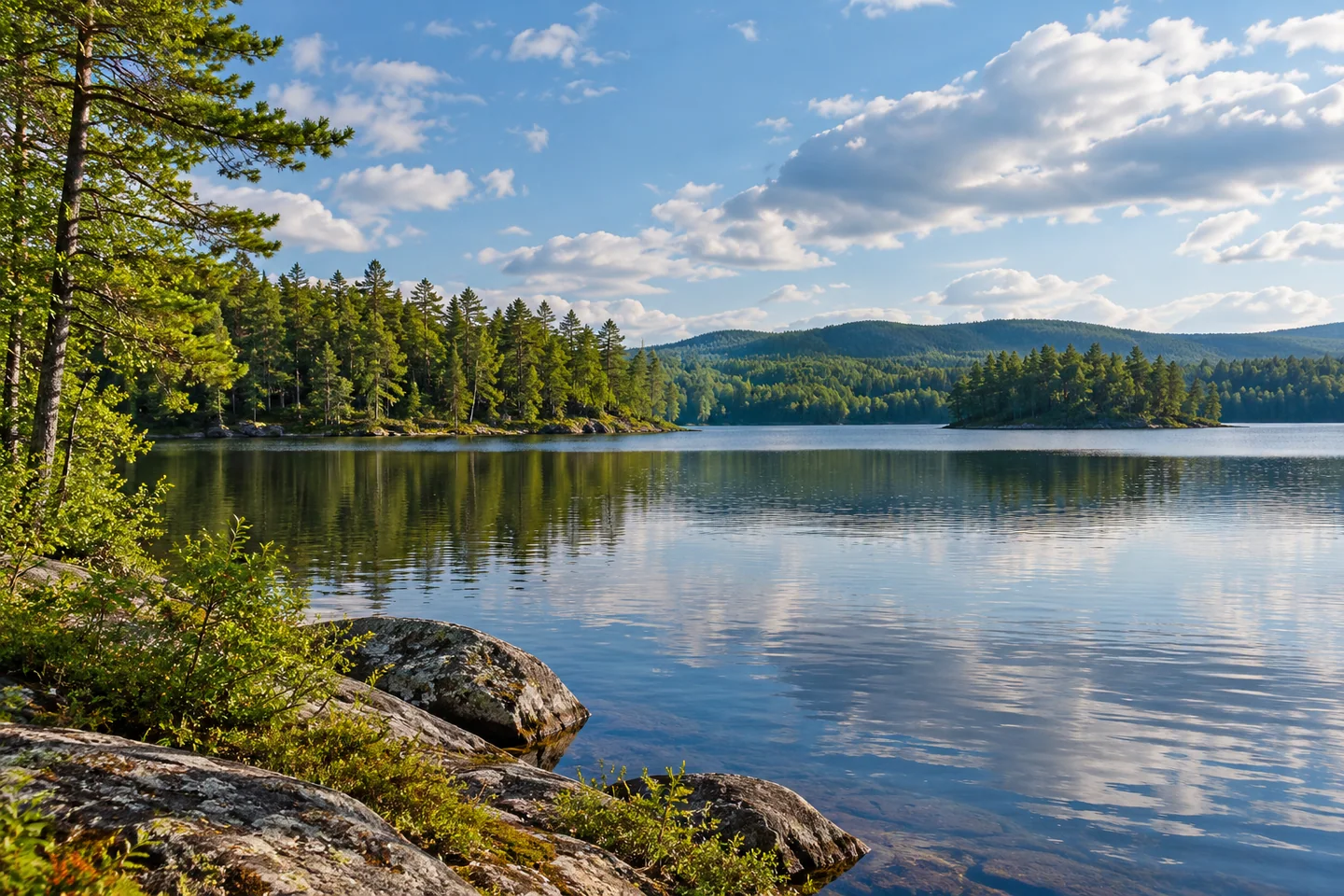
Jones Pond provides a freshwater outing in coastal Gouldsboro, with a municipal recreation area on Recreation Road. The town lists the facility at 71 Recreation Road, a specific address to use when checking your approach. Its current welcome page identifies the site and directs anyone arranging a facility rental to the town office. Begin there when planning a group gathering rather than assuming a picnic setting can be reserved informally. For a boating visit, use the established public approach and leave room for other users. The recreation area and the pond belong in the same plan: one supplies a practical starting point, while the water offers room for a different pace of exploration.
The state's fisheries survey, revised in 1994, describes an ecological reason that fishery management changed here. Jones Pond offered only marginal habitat for coldwater sportfish. Experimental salmon stocking ended in 1975 after generally disappointing growth and returns to anglers, and a brown-trout experiment began in 1980. The report credits the latter species' broader choice of prey with more consistent results and identifies juvenile alewives as seasonally important food. This is a historical management account, not a present fishing forecast. It makes the pond more interesting than a simple species checklist: decisions reflected what fish could eat and how they actually performed in this particular habitat.
An older local source gives those alewives a human history. The Peninsula Gazette of May 22, 1956, records Fletcher Wood's account of fish being brought from Duck Creek on Mount Desert Island to Jones Pond around 1830. The editor also describes a contemporary local operator restocking the pond, smoking fish and selling them. Read the origin story as a recollection preserved in a historical newspaper, rather than as a modern scientific reconstruction. It reveals how residents understood the connection between fresh water, migrating fish and a working coastal food supply. A pond trip can carry that question with it without depending on seeing a fish run.
Aislinn Sarnacki's first-person account of a May 2015 paddle adds close observation. She and her companion watched painted turtles, including a memorable group lined along a log, and noticed beaver signs around the shore. Near an island she initially mistook a nesting goose for an injured bird. When she understood what she was seeing, she moved away. That change of mind is as useful as the wildlife list: a visitor can act on an incomplete interpretation and then correct it. Her sightings describe that particular trip. Give animals space, and let the possibility of an observation remain different from an expectation that it must occur.
For a photograph from a stable position, leave enough surrounding water in the frame to describe the scale of a shoreline feature. If an animal is present, a distant view can show its setting without requiring a close approach. An empty log or an unoccupied patch of water can still belong in a truthful record of the day. The point is to describe the encounter you actually had, including whatever you decided to leave alone.
Fun facts
- A 1956 local newspaper preserved an account of alewives brought to Jones Pond around 1830.
- A historical fisheries report records salmon stocking ending in 1975 and a brown-trout experiment beginning in 1980.
Before you go
- Arrange any municipal facility rental through the town office.
- Give nesting wildlife space and observe from a distance.
Visitor perspectives
- Aislinn Sarnacki watched turtles and beaver signs during a May 2015 paddle, then moved away when she realized a goose was nesting rather than injured.
Capture
- From a stable position, frame a shoreline feature with enough surrounding water to show scale; photograph wildlife from a distance.
 Lower Patten Pond
 Silver Lake in Bucksport
 Dyer Long Pond
Social
Gouldsboro identifies Jones Pond Recreation Area on Recreation Road.
Contact the town office when arranging a facility rental.
A historical fishery experiment changed from salmon to brown trout.
Juvenile alewives formed part of the pond’s historical fish-food story.
A 1956 newspaper preserved a local account of introducing alewives around 1830.
One 2015 paddler remembered a group of turtles lined along a log.
Recognizing a nesting bird changed that paddler’s approach.
A truthful outing record can include what you chose to leave undisturbed. #Cre8Travel
Hashtags