 Cre8Travel
CRE8TRAVEL · MAINE PLACES
Bethel Historical Society Regional History Museum
Bethel’s Robinson House: A Museum of Pictures, Records, and Questions
Discover
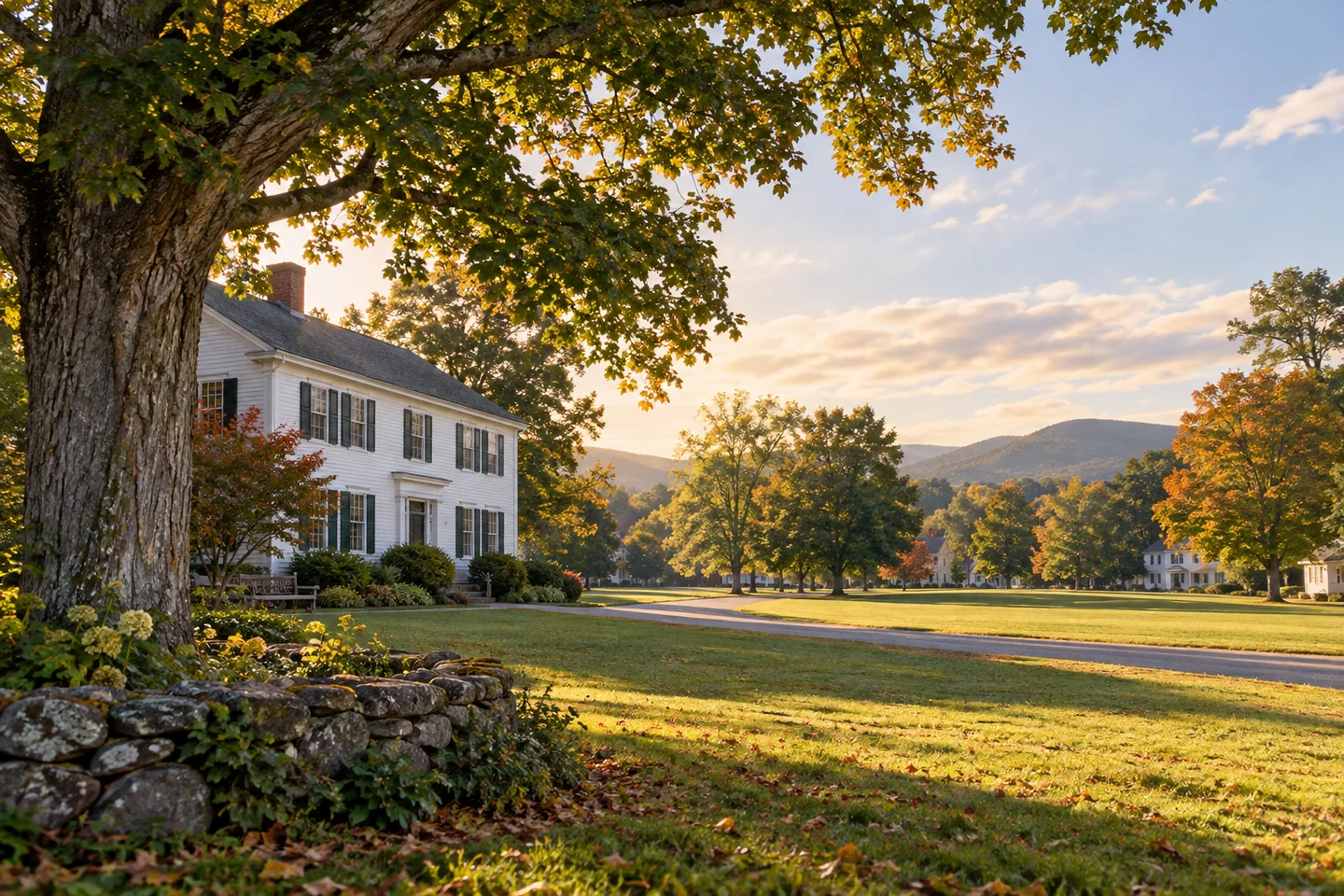
At the Museums of the Bethel Historical Society, make the O'Neil Robinson House your starting point for a visit concerned with collections and the work of understanding them. The early nineteenth-century house overlooks the village common and serves as the organization's administrative center, with exhibit galleries, research facilities, and collection storage. Contact the museum about present gallery access and arrange any research request separately. A gallery visit and access to archival material involve different preparations; a collection description does not mean its originals will be laid out when you arrive.
One published collection account offers an unusually good question to bring along. The society acquired the Roberts-Hastings Family Collection in 2018, adding more than 440 glass-plate images. It initially seemed that professional portrait photographers Beulah and Stella Bartlett had made the negatives during their working lives. Closer inspection upset that assumption: the sisters themselves appeared as children in some photographs, and buildings supplied additional dating clues. The collection became a problem of evidence as well as an accumulation of attractive old pictures.
The society's researcher concluded that different members of the Roberts and Hastings families probably made the photographs in the 1890s and early 1900s. A box label naming Helen and a personal inscription offered clues without settling every attribution. The images include river ferries, log drives, maple sugaring, and recreation around Howard Pond. None needs an imagined adventure added to make it interesting. A practical task, a child's presence, or a partly identified photographer can give an image more depth than a confident caption that goes beyond what is known.
A separate collection preserves a different kind of local work. Libbie Kneeland taught in the Bethel district for thirty-two years and researched West Bethel for an intended village history. She died before completing the book, and her daughter donated her papers to the society. Newspaper clippings, handwritten notes, and an album of photographic postcards remain available as research resources through the institution. The published introduction describes a project interrupted, yet still useful to other people investigating the village. A museum can preserve the groundwork for a history as well as a finished account.
Think about those collections while examining whatever displays are available during your visit. What identifies a person? Does a date come from a handwritten caption, a building, or someone else's later conclusion? Which part of a story remains uncertain? These are questions to ask of the material actually presented, rather than a checklist of objects you should expect to find on view. If a particular negative or postcard interests you, give staff its published collection or object reference when making a separate inquiry. Do not assume permission to handle, scan, or reproduce it.
An August 2013 column by Cynthia Melendy records a visit that included a Civil War exhibit in the Robinson House. She valued the combination of social history, material history, and art across the museum complex. That is a dated response to a particular display, rather than a current exhibition announcement. For your own record, photograph the exterior setting or an authorized gallery view without reproducing archival pages or nearby researchers. The strongest memory may be a question you can now phrase precisely: who made an image, what did a collector preserve, and how much does the surviving evidence allow us to say?
Fun facts
- The Robinson House contains museum galleries and research facilities.
- The Roberts-Hastings collection includes more than 440 glass-plate images.
- Libbie Kneeland’s unfinished West Bethel research survives in papers and photographic postcards.
Before you go
- Confirm current gallery arrangements directly with the museum.
- Arrange archival research separately and identify specific collection references.
- Ask before photographing exhibits or reproducing archival material.
Capture
- Relate the Robinson House to its village setting from permitted pedestrian space.
- If photography is authorized, favor a broad display composition over reproducing document text.
 John Hancock Warehouse
 Grace
 Denmark Civil War Monument
Social
The Robinson House offers a starting point for investigating regional history.
A glass-negative collection challenged an initial assumption about its photographers.
Pictures of children became clues to the dates of older photographs.
Box labels can help identify a maker without settling every question.
Libbie Kneeland’s research preserved material for an unfinished village history.
An album of photographic postcards can hold evidence alongside a familiar view.
Ask what is actually on display before planning around a particular collection.
A good museum question can outlast the first impression of an old photograph.
Hashtags