 Cre8Travel
CRE8TRAVEL · MAINE PLACES
Governor Brann Schoolhouse
A Rural Classroom in the St. John Valley
Discover
The Governor Brann Schoolhouse makes a small building carry a surprisingly large educational story. Set along Route 1 in Cyr Plantation, it belongs to the heritage landscape of the St. John Valley and offers a reason to pause between larger destinations. The most rewarding question is how a rural classroom was designed to serve a community. Its scale allows details of light, shelter and daily use to become the subject of a visit rather than background architecture.
The Maine Acadian Heritage Council currently welcomes visitors to this preserved schoolhouse and its memorabilia. Arrange the actual visit before traveling and establish whether an interior opening will be available. A useful exterior stop can still concentrate on the building's form, while an arranged interior visit offers another set of questions. Keep photographs and exploration within authorized areas, and respect any civic use. An interpretive listing should lead to a confirmed arrangement, rather than an assumption that a door will be open on arrival.
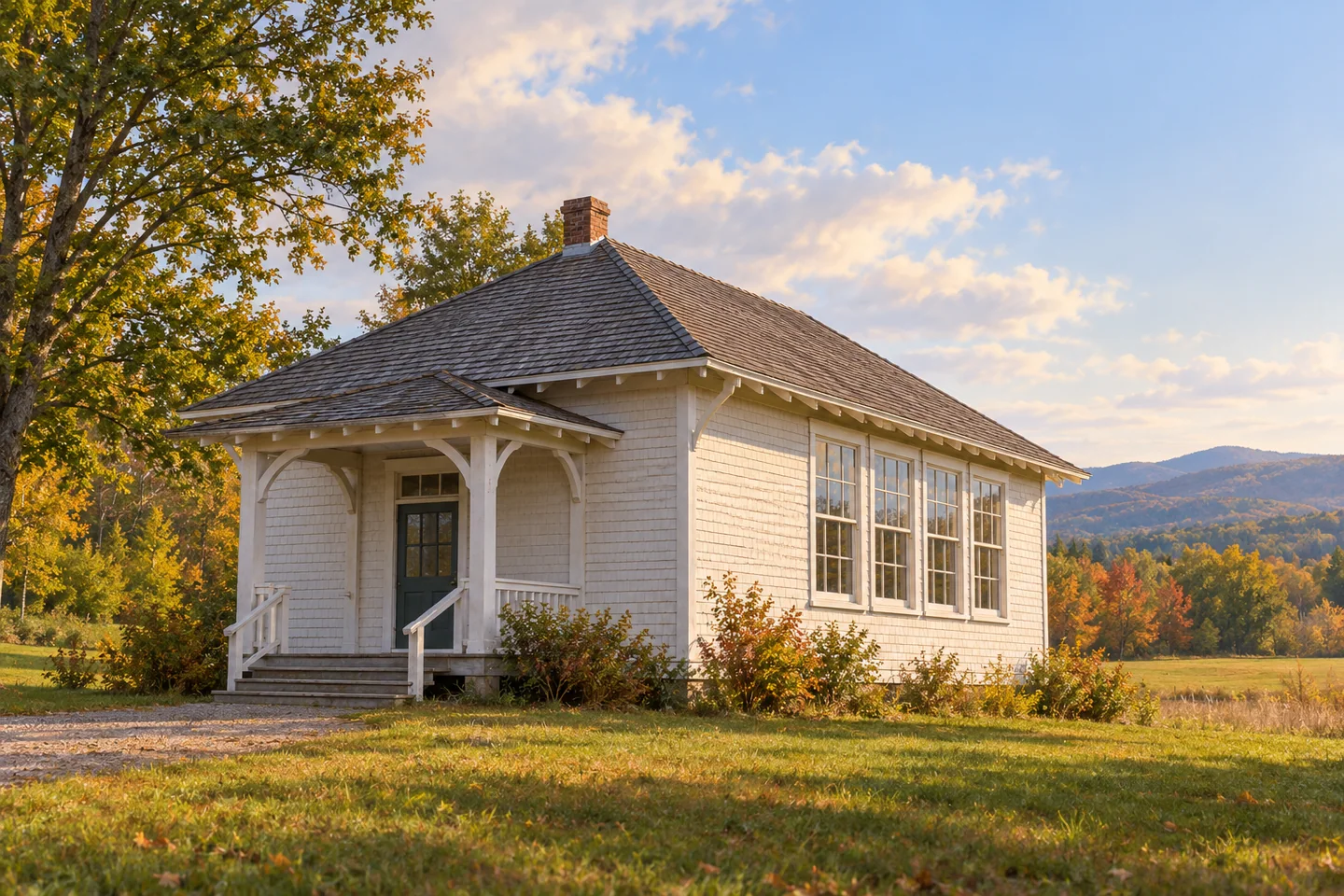
The 1993 National Register nomination describes a wood-shingled, single-story building with a hipped roof and a smaller porch marking the entrance. Large windows along one side supplied classroom daylight. Craftsman porch brackets and exposed rafters complete the design. Look at how the entrance offers shelter and how the windows gather light, then consider the routines of children arriving, putting away their belongings and settling into a shared room.
The nomination places that design within Maine's model-school program. The state developed plans that communities could use to improve rural school buildings, with attention to heating, lighting, ventilation and sanitation. Its precise model designation remains uncertain. A small school can be connected with statewide reform without inventing an architect or making its familiar appearance seem accidental.
The National Park Service dates the school to 1934 and explains its name as a tribute to the governor then in office, Louis J. Brann. Its account describes restoration retaining the original paint scheme and wooden floors, while noting a modern furnace. The classroom later served community meetings and voting. In that history, preservation is more than keeping an object still: a building first associated with education found another public role. Treat those documented uses as context and arrange access independently of any civic occasion.
The same Park Service account places the building within a farming township organized in 1870, with settlement once concentrated along the Caribou-to-Van Buren stagecoach road. The school can therefore be read at two scales: a room for local children and a stop within a larger working valley. It is an invitation to look carefully at an ordinary community institution, rather than expect a grand museum complex.
An original July 2022 travel blog by the Martins records a brief stop to see the school while exploring Acadian heritage sites. That modest encounter suits the building's scale. Bring a question about classroom life, photograph the roof and window arrangement from a permitted position, and leave room for interpretation to deepen a small stop. Governor Brann Schoolhouse rewards close attention to how public life was housed in a rural place.
Fun facts
- The schoolhouse was built in 1934 and named for Louis J. Brann.
- Its National Register nomination connects the design with Maine’s model-school program.
- Large side windows supplied daylight to the classroom.
Before you go
- Confirm whether an interior visit can be arranged before traveling.
- Respect civic activities and use only authorized visitor areas.
- Look at the roof, entrance and windows as parts of a working school design.
- Ask before photographing interior objects or displays.
Visitor perspectives
- The Martins briefly visited the school during their July 2022 Acadian heritage trip.
Capture
- Frame the porch and roofline from an authorized exterior position.
- Use the window arrangement to show how the classroom received daylight.
 Coffeelos Pond
 Togue Pond, Deboullie
 Scopan Lake
Social
Governor Brann Schoolhouse offers a close look at a rural Maine classroom.
Built in 1934, the school bears the name of Governor Louis J. Brann.
The design belongs to a wider story of Maine’s model-school program.
Look at how windows, roof and entrance served everyday learning.
Arrange the interior visit directly before traveling.
A 2022 original travel blog records a brief heritage stop at the school.
Small community buildings can carry large public histories.
Which detail makes an old classroom feel most immediate: light, furniture or the doorway?
Hashtags