 Cre8Travel
CRE8TRAVEL · MAINE PLACES
Georgia Fuller Wiesendanger Wildlife Protection Area
A Woodland Gift with a Living Purpose
Discover
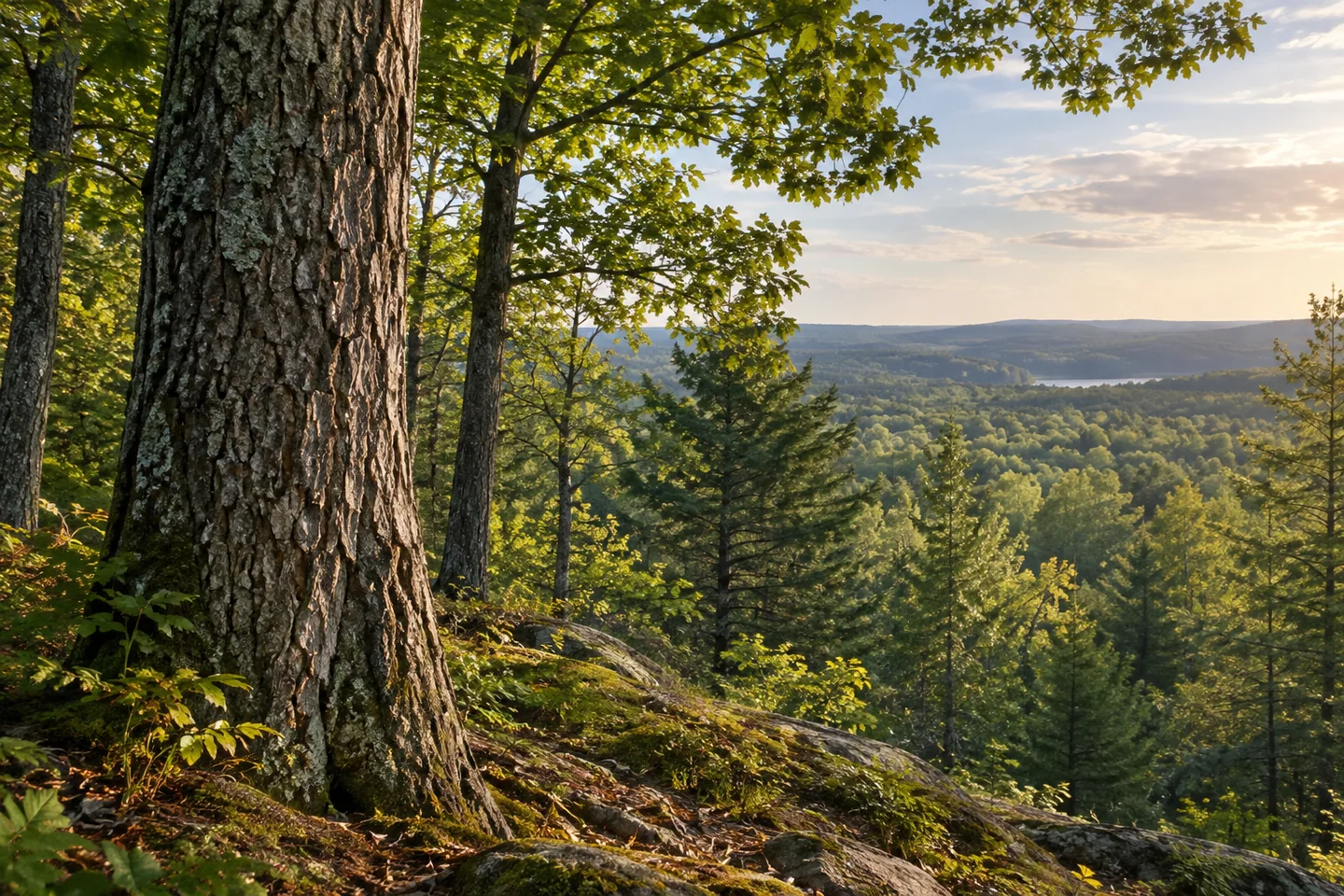
The Georgia Fuller Wiesendanger Wildlife Protection Area brings an unusually clear intention to a woodland visit: protecting animals while demonstrating thoughtful forest management. Maine Woodland Owners received the Winthrop and Readfield property from the Wiesendanger estate in 2011. The donor stipulated that hunting should not be allowed. Walking here therefore begins with a particular act of generosity, rather than a promise of seeing a particular animal. Follow the manager's access information for the land off Case Road, and choose an outing based on observation rather than distance alone.
The forest also has a place in the history of American chestnut restoration. A 2017 field-tour booklet from The American Chestnut Foundation identifies this property as its Winthrop stop for seed-orchard selection strategies. Its accompanying research account explains how breeding programs used multiple family lines and replicated plantings to retain diversity while selecting for blight resistance. That work makes an interesting contrast with the usual image of conservation as simply leaving trees alone. Some restoration depends on careful intervention, patient comparison and the possibility of disappointing results. The booklet is a historical research record, not an announcement of an orchard tour available to every walker today.
The surrounding landscape matters just as much as individual trees. Winthrop's natural-resources planning places the protected property within a larger, relatively unfragmented forest block extending toward Readfield. Its explanation of wildlife corridors emphasizes connections between habitat patches, with undeveloped edges providing buffers from surrounding activity. On a walk, that suggests paying attention to continuity: where does tree cover continue, and where does it meet a road or an opening? A property boundary is essential for deciding where you may go, but animals and ecological processes do not read the boundary in the same way.
Plan a woodland outing with a clear return, and ask the manager about the appropriate entry before setting out. Campfires and overnight camping are prohibited. A research planting should never become a target to enter, collect from or handle without permission. Let information about the forest enrich the walk without making access to a particular experimental tree the measure of success.
Try a simple field exercise. Choose one tree visible from your lawful route and describe it before attempting to name it: the branching pattern, bark texture, relationship to neighboring crowns and the ground beneath. Then make a second observation that changes the first impression. You need not turn an afternoon into a botany examination. The purpose is to replace a quick glance with attention that has somewhere to develop.
For photographs, let the same exercise shape the frame. Make one image about a trunk's texture and another about its place among surrounding trees, keeping your feet on permitted ground. Avoid presenting a photographed tree as a restoration specimen unless its identity has actually been established. This is a rewarding place to consider what protection can mean across several scales: one donor's wishes, the management of a woodland, the future of a tree species and the connections that make a larger forest useful to wildlife.
Fun facts
- The Wiesendanger estate donated this protected woodland in 2011.
- A donor restriction prohibits hunting on this property.
- A 2017 chestnut field tour included the property as its Winthrop seed-orchard stop.
Before you go
- Obtain the manager’s access information for the Case Road property before choosing your approach.
- Respect research areas and avoid collecting or handling plant material.
- Plan a return walk; campfires and overnight camping are prohibited.
Capture
- Compare one tree’s bark texture with a wider image of surrounding crowns, using permitted ground.
- Do not identify a photographed tree as a restoration specimen without evidence.
 Megunticook Lake
 Besse Historic Conservation Area
 Kennebec Arsenal Historic District
Social
A woodland gift carries a specific wish: the Wiesendanger property protects wildlife without hunting.
Maine Woodland Owners received the property from the donor’s estate in 2011.
Chestnut restoration gave this forest a place in a 2017 research field tour.
Research history adds another way to think about a woodland, without implying a public laboratory tour.
Winthrop’s planning connects this protected land with a larger forest block.
Describe a tree before naming it: branching, texture and its relationship with neighboring crowns.
Keep research areas undisturbed and leave a photographic subject where you found it.
What would you notice first on a slow forest walk: one tree or the connections between many?
Hashtags