 Cre8Travel
CRE8TRAVEL · MAINE PLACES
Besse Historic Conservation Area
Besse Historic Conservation Area: A Forest After Farming
Discover
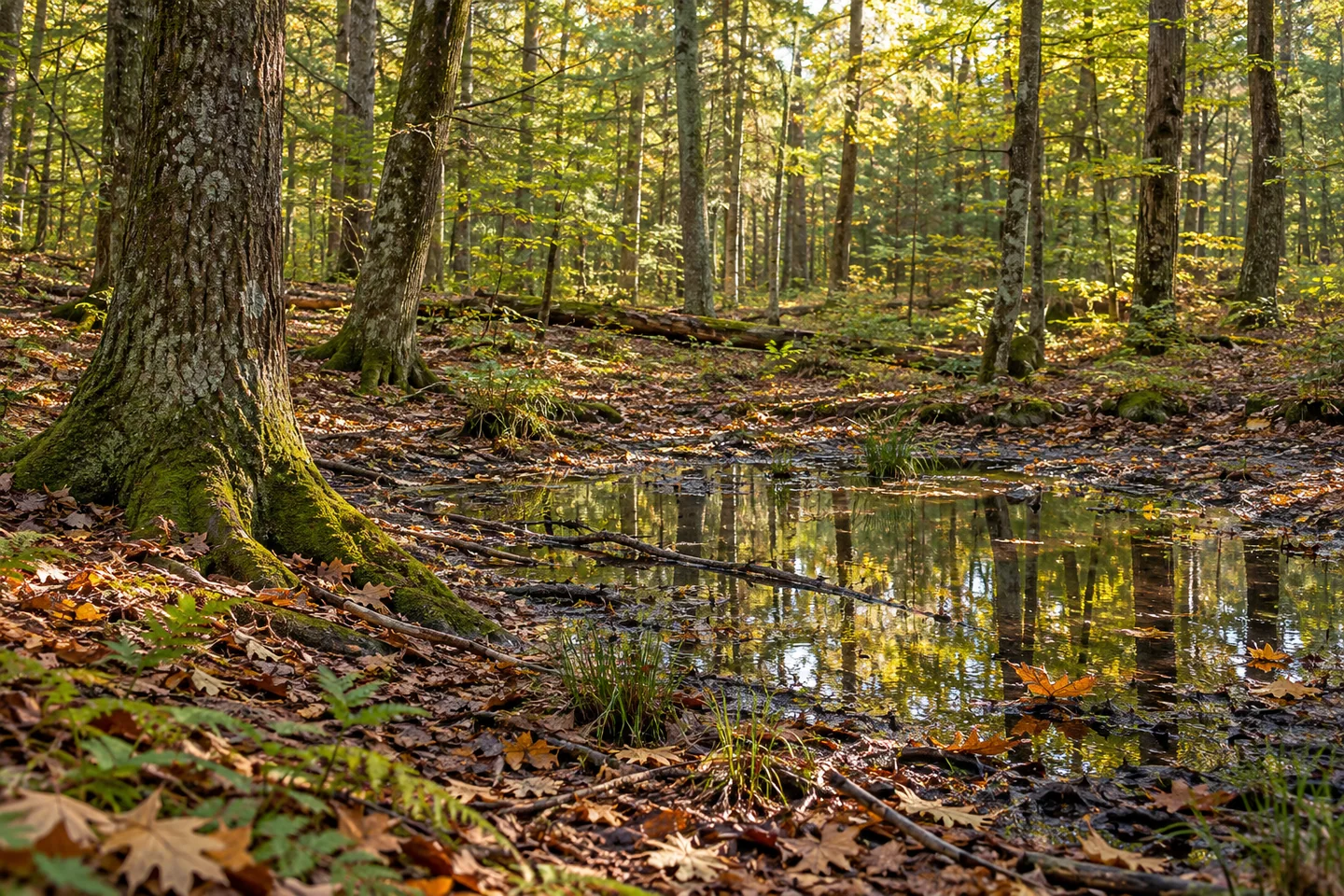
Besse Historic Conservation Area in Wayne invites a different sort of woodland visit. Kennebec Land Trust permits nature observation here, but identifies no designated hiking trails. The approach is from Old Winthrop Road, where visitors should use the signed property and roadside parking with care for neighbors. Think of a modest, attentive nature stop rather than a marked circuit to complete. Obtain the current property information before deciding how far to explore.
The wooded setting carries a farming history. The land trust describes red oak, northern hardwoods and white pine growing on a former family farm. Its account of the Besse family's nineteenth-century production includes corn, potatoes, hay, butter and cheese: a mixed enterprise, with wet ground contributing livestock forage. Albion Besse donated the preserve in 1998 with the intention of allowing the forest to recover its natural character. A tree-filled place can therefore be understood as the latest chapter of a working landscape, rather than evidence that nothing happened here before conservation.
A small vernal pool is another important part of the property. Maine's environmental agency explains the broader ecology of these temporary waters: regular drying prevents permanent fish populations, which can benefit the eggs and young of pool-breeding amphibians. Some species spend most of their lives in surrounding uplands before returning to water to reproduce. The general lesson is that a wet depression and the forest around it belong to one system. This explanation does not establish which animals will be visible at Besse, or whether the pool will contain water on your visit.
The preserve also has a documented connection with patient observation. In its memorial account of Mary Coffin Sturtevant, the land trust records that she volunteered for the Maine Vernal Pool project here from 2000 to 2004. She and her husband Tom served as volunteer land stewards. Her earlier career included work as a water-laboratory chemist, making the connection between water and careful inquiry especially fitting. It is a useful human story to remember beside a small feature that a hurried visitor might overlook. Conservation includes repeated attention by people as well as the original gift of land.
Give the outing a question rather than a mileage target. What changes between the drier ground and a wet margin? Can you describe a pattern without assigning an uncertain species name? Observe from a position that avoids trampling soft ground, and leave plants, eggs and animals where they belong. A record of what you actually saw is more useful than a confident list assembled from what a habitat might support.
For a photograph, choose the relation between trunks, leaf litter and a changing ground surface, then use a closer image only where it can be made without disturbance. Do not move a subject or enter the pool for a clearer view. A satisfying visit can be quite small: recognize the former farm, understand why temporary water matters, and leave with a sharper sense of how a forest is protected over time. The absence of a marked loop leaves room for an outing organized around learning rather than completion.
Fun facts
- Albion Besse donated the preserve in 1998.
- Mary and Tom Sturtevant served as volunteer land stewards here.
Before you go
- Plan for nature observation rather than a designated hiking circuit.
- Observe soft ground without entering the pool or moving animals.
- Confirm access and parking before arriving.
Capture
- Photograph the meeting of trunks, leaf litter and changing ground from a position that avoids trampling wet margins.
 Georgia Fuller Wiesendanger Wildlife Protection Area
 Kennebec Arsenal Historic District
 The Ticonic Sculpture
Social
A short outing can leave you with a better question about the land.
A marked hiking circuit is not part of this nature-observation property.
Temporary pools and surrounding uplands can support different stages of an amphibian’s life.
Regular drying helps explain why a vernal pool differs from a permanent fish pond.
Mary Sturtevant volunteered for vernal-pool work at Besse from 2000 to 2004.
A conservation story includes land stewards as well as land donors.
Describe what you actually observe, and keep uncertain identifications open.
What question would you bring to a small woodland stop?
Hashtags