 Cre8Travel
CRE8TRAVEL · MAINE PLACES
First and Second Musquacook Lakes
Two Connected Lakes, Two Underwater Stories
Discover
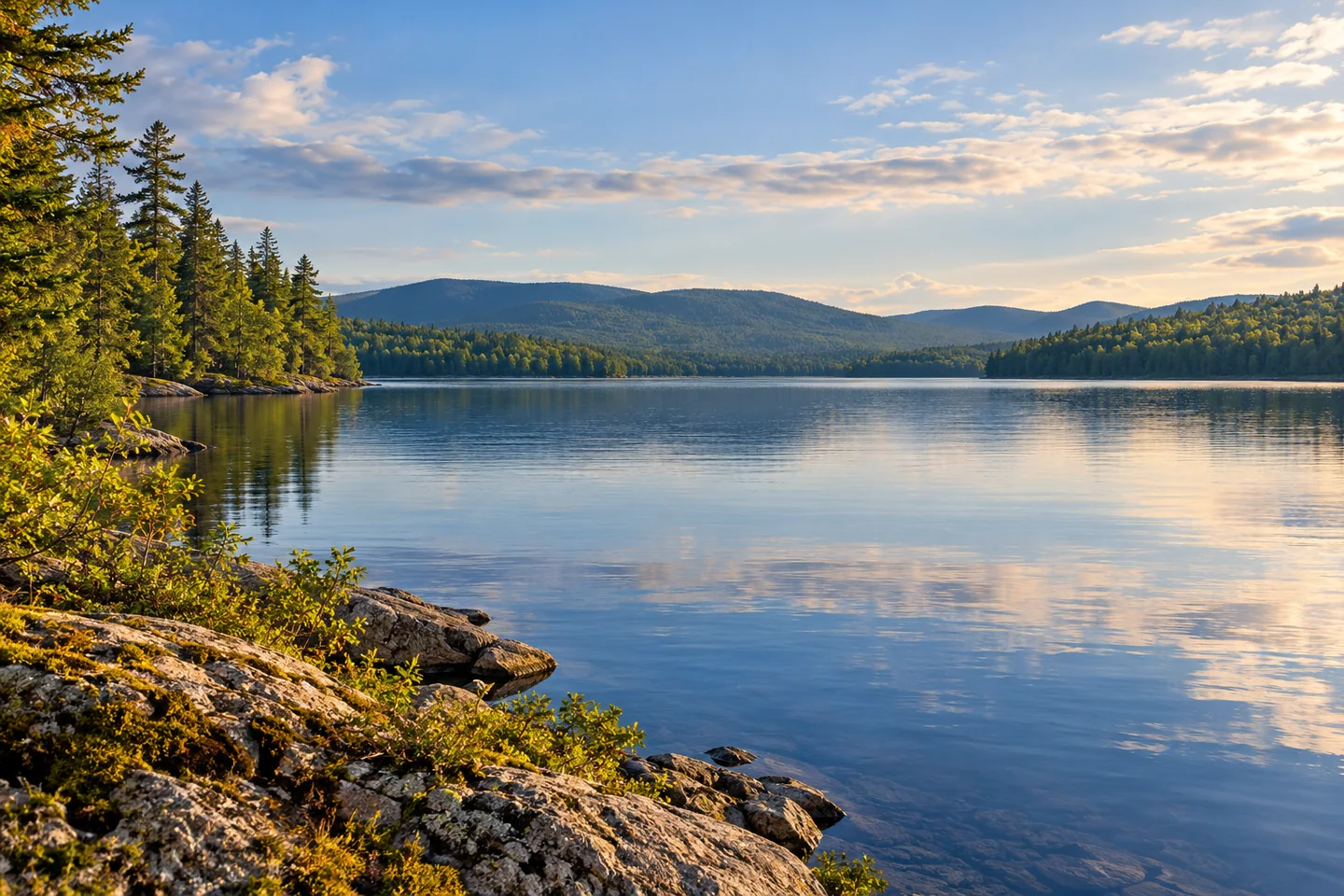
First and Second Musquacook Lakes make a rewarding pair for a northern Maine outing because their connection is as interesting as their individual shapes. These Aroostook County waters belong to a longer chain, but a visit can concentrate on the two northern lakes without becoming an expedition through the entire drainage. The attraction is a wooded water landscape with distinct underwater conditions, a practical camping approach and a long relationship with anglers exploring beyond familiar roadside waters.
Begin by organizing access to Second Lake. North Maine Woods' current brochure lists its designated camping area with vehicle and water access. The state's lake account places the established launching and camping approach at the southeastern corner. Confirm the present road route, registration and suitability of the launch with the manager before traveling. Private forest roads serve working timberland as well as visitors, so leave commercial traffic room and keep any stop within the authorized arrangements. An overnight stay and a day paddle deserve separate plans.
Second Lake's fisheries survey, revised in 2002, describes a mostly wooded shoreline with some camps and a road along the western side. Its basin reaches a recorded depth of sixty-two feet. The biologists linked the lake's fish community to both deep-water habitat and the inlet, where spawning opportunities differ from those along the shore. Looking across the water with that account in mind adds an invisible geography to the visible one. These are historical observations, useful for understanding the basin rather than forecasting a particular catch.
First Lake has a different ecological profile. Its corresponding survey describes a shallower basin and concern about limited oxygen in the cooler deep water during summer. Cold water alone therefore did not tell the whole story of suitable habitat. The contrast is especially revealing because the two lakes communicate through a short thoroughfare. A continuous surface can connect environments that function differently beneath it, making the pair more interesting than two interchangeable places to put a boat.
The connecting water matters to fish as well as travelers. The First Lake survey discusses trout moving between the lakes, brook-trout spawning in the thoroughfare and the importance of Searway Brook. Beaver activity could alter passage in tributaries. These details suggest a visit attentive to habitat rather than a search for every sensitive feature mentioned in a report. Observe from an appropriate distance, leave spawning margins undisturbed and check current angling requirements independently of the old biological accounts.
Bill Graves gives the pair a personal place in his original 2016 outdoor column. Describing favorite outings, he recalled finishing a day in the North Maine Woods by trolling on Second and First Musquacook after visiting other waters. His enthusiasm concerns the variety and satisfaction of a deliberately chosen fishing day. The old sequence is a recollection, with its timing and access assumptions belonging to that period. A present visitor can borrow the idea of giving the lakes unhurried attention without copying the itinerary.
Choose a purpose that fits the group: a properly equipped fishing outing, an appropriate paddle from the authorized approach or a planned camp with time beside the water. For photographs, frame a wooded shore against open water, then try a smaller detail from a secure position. Leave room in the plan for conditions to change its reach. Together, these lakes offer a satisfying encounter with northern water: two related basins, a living connection between them and enough ecological difference to keep a thoughtful visitor looking closely.
Fun facts
- A short thoroughfare connects First and Second Musquacook Lakes.
- The 2002-revised surveys describe different deep-water habitat conditions.
- North Maine Woods lists designated camping at Second Musquacook.
Before you go
- Confirm the Second Lake road approach and camping registration with North Maine Woods.
- Match the launch and water conditions to the craft and the group.
- Read current fishing requirements separately from historical surveys.
- Keep sensitive inlet and thoroughfare habitat undisturbed.
Visitor perspectives
- Bill Graves’s 2016 column describes a favorite North Maine Woods outing finishing with togue fishing on Second and First Musquacook Lakes.
Capture
- Frame a wooded shore against the broader lake from a stable authorized position.
- Try a small water-pattern detail without approaching sensitive habitat.
 Ragged Lake
 Coastal Maine Botanical Gardens
 Rainbow Lake
Social
First and Second Musquacook offer a connected Aroostook County lake outing.
Two adjacent lakes can hold different underwater habitats. Their historical surveys make the contrast visible.
Organize the Second Lake approach before choosing the day’s route.
A short thoroughfare links these northern waters and their fish communities.
Bill Graves recalled ending a favorite fishing day on both lakes in his 2016 column.
Choose a modest paddle or a planned camp and leave room for changing conditions.
A wooded shore and open water make a simple photographic pairing.
What makes a lake memorable to you: the water view or the story beneath it?
Hashtags