 Cre8Travel
CRE8TRAVEL · MAINE PLACES
Churchill Lake
Churchill Lake: Water, Work and a Former Woods Community
Discover
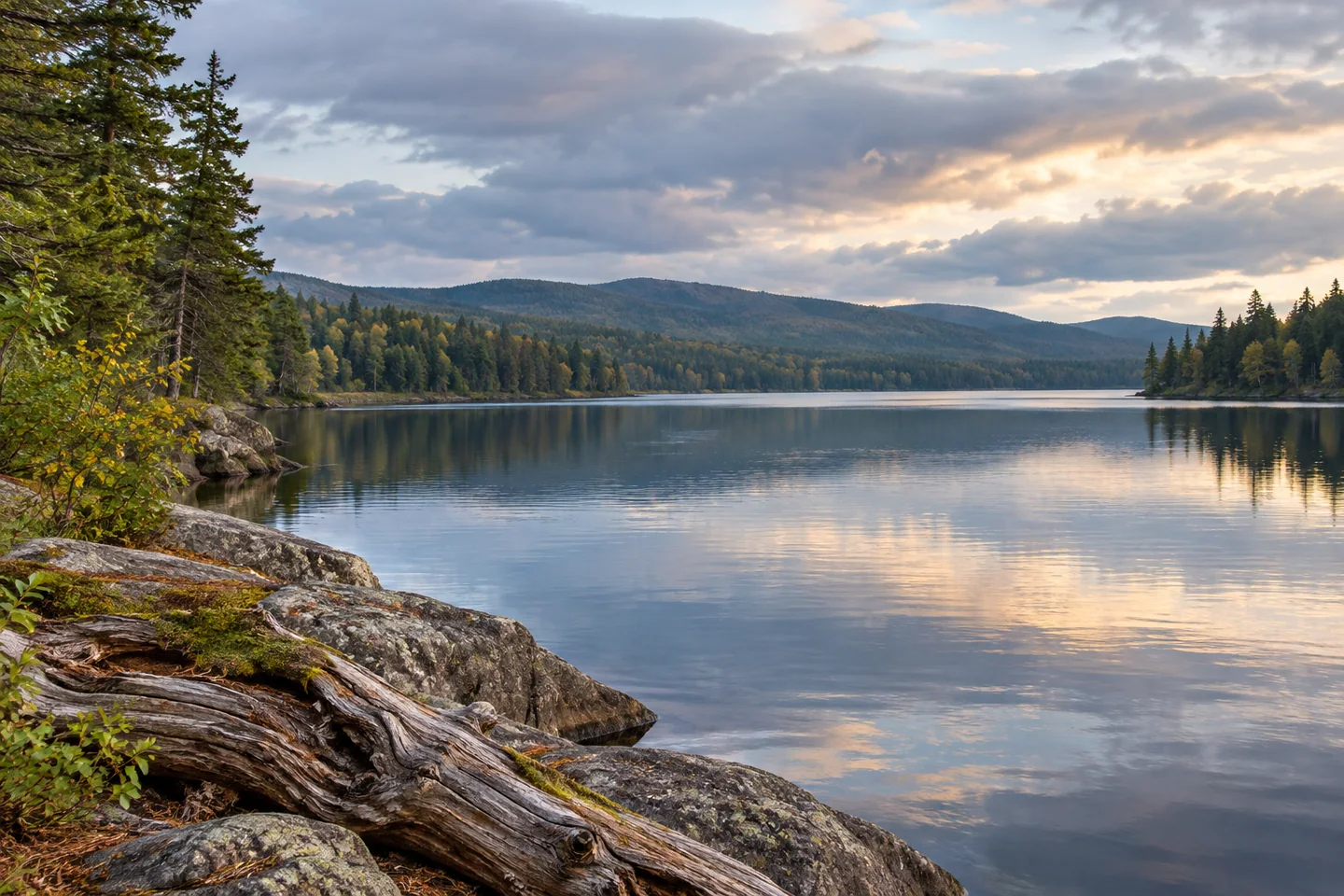
Churchill Lake offers an Allagash visit at the meeting of broad water and a former logging community. Its outlet area can be a starting place for a river expedition, but the lake deserves attention before anyone moves downstream. Wooded water, the remnants of a supply depot and a distinctive fisheries history give a lake-focused outing several ways to develop. The useful first decision is whether the plan concerns the lake itself or a much larger journey beyond it.
The Waterway guide identifies Churchill Dam among its vehicle access points. Arrange the applicable arrival and registration before traveling, and confirm with the land manager which lake-side entry suits the intended activity. A dam is a boundary to plan around, rather than a feature to approach casually in a boat. Keep any exploration within permitted areas and establish a clear return. A guided arrangement can help connect remote-road travel, equipment and the group's abilities into one coherent visit.
The depot's past makes the shore more than a launching area. The state's historical account describes Edouard Lacroix's Madawaska Company operating a headquarters here from 1926 to 1938. A road, supply buildings and boat transport supported the lumber camps. The community included families as well as transient workers, with many trades needed to keep the operation functioning. Looking at this history changes the sense of an empty forest landscape: the water once connected an organized workplace and a small settlement.
Two surviving buildings express that social life particularly clearly. Maine Historic Preservation Commission identifies the boarding house and storehouse as important remnants of the logging base. The boarding house combined accommodation, cooking, meals and administration. Its significance lies in a building type shaped by communal work, while the storehouse supplied the wider operation. Appreciate those relationships from authorized access; historical recognition alone does not establish that every building can be entered during a particular visit.
The lake's scientific history concerns another kind of connection. A state survey revised in 1990 describes water levels managed at the outlet and a fishway, along with spawning and nursery habitat in tributaries. It also records concern about oxygen conditions in the deeper water during summer. These observations are a dated snapshot of a changing system. They help explain why temperature, oxygen and movement between connected waters matter to fish, while contemporary rules and conditions must guide an actual angling plan.
Christi Holmes's original personal account, republished by Canoe the Wild in 2022, adds a more immediate lake scene. Traveling with her mother and a guided group, she described changing the expedition's starting point because of the forecast, visiting the depot museum and paddling to a Churchill Lake campsite in rain. Her story gives comfort, learning and company a place alongside mileage. Its museum visit and weather belong to that trip; they are useful context for asking about the present arrangements rather than guarantees to put into an itinerary.
For a lake-focused visit, leave time to consider both the open water and the shore's human scale. A close timber detail viewed from a permitted position can tell a different story from a broad wooded horizon. Pack the camera away whenever navigation or landing requires attention, and keep the outing's reach responsive to conditions. Churchill Lake rewards an informed pause: an opportunity to understand the water and the community before treating the outlet as the beginning of the next stage.
Fun facts
- Churchill Depot served as a company headquarters during 1926–38.
- A boarding house combined living, dining and administrative functions.
- The lake has a documented history of water-level and fisheries management.
Before you go
- Confirm the appropriate lake-side arrival and registration before departure.
- Plan around the dam and keep within permitted access.
- Ask directly about present access to historic buildings.
- Use historical ecological findings as background for contemporary research.
Visitor perspectives
- Christi Holmes’s 2022 account recalls a forecast-led change of starting point, a depot museum visit and a rainy paddle to a Churchill Lake camp with her mother and a guided group.
Capture
- From a permitted position, compare a timber detail with the wider wooded water.
- Keep equipment packed while navigating or landing.
 Eagle Lake, Allagash
 Telos Lake and Round Pond
 Webster Lake
Social
Churchill Lake can be a destination before a downstream journey begins.
The former depot connects lake scenery with the lives of woods workers and families.
A communal building can reveal how a remote workplace functioned.
The lake’s history includes ecological questions as well as industrial ones.
A personal trip account can suggest good questions for the land manager.
Allow conditions to shape the reach of a lake outing.
Look for both the water’s broad scale and a close detail of the working past.
Would your first pause be beside the lake or near the depot’s historic structures?
Hashtags