 Cre8Travel
CRE8TRAVEL · MAINE PLACES
Big Lake
Big Lake: Water, Community and Living History
Discover
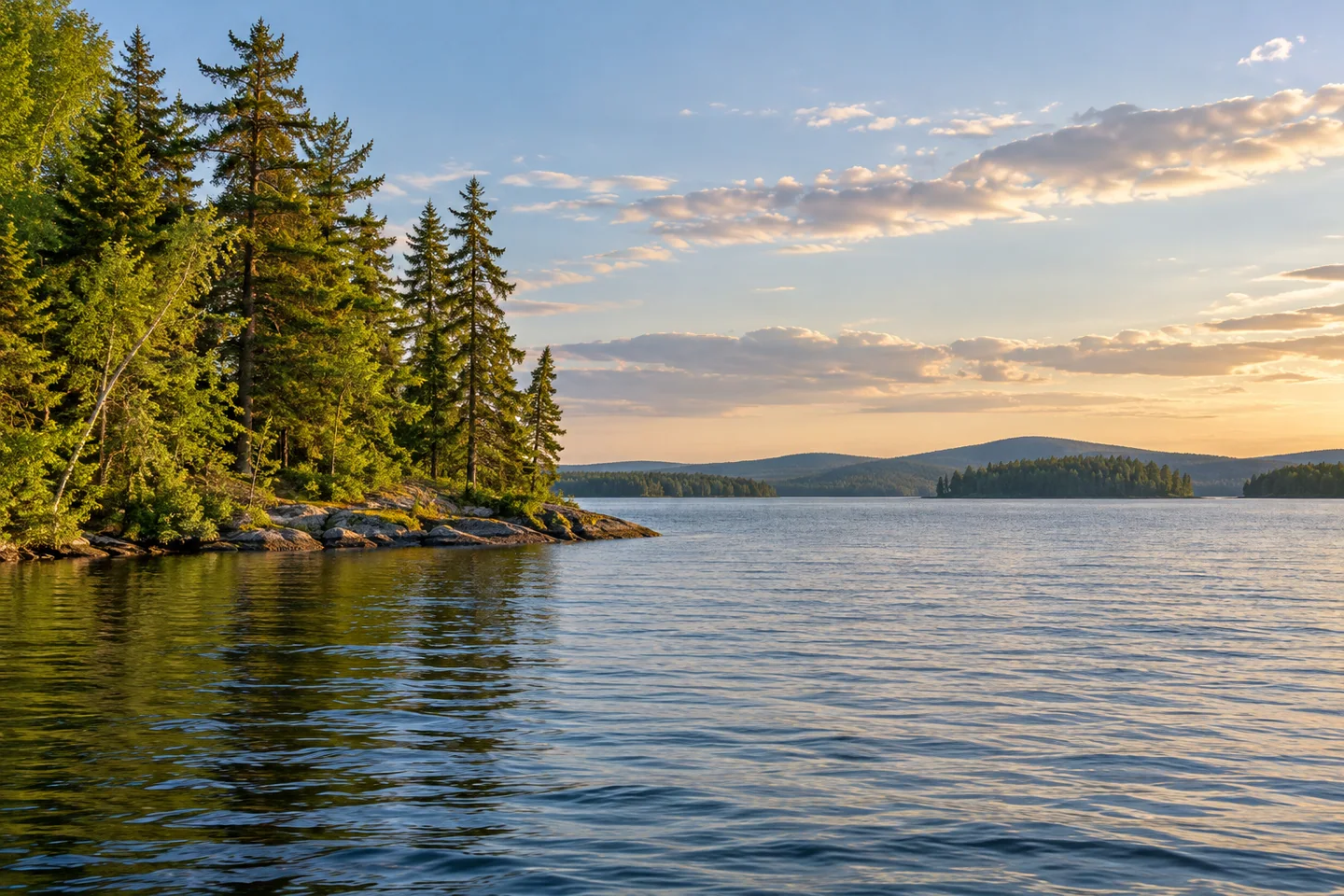
Big Lake has a verified public starting point at the southern end of Water Street in Greenlaw Chopping Township. Downeast Lakes Land Trust identifies that landing on the lake's western shore. Begin with the public entry and a plan suited to this extensive water body, rather than assuming every island or inviting-looking bank is a permitted place to land. The lake's islands and coves make the shape of the outing a real choice: a short exploration near the entry can have a different purpose from a journey to a distant bay.
The state's fisheries survey, revised in 1999, explains some of that variety beneath the surface. It describes rocky shoals and suitable spawning substrate as important smallmouth-bass habitat, with crayfish among the bass's favored foods. Salmon had a more complicated origin: some moved down from West Grand, some were stocked near the lower end of Grand Lake Stream, and some were wild fish produced in the stream's spawning and nursery habitat. These are historical management findings, not a forecast of today's catch. They show why the water cannot be reduced to a single fishing label. A rocky shallow and a connecting stream contribute differently to the same broad lake system.
The cultural landscape is equally specific. The Maine Indian Tribal-State Commission identifies the lake as Kci Monosakom and describes Kuwesuwi Monihq, or Pine Island, as its largest island. Its account of a 2022 reclamation celebration records the return of culturally significant land to the Passamaquoddy Tribe in 2021. That history belongs to the lake's present identity, rather than only to a distant past. Recognizing it does not make the island a public attraction or authorize a landing. A visitor can appreciate the wider view while respecting the distinction between public water access and particular places held within a living community's history.
The Indian Township Tribal Government's 2024 environmental report documents another relationship with the lake: the sustained work of responding to invasive variable watermilfoil. It describes tribal staff, trained divers, residents, the state and other partners surveying and removing plants. Repeated checks after removal were essential because finding an infestation once did not end the problem. The report also records community training in plant recognition and the practical support needed to keep field teams working. These dated findings add a stewardship story to a recreation visit. Follow current inspection and launch guidance and avoid carrying plant fragments between waters; the attractive view is supported by work that a passing boat may never see.
David R. Kotok's original account, published in 2020, recalls a June 2018 fishing day with guide Ray Sockabasin. The pair worked the weedy edge near Musquash Bay and landed an unusually large pickerel through patient teamwork before releasing it. The narrative identifies the fish as beyond the range of their six-pound scale, so no exact weight should be invented. It is a particular memorable catch, not an expectation for another angler. Its strongest detail is the collaboration between guide and visitor, each responding to the fish and the boat rather than rushing the moment.
Fun facts
- Historical fisheries work identifies three sources of salmon entering the lake’s fishery.
- Pine Island returned to the Passamaquoddy Tribe in 2021.
Before you go
- Use the identified Water Street landing and respect separate shore permissions.
- Follow current boat-inspection guidance to avoid moving plant fragments.
Visitor perspectives
- Kotok recalled teamwork with guide Ray Sockabasin in June 2018 while landing and releasing a large pickerel near Musquash Bay.
Capture
- From a stable boat position, use a nearer wooded point against the open water to convey the distance between shores.
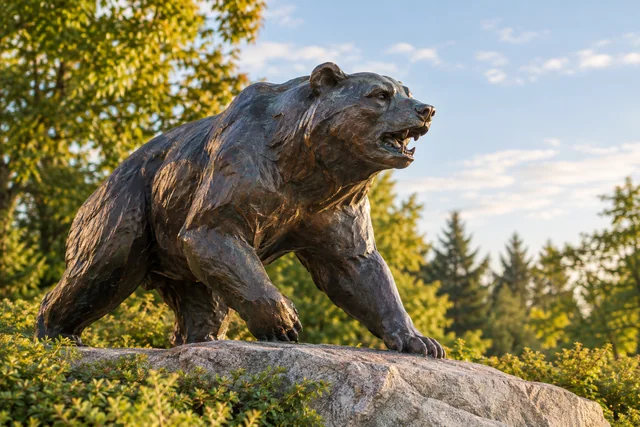 Fighting Black Bear Statue, Orono
 Courthouse Gallery Fine Art and Art Park
 Ethel H. Blum Gallery
Social
A public landing is identified at the end of Water Street.
Rocky shoals contribute habitat for smallmouth bass.
Salmon historically reached the fishery from several sources.
The lake is also known as Kci Monosakom.
Pine Island’s return belongs to the lake’s living cultural history.
Tribal and partner teams have worked against invasive watermilfoil.
One 2018 fishing recollection centers on teamwork and release.
A wooded point against open water can show the lake’s scale. #Cre8Travel
Hashtags