 Cre8Travel
CRE8TRAVEL · NEW YORK PLACES
Williamsbridge Oval
Williamsbridge Oval: A Reservoir Reimagined as a Bronx Park
Discover
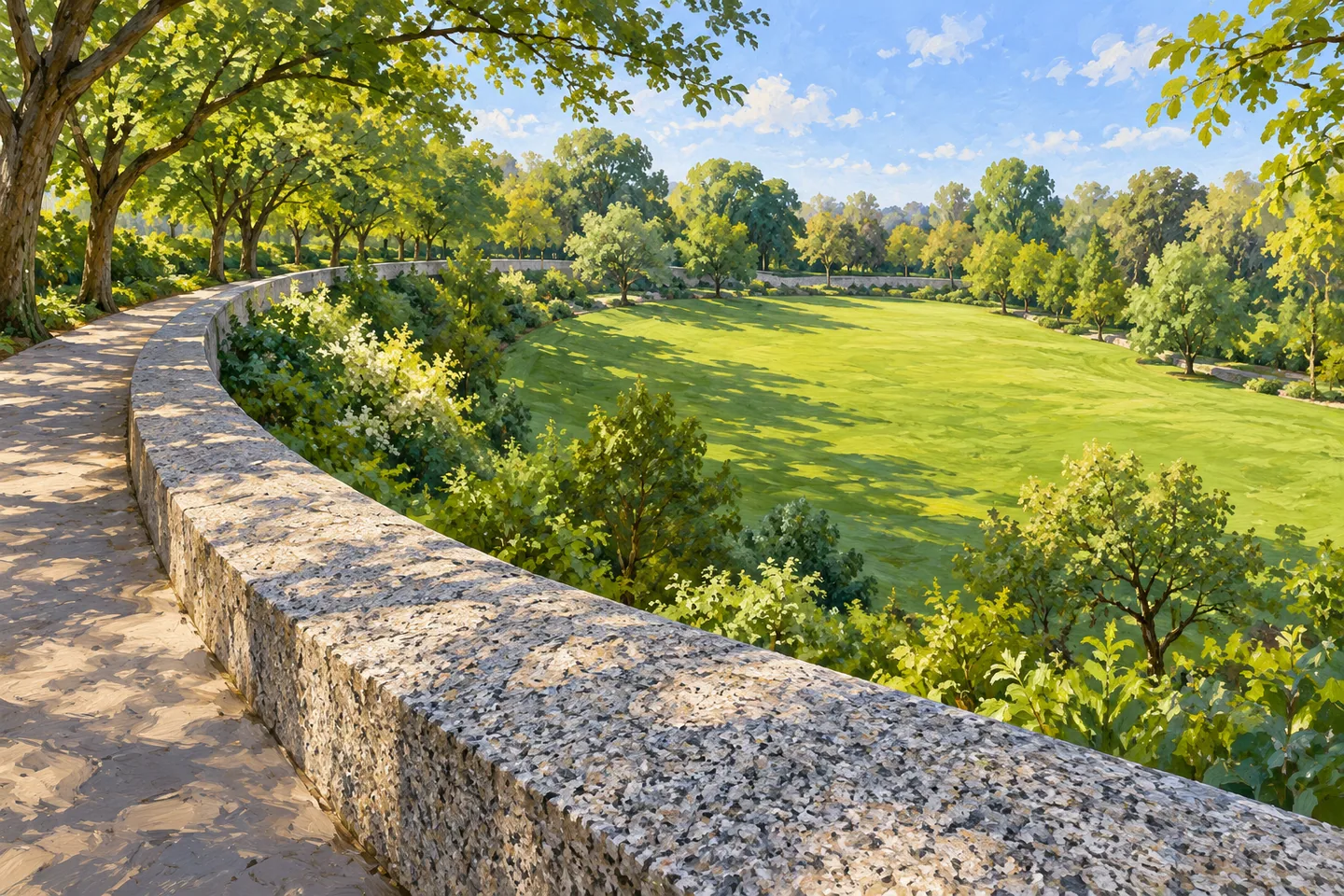
The shape of Williamsbridge Oval tells its story before a date or a name does. In Norwood, a raised ring of paths surrounds a lower central recreation area, giving the park an unusually clear outline. The form follows a former reservoir. A walk around the perimeter becomes a way to see how a piece of water infrastructure was adapted for everyday neighborhood recreation.
The reservoir opened in 1889 as part of the Bronx and Byram Rivers water system. It received water through a pipeline from Westchester County, serving the western Bronx before larger water systems reduced its importance. After a period as a backup supply, it was drained in 1925. The Parks Department acquired the obsolete reservoir in 1934, and the new park opened in 1937.
The transformation involved reshaping the ground. Designers lowered the reservoir embankment and raised its basin, creating the sunken recreation space and elevated promenade. Those changes explain why the park can feel both enclosed and open: the perimeter provides a broad circuit, while the center gathers activity below it. Follow the changing relationship between the two levels as you walk, looking at where stairs, entrances and sloping paths connect them.
Several traces of the reservoir survived the conversion. The entrance tunnel cuts through the old embankment, and reused granite appears in walls and in the recreation center. The stone makes the earlier structure part of the park's visible character. Instead of removing every sign of its former purpose, the design gave useful materials and landforms a new role.
The recreation center anchors the southern end. Architect Aymar Embury II designed a building with a central entrance and gently curving wings, combining the streamlined forms of Art Moderne with a strong sense of symmetry. Its granite exterior sets it apart from the brick and concrete commonly used for recreation buildings of the period. From across the central area, the building helps make the park's organized geometry easy to read.
That geometry extends into the landscape. The National Register nomination describes a Beaux Arts inspired radial plan, with paths and rows of trees emphasizing the oval. Sports and play occupy distinct areas within it. A leisurely circuit and a visit centered on a playground can therefore use the same park differently, with the elevated paths offering an overview of the arrangement.
The park continued to evolve after its opening. Early twenty-first-century work renewed playgrounds and the central playing surface, while a recreation-center rehabilitation completed in 2013 restored the granite exterior and reorganized interior facilities. These layers of change sit within the older plan, showing how a neighborhood park can accommodate new uses while retaining a recognizable shape.
For a visit, choose the entrance and facilities that suit your group. NYC Parks lists different accessibility features for individual playground areas, including limited access at the Reservoir Oval East and Holt Place location. Check the current facility listing and recreation-center programme if either will determine your plans. The surrounding historic houses offer separate destinations; within the Oval itself, the most rewarding starting point is the relationship between the ring, the lower ground and the reused stone.
Fun facts
- The reservoir opened in 1889 and was drained in 1925.
- The site became a public park in 1937.
- Granite from the reservoir was reused in the recreation center.
- A raised perimeter surrounds the lower central recreation area.
Before you go
- Use the oval promenade to understand the park’s two levels.
- Choose a playground entrance after checking its specific accessibility information.
- Check the recreation-center programme separately from outdoor park visiting.
Capture
- Frame the contrast between the elevated paths and the lower central area from a public path.
- Look for the texture of reused granite and the recreation center’s curving wings; keep entrances and active play areas clear.
 Yellow Lake State Forest
 Stuyvesant Square
 Powell's Cove Park
Social
Williamsbridge Oval turns a former Bronx reservoir into a distinctive neighborhood landscape. #Cre8Travel
Its raised ring and lower central area preserve the logic of the old reservoir.
The reservoir opened in 1889; the park opened in 1937.
An entrance tunnel and reused granite connect the park with its earlier purpose.
Aymar Embury II designed the granite recreation center with gently curving wings.
The oval paths and rows of trees make the park’s geometry easy to follow.
Check individual playground access and recreation-center activities when planning your visit.
What older use can you read in the shape of a familiar park?
Hashtags