 Cre8Travel
CRE8TRAVEL · NEW YORK PLACES
Palace Theatre
Albany’s Palace Theatre: A Movie House Finds New Acts
Discover
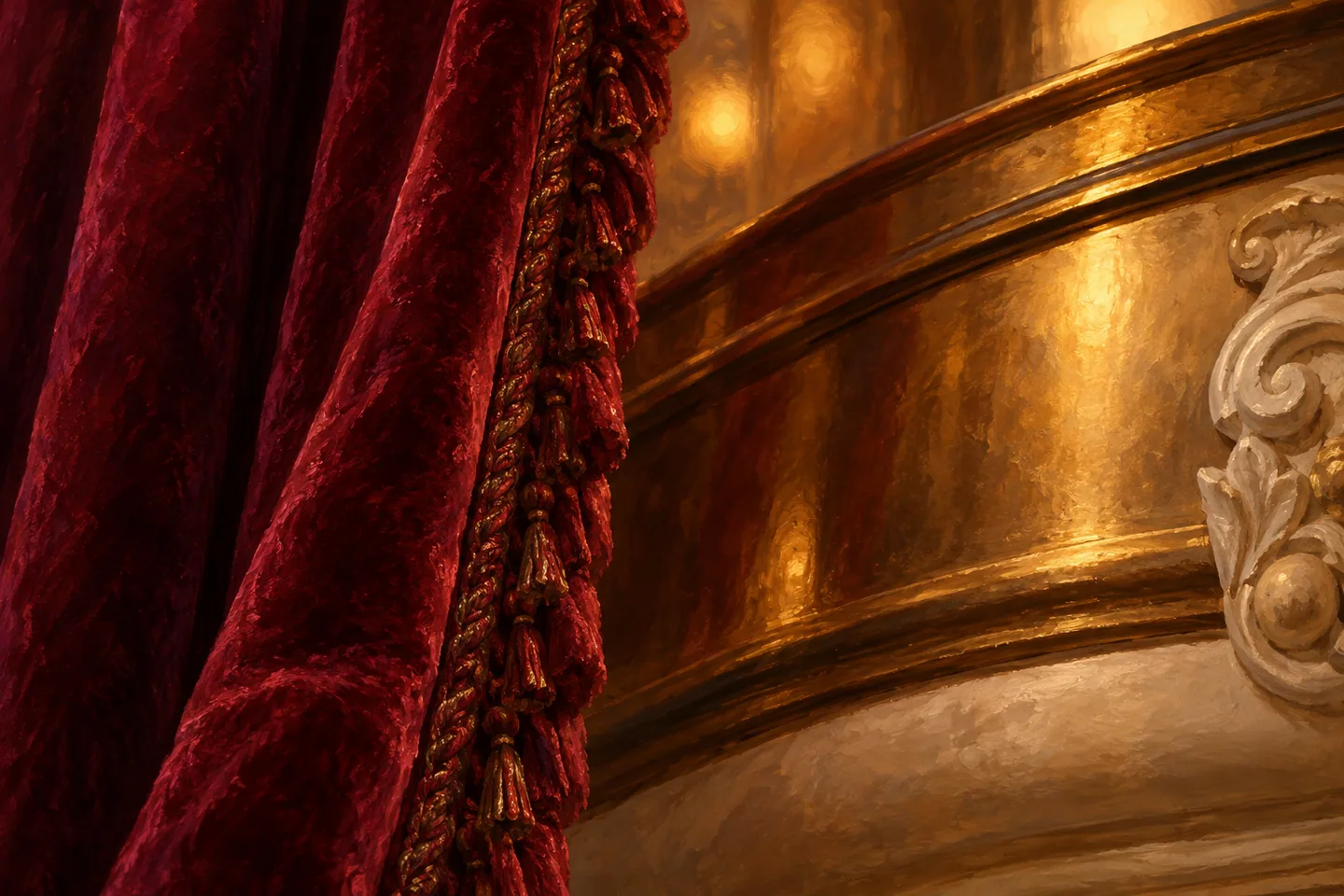
A performance at Albany's Palace Theatre takes place inside a building with a performance history of its own. At 19 Clinton Avenue, the theatre began as an RKO movie palace, pairing films with vaudeville. Its later role as a civic auditorium and live entertainment venue adds another chapter. Before concentrating entirely on the stage, give some attention to the surviving decorative details that connect today's evening out with the building's original purpose.
Construction began in June 1930, and the doors opened in October 1931. Architect John Eberson designed an elaborate Austrian Baroque interior with atmospheric elements in the auditorium. The operator's history identifies features that remain from that early scheme: a brass chandelier in the main lobby, murals by Andrew Karoly and Louis Szanto, and plaster beams in the fore-lobby painted to resemble carved wood. The distinction between material and appearance makes a useful theme for looking closely.
These details belonged to a building that presented vaudeville acts between feature films. The theatre adapted to the era of talking pictures and became a first-run movie venue. Its later difficulties were part of wider changes in entertainment and city life, including television and suburban development. A renovation in 1960 did not resolve the problems, and the Palace closed in September 1969. Its present activity should not obscure that interruption in its history.
The City of Albany subsequently purchased the building for use as a civic auditorium. The theatre entered the National Register of Historic Places in November 1979. A nonprofit organization established in 1984, and incorporated in 1989, took on its operation. Those different milestones describe preservation as a process involving ownership, recognition and management, rather than a single moment when an old building was simply saved.
Work in 2002 and 2003 included a new LED marquee that replicated the original 1931 design. That mixture of newer technology and an earlier appearance continues the theatre's pattern of adaptation. The venue's programme now encompasses different kinds of live performance as well as film. Check the current event listing and choose a specific performance; an active theatre is not the same thing as a museum with continuous public access to its auditorium.
Seating deserves attention before buying tickets. The operator says wheelchair-accessible seating is available only on the Orchestra level and that there is no public elevator. Contact the box office about access needs rather than assuming all sections are equally reachable. The FAQ also explains that seats in many sections use alternating odd or even numbers, so apparently nonconsecutive ticket numbers can still describe adjacent places.
Confirm the camera policy for your particular show. The general policy excludes flash and professional lenses, while artists can impose additional restrictions. Follow staff directions and keep the experience of other audience members in mind. A short look at the lobby can be rewarding when permitted, but the visit should work around the event you have booked. The Palace's appeal lies in that meeting of an old entertainment setting and the new performance unfolding within it.
Fun facts
- Construction began in 1930 and the Palace opened in October 1931.
- John Eberson designed its Austrian Baroque interior.
- The theatre closed in September 1969 before its later civic and performing-arts roles.
- A 2002–2003 renovation included an LED marquee based on the original design.
Before you go
- Choose a specific event and confirm entry arrangements.
- Ask the box office about access needs before booking a seating section.
- Check the event-specific camera policy, including any artist restrictions.
- Use the seating chart before assuming odd or even ticket numbering separates your party.
Visitor perspectives
Tripadvisor reviewer Afoodie65, visiting in May 2024, praised the building and expressed appreciation that it had been preserved. This is one visitor’s opinion.
Capture
- If allowed, compare painted plaster beams with other lobby materials without blocking circulation.
- Check permission for each show; general camera guidance does not override an artist’s restrictions.
 UB Anderson Art Gallery
 Kenan House Gallery
 The Frank S. McCullough, Jr. Hawkins Point Visitors Center
Social
Albany’s Palace Theatre opened as an RKO movie palace in October 1931. #Cre8Travel
Architect John Eberson gave the interior an ornate Austrian Baroque character.
A brass lobby chandelier and original murals are part of the operator-described surviving decoration.
The Palace closed in 1969 before the city purchased it for a civic auditorium.
National Register recognition followed in 1979.
A later LED marquee took its design from the original 1931 version.
Book with access needs in mind: the operator identifies Orchestra-level accessible seating and no public elevator.
Which theatre detail catches your eye before the performance begins?
Hashtags