 Cre8Travel
CRE8TRAVEL · NEW YORK PLACES
Michael Kudish Natural History Preserve
Michael Kudish Natural History Preserve: Reading a Forest’s Earlier Life
Discover
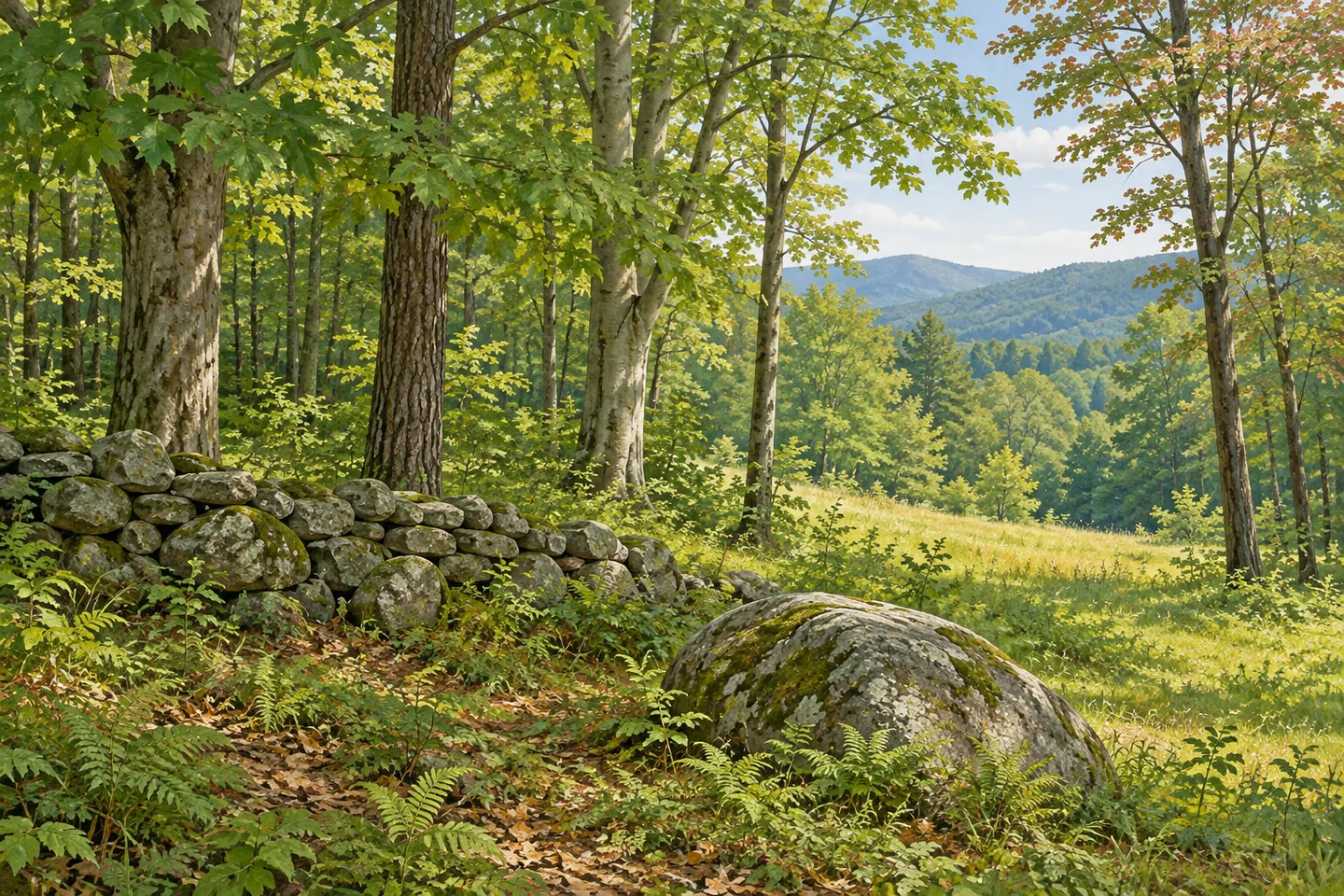
Michael Kudish Natural History Preserve connects a protected woodland setting with the study of how Catskill forests came to be. The organization stewards 101 acres in the Stamford area and supports research, education and creative work concerned with the region's natural history. Stone walls, mature trees, open ground and glacial rock provide a physical setting for that purpose. A visit can begin with the idea that a forest contains evidence of earlier landscapes as well as the living things visible today.
The preserve's namesake has spent decades studying forest history. Michael Kudish's work includes The Catskill Forest: A History, published in 2000, alongside writing on Adirondack vegetation and regional railroads. The preserve's mission draws on that broader attention to how landscapes develop and how people have used them. For a visitor, the connection offers a particular way of looking: the woodland is a place to ask questions about the past, rather than only a backdrop to a walk.
The recreation description identifies handmade stone walls beneath mature maple, beech and black cherry. It interprets those walls as likely boundaries of former pasture. Keeping that qualification matters, since a surviving wall does not by itself supply the exact date or complete story of the field it once bordered. What is clear is the juxtaposition: a human-made line remains within ground now occupied by trees, making earlier use part of the present woodland setting.
Open fields and native blueberries provide another contrast, while a boulder associated with glacial activity adds a different timescale. These documented features make the landscape a mosaic, with several kinds of evidence close enough to belong to the same general woodland story. Notice what the appropriate route actually reveals rather than expecting every feature to appear together in one view. The relationship among field, forest and stone is more useful than a checklist of objects to find.
Research at the preserve includes mapping, plant inventories, forest history above former pasture limits and work on mosses and fungi. These are investigations, not a finished explanation for every part of the land. They give observation a purpose while leaving room for questions. The history of logging, the boundary of an old pasture and the plants now present can become different lines of inquiry within the same natural-history approach.
The online flora project began in 2011 and compares the preserve's surrounding watershed with the Dry Brook Valley. Its geographical scope extends beyond the 101-acre property, an important distinction when reading the species records. A research inventory is therefore different from a list of plants guaranteed along a public route. The comparison shows how the preserve's work reaches into the wider Catskill landscape while remaining rooted in a particular protected holding.
The organization also uses visual and performing arts to encourage attention to nature and describes primitive temporary stays within its broader program. Confirm current visitor arrangements before planning around a particular activity or overnight visit. The clearest introduction is the physical setting and the questions it supports: old walls beneath trees, changes between open and wooded ground, and natural history studied across different scales. Those connections give this preserve a distinctive purpose within the Catskills.
Fun facts
- The organization stewards 101 acres of permanently protected land in the Stamford area.
- Michael Kudish’s The Catskill Forest: A History was published in 2000.
- The recreation description identifies stone walls beneath mature maple, beech and black cherry.
- The flora project began in 2011 and includes a surrounding watershed extending beyond preserve boundaries.
Before you go
- Confirm current arrangements before planning a particular program or overnight stay.
- Keep the wider watershed inventory separate from plants documented inside the visitor property.
- Observe old walls and vegetation in place without collecting or disturbing them.
Capture
- From legitimate access, compare visible stonework, trees and open ground.
- Use the actual setting rather than attempting to reproduce a historical pasture from inference.
- Conceptual images should avoid exact stone walls, buildings, proposed structures or identifiable rare plants.
 Mohonk Preserve
 RBTL West Herr Auditorium Theatre
 Poestenkill Community Forest
Social
Michael Kudish Natural History Preserve links protected land with the study of Catskill forest history. #Cre8Travel
The organization stewards 101 acres in the Stamford area.
Its namesake’s The Catskill Forest: A History was published in 2000.
Stone walls beneath mature trees offer one physical clue to earlier land use.
Open fields, native blueberries and glacial rock add different landscape elements.
Mapping and plant inventories are part of a research program, not a promise of every species on every walk.
The flora inventory covers a watershed beyond the property’s boundaries.
Confirm visitor arrangements, then appreciate how the setting encourages questions about a forest’s earlier life.
Hashtags