 Cre8Travel
CRE8TRAVEL · NEW YORK PLACES
Marsh Pond State Forest
Marsh Pond State Forest: Sphagnum, Sundew and Woodland
Discover
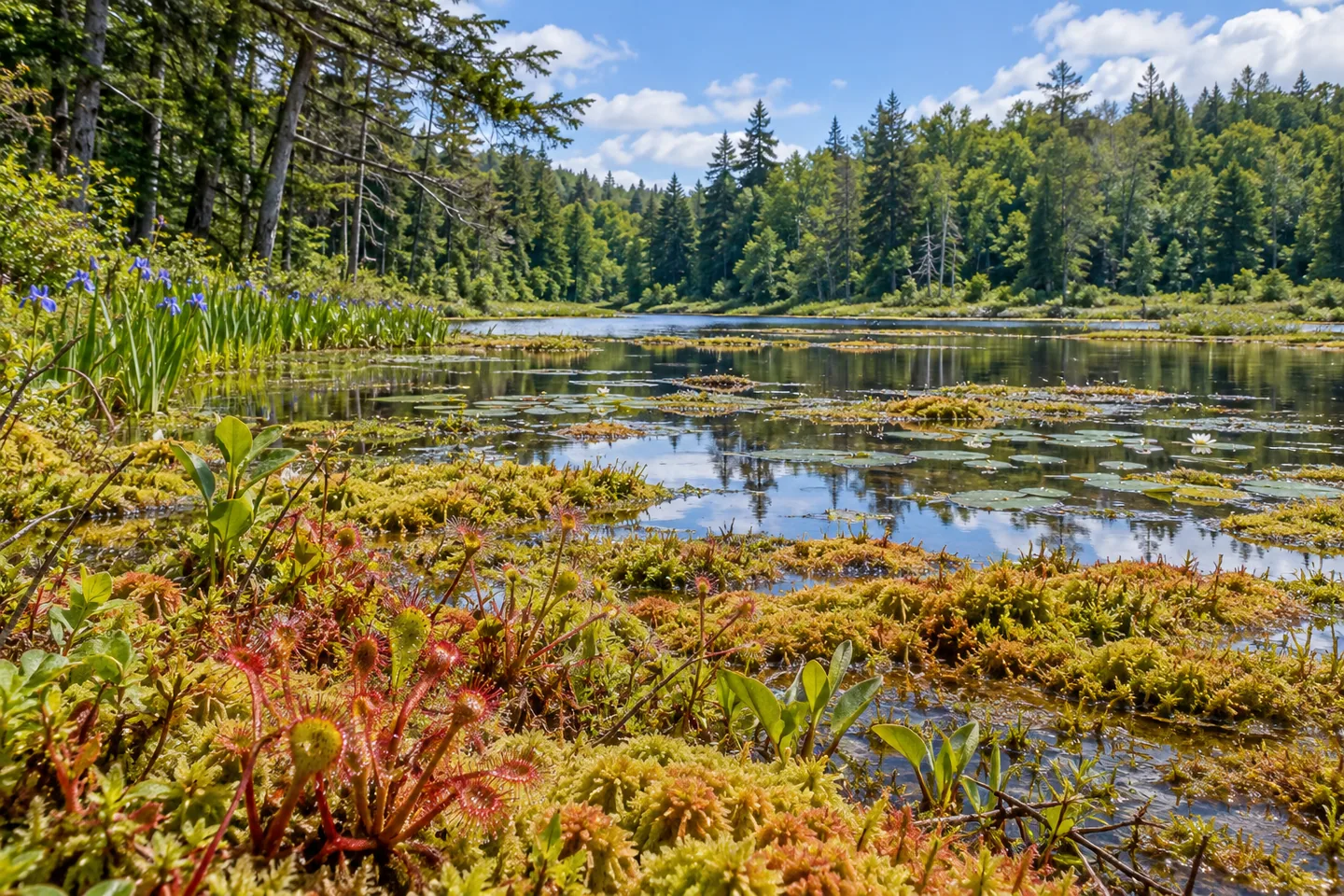
Marsh Pond State Forest invites a closer look at the border between woodland and water. The 893-acre property in Sanford, Broome County, contains a pond with a floating sphagnum mat and documented carnivorous plants, including sundew. Beyond the pond, hardwood and hemlock stands tell a different part of the story. The interest lies in those contrasting environments, rather than in a checklist of built attractions.
Water is an obvious starting point. DEC identifies paddling among the activities here, and its description places particular emphasis on the pond. Floating sphagnum gives the scene a distinctive texture. Sundew adds botanical interest, but a plant named in a forest description is not a promise that every visitor will find it beside a convenient access point. Observe delicate vegetation without treating the moss mat as a walking surface or collecting plants for a closer look.
The pond supports small fish, primarily brown bullhead. Turtles, warblers, water lilies and blue flag irises also appear in DEC's description of the pond-side setting. They offer subjects to notice when conditions allow, rather than a guaranteed display at any time of year. For a photograph, consider the relationship between water, floating vegetation and the woodland edge before relying on an animal or flower to complete the frame.
There are no formal trails in Marsh Pond State Forest. Hiking is allowed unless otherwise posted, but that is an important planning distinction from arriving for a marked walking circuit. A map and an honest assessment of your navigation skills matter more than a promise of carefree wandering. DEC recommends using appropriate outdoor-safety practices and considering an outdoor guide when woodland experience is limited.
The western side of Bryce Road contains mature white ash and hemlock stands, both near the roadside and at the top of a steep slope. DEC describes these areas as developing old-growth characteristics after decades without timber harvesting. That is more precise than calling the entire forest ancient or untouched. Elsewhere, the management account records timber harvesting on 109 acres in 2005, illustrating how different parts of the same property have different histories.
The forest was acquired through separate purchases in 1932 and 1933. Its cover includes northern hardwoods, hardwood-hemlock and oak, while elevations run from about 1,500 feet to more than 1,800 feet. A stream and mixed hardwood-hemlock stands occupy the southeastern section. Thinking of these features together helps broaden a visit beyond a single pond view without assuming that formal paths connect them.
Two primitive campsites are described near the pond. For dispersed camping elsewhere, DEC states the usual 150-foot separation from roads, trails and water; stays beyond three nights or groups of ten or more need a ranger permit. Consult the current map and property guidance to distinguish designated sites from dispersed-camping rules rather than applying one rule indiscriminately to every place you see.
Marsh Pond Road and Bryce Road meet at the pond's northern end. DEC identifies three parking areas on Marsh Pond Road and two on Bryce Road. Beaver Pond State Forest is listed among the nearby lands, with Binghamton identified for amenities. Marsh Pond also belongs to the wider Broome State Forests management unit. For a day here, however, the most useful focus stays local: distinctive pond vegetation, the contrast of hardwoods and hemlock, and an unmarked woodland that deserves a considered approach.
Fun facts
- Marsh Pond State Forest covers 893 acres in Sanford, Broome County.
- The pond supports floating sphagnum and documented carnivorous plants including sundew.
- The property was acquired through purchases in 1932 and 1933.
- Western white ash and hemlock stands are described as developing old-growth characteristics.
- There are no formal trails in the forest.
Before you go
- Plan for unmarked woodland rather than a signed trail circuit; review the official map and your navigation skills.
- Observe sphagnum and sundew without stepping onto floating vegetation or collecting plants.
- Consult current guidance for designated pond-side sites versus dispersed camping and ranger permits.
- Use the parking areas identified along Marsh Pond Road and Bryce Road.
- If your woodland skills are limited, follow DEC’s suggestion to consider an outdoor guide.
Capture
- Frame floating sphagnum and water from appropriate access without stepping onto fragile vegetation.
- Compare the vertical forms of mature hemlock and white ash near Bryce Road; do not assume every stand is old growth.
- Photograph water lilies or blue flag irises only when actually present, using the surrounding pond setting rather than promising a seasonal display.
 Cascade Valley State Forest
 Melondy Hill State Forest
 Skyline Drive State Forest
Social
Marsh Pond State Forest covers 893 acres in Sanford, Broome County. Its pond and woodland offer two different ways to look closely at a landscape. #Cre8Travel
Floating sphagnum gives Marsh Pond a distinctive texture. Carnivorous plants including sundew are documented here; observe without disturbing the vegetation. #Cre8Travel
Marsh Pond has no formal hiking trails. Plan for unmarked woodland and consult the official map rather than expecting a signed walking circuit. #Cre8Travel
The state acquired Marsh Pond’s land in 1932 and 1933. Its woodland history includes both timber management and stands developing old-growth characteristics. #Cre8Travel
Mature white ash and hemlock occur west of Bryce Road, near the roadside and above a steep slope. Tree form can be a photographic subject in its own right. #Cre8Travel
DEC documents brown bullhead in Marsh Pond. Check current fishing requirements before turning a landscape visit into a fishing trip. #Cre8Travel
Two primitive campsites are described near Marsh Pond. Review current designated-site and dispersed-camping guidance before planning an overnight stay. #Cre8Travel
At Marsh Pond, compare the pond’s floating vegetation with the woodland beyond. Which texture would you put at the center of a photograph? #Cre8Travel
Hashtags