 Cre8Travel
CRE8TRAVEL · NEW YORK PLACES
Long Pond Park
Long Pond Park: Woodland and Wetland on Staten Island’s South Shore
Discover
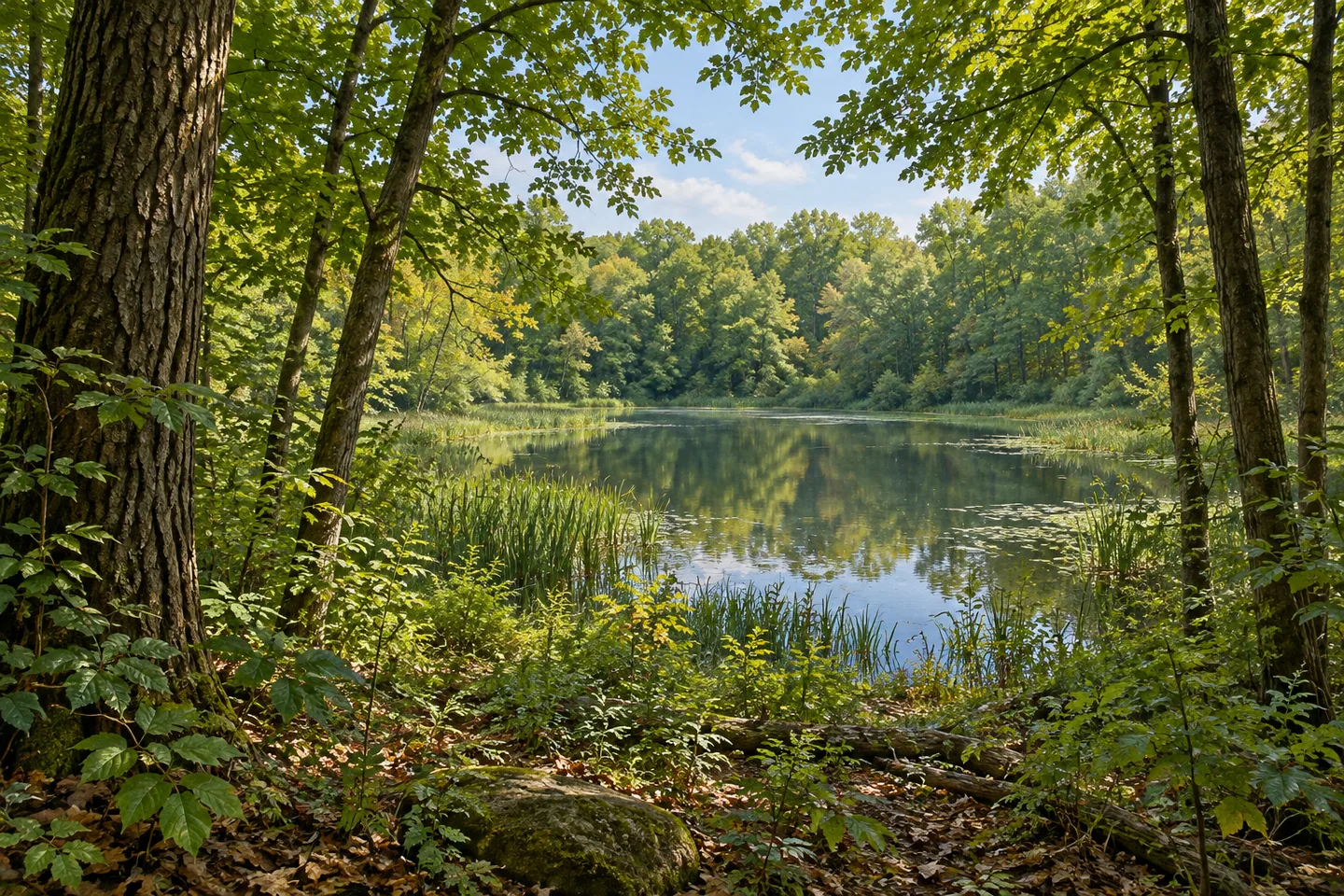
Long Pond Park brings woodland, wetland and a naturally formed pond into the landscape of Staten Island’s South Shore. NYC Parks identifies it as a nature area around Page Avenue, Hylan Boulevard and Amboy Road, with hiking trails providing a way to experience its quieter setting. The appeal is in the relationships between water, trees and ground cover, giving a walk more to notice than a single destination at the end of a path.
Begin by looking at the shape of the ground. A Parks natural-area inventory from 2014 describes several ponds occupying kettle depressions associated with the island’s glacial past. That history gives the small changes in level a larger context. A hollow, a wooded rise and a patch of water can be read as parts of a landscape formed over a much longer period than the surrounding streets.
The same report places the park’s water bodies within the Bluebelt stormwater drainage system. This adds a second way to understand the setting: natural features also have a role in the functioning of nearby neighborhoods. A visitor can appreciate the appearance of water and woodland while recognizing that the landscape has practical relationships beyond the park boundary.
Trees give those broad ideas a more immediate scale. The historical inventory recorded mature beech, oak and hickory woodland, with shrubs and smaller plants beneath it. Instead of turning a visit into a species checklist, look at the arrangement of layers. Notice where branches overlap, how trunks divide a view and where lower vegetation catches the light between larger trees.
That approach works for families as well as independent walkers. Choose a small detail to compare along a public path: the texture of bark, the outline of leaves or the difference between open and shaded ground. A child can look for changing shapes without needing a name for every plant. Adults can use the same exercise to slow the pace and notice how one part of the woodland differs from another.
The park also belongs to a wider seasonal landscape. The official park description identifies its role along the Atlantic flyway. Think of a natural area as a place connected to movement beyond its immediate surroundings, even during a visit when no particular bird appears. Listening and watching can be rewarding without making a sighting the measure of a successful walk.
Outdoor learning is a documented part of its use. A February 2026 community-board report listed an adult hike through Long Pond Park’s trails. That dated programme points to the value of exploring the landscape with attention and curiosity. For an independent visit, leave time to pause at changes in vegetation and compare the broad scene with a close detail.
Use current Parks information and posted paths to choose an outing that suits your group. Keep clear of wetland planting and enjoy the pond from established public ground. For photographs, place a sequence of trunks in the foreground or use foliage to frame water where a public viewpoint allows. The park rewards an unhurried look at the connections between its woodland layers, the shape of the land and the water within it.
Fun facts
- The park combines woodland, wetland and a naturally formed pond.
- A 2014 Parks inventory describes glacial kettle depressions in the landscape.
- The official park description identifies a connection to the Atlantic flyway.
Before you go
- Use current Parks information and posted paths when choosing a walk.
- Compare woodland layers and changes in ground level at an unhurried pace.
- Observe wetland vegetation from established public ground.
Capture
- Use a sequence of tree trunks to give a woodland composition depth from a public path.
- Frame water with foliage where an established public viewpoint allows, without disturbing wetland plants.
 Watson's East Triangle Wild Forest
 Watkins Glen State Park
 Storm King Art Center
Social
Long Pond Park brings woodland and wetland to Staten Island’s South Shore. #Cre8Travel
A naturally formed pond gives this nature area its name.
Look at the shape of the ground as well as the trees.
A 2014 inventory describes glacial kettle depressions.
Compare a broad woodland view with the texture of a single trunk.
The park’s official description places it along the Atlantic flyway.
Use current information and posted public paths to plan a walk.
Which detail would make you pause: water, bark or a changing patch of light?
Hashtags