 Cre8Travel
CRE8TRAVEL · NEW YORK PLACES
Forsyth Nature Center
Forsyth Nature Center: Gardens, Animals and Everyday Ecology
Discover
Forsyth Nature Center brings several kinds of outdoor learning into one Kingston setting. A facility of the city's Parks and Recreation Department, it combines more than two dozen animal exhibits with gardens, a pond-life display and examples of everyday environmental care. The center stands on Lucas Avenue in Uptown Kingston, within Forsyth Park and beside the Dietz Stadium complex. Its manageable collection of subjects invites a visit that follows curiosity rather than a long list of stops.
The park's origins reach back to an 1855 gift. The Forsyth sisters donated eighteen and a half acres in memory of their father, Judge James C. Forsyth. The zoo opened in 1936 after a bear that had wandered into the park became its first exhibit, according to the center's historical account. That unusual beginning belongs to the institution's history, rather than a description of an animal encounter visitors should expect today.
The present animal exhibits span native, exotic and domestic animals. The facilities guide groups them into turtle and reptile houses, birds, birds of prey, and small and large mammals. These categories offer different observation themes without requiring a promised appearance by a particular individual. A mobile audio tour supplies another way to approach the exhibits, adding stories and information through a visitor's own device. Checking what is actually on view can shape the visit as it unfolds.
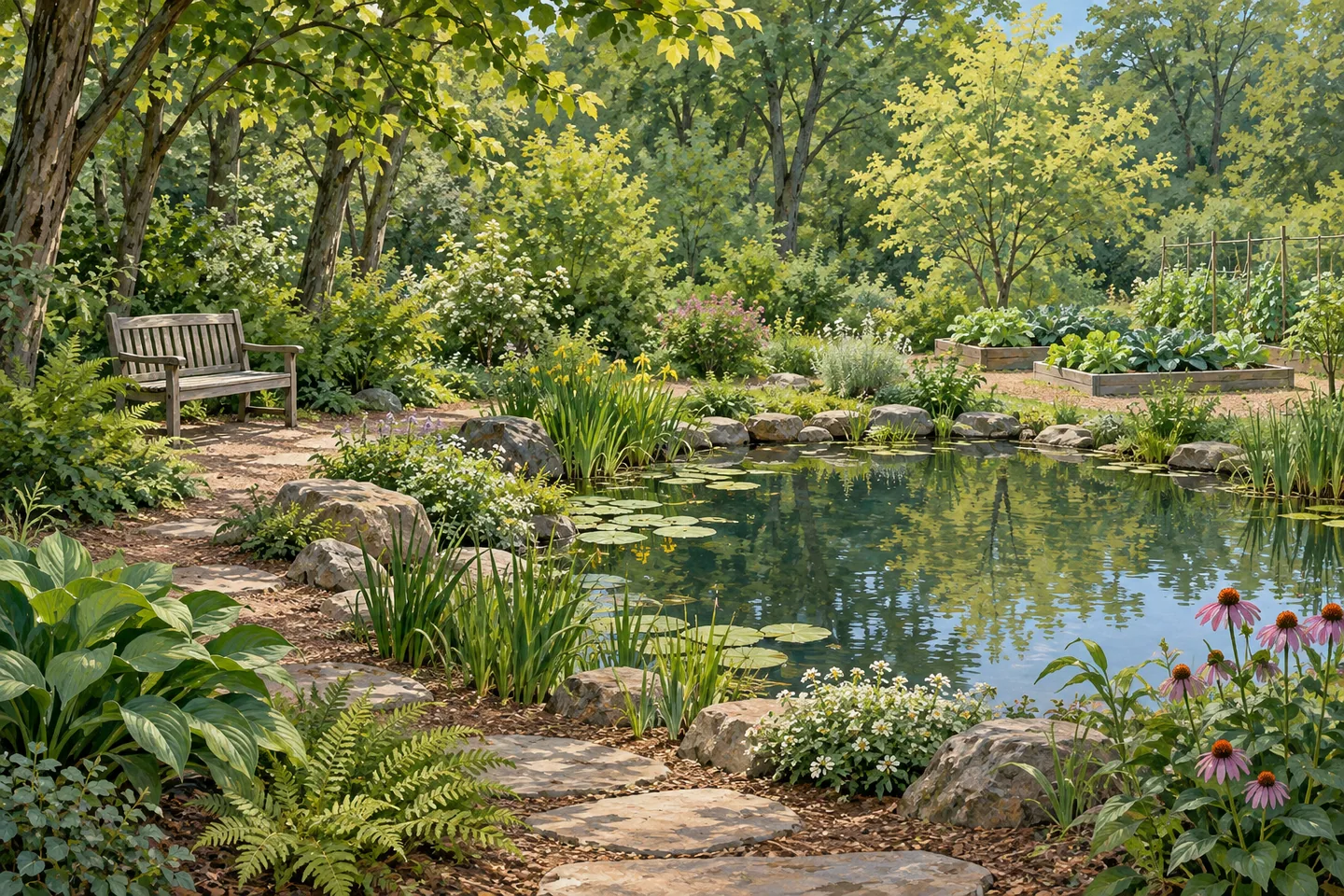
The gardens provide a complementary focus. Woodland, sensory, butterfly, wildflower and rose gardens are listed alongside a hummingbird garden and a vegetable garden. Their variety invites attention to planting purposes as well as color. Compare the form of a cultivated food garden with the arrangement of a woodland planting, for example. Names identify the intended setting; they do not guarantee that flowers or visiting insects will appear in the same way throughout the year.
A native pond-life exhibit and the John Burroughs Reading Nook introduce two more ways to slow the pace. One turns attention toward a small water habitat, while the other makes room for reading within the outdoor setting. Picnic space and a gazebo add opportunities for a pause. These elements work well together as choices, rather than a compulsory sequence: spend longer with the subject that interests the group and let the rest remain possibilities.
Environmental practices make the center more than a collection of displays. Its facilities information identifies solar arrays, a permeable paver walkway, rain gardens, rain barrels and composting features. Those are concrete examples of how the site handles energy, water and organic material. They offer useful questions for a visit: where rain goes, how a planted area relates to runoff, and which of the visible features might have an equivalent at home. No specialist vocabulary is needed to begin looking.
Plan for the practical setting as well. The center's visitor information says there are no concessions or drinking fountains in Forsyth Park, while picnic areas are available. Pets are not permitted inside the Nature Center; properly leashed service animals are allowed. Children aged twelve and under need an adult chaperone. Keep those arrangements distinct from the surrounding park's rules. Forsyth's appeal lies in bringing animal observation, gardens and ordinary environmental questions together in a municipal outdoor classroom, with enough variety to let different visitors find their own thread.
Fun facts
- The Forsyth sisters donated eighteen and a half acres for the park in 1855.
- The zoo opened in 1936; today the Nature Center is a Kingston Parks and Recreation facility.
- Its garden collection includes woodland, sensory, vegetable and hummingbird gardens.
- Solar arrays, rain gardens, rain barrels and permeable paving are among its environmental features.
Before you go
- Check the current exhibits and use the mobile audio tour if its stories suit the visit.
- Plan for the absence of concessions and drinking fountains identified in the official visitor information.
- Keep the Nature Center’s pet, service-animal and child-chaperone rules distinct from those of the surrounding park.
Capture
- Use visible garden forms and planting textures as subjects without promising seasonal flowers or insects.
- Respect posted exhibit rules and avoid staging feeding or handling for a photograph.
- Try a close frame of leaf textures and a wider garden view from the same visitor position, following posted exhibit rules.
 Stone Hill State Forest
 Mexico Point Park
 West End Gallery
Social
Forsyth Nature Center brings outdoor learning to Uptown Kingston. #Cre8Travel
The surrounding park began with an eighteen-and-a-half-acre gift from the Forsyth sisters in 1855.
The zoo opened in 1936, adding an unusual chapter to the park’s history.
Today’s center combines animal exhibits with a varied garden collection.
Woodland, sensory, vegetable and hummingbird gardens suggest different ways to look at planting.
Solar arrays, permeable paving and rain gardens make everyday environmental care visible.
A mobile audio tour offers another way to explore the exhibits.
Follow one question through the visit: how do plants, water and people shape this small outdoor classroom?
Hashtags