 Cre8Travel
CRE8TRAVEL · NEW YORK PLACES
Coffin Woods
Coffin Woods: Estate History and a Varied Woodland Floor
Discover
Coffin Woods combines mature woodland and wetter ground within one of the North Shore Wildlife Sanctuary's individual preserves. The setting has a specific connection with a former estate, while its present interest includes the trees overhead and the plants on the woodland floor. A visit can keep those two themes together: how this particular land became a preserve, and how different habitats occupy the ground protected by that gift.
The property was once part of the estate of Charles Coffin, a founder of General Electric. His daughter Alice inherited it and, at her death in 1963, left 73 acres of woodland to the sanctuary. The mansion and outbuildings became part of Portledge School, a separate destination and use. That distinction matters when reading the landscape's history. An estate connection does not make the school buildings part of a public preserve visit or extend woodland access onto neighboring property.
The woodland gift also belongs within a longer organizational story. The North Shore Wildlife Sanctuary traces its origins to a preserve established in Mill Neck in 1929, followed by a revival and re-establishment in 1963. Those dates describe the organization, while Alice Coffin's bequest explains this specific property's connection to it. Keeping the two histories separate gives Coffin Woods a clearer identity than assigning every event in the sanctuary's history to this one parcel.
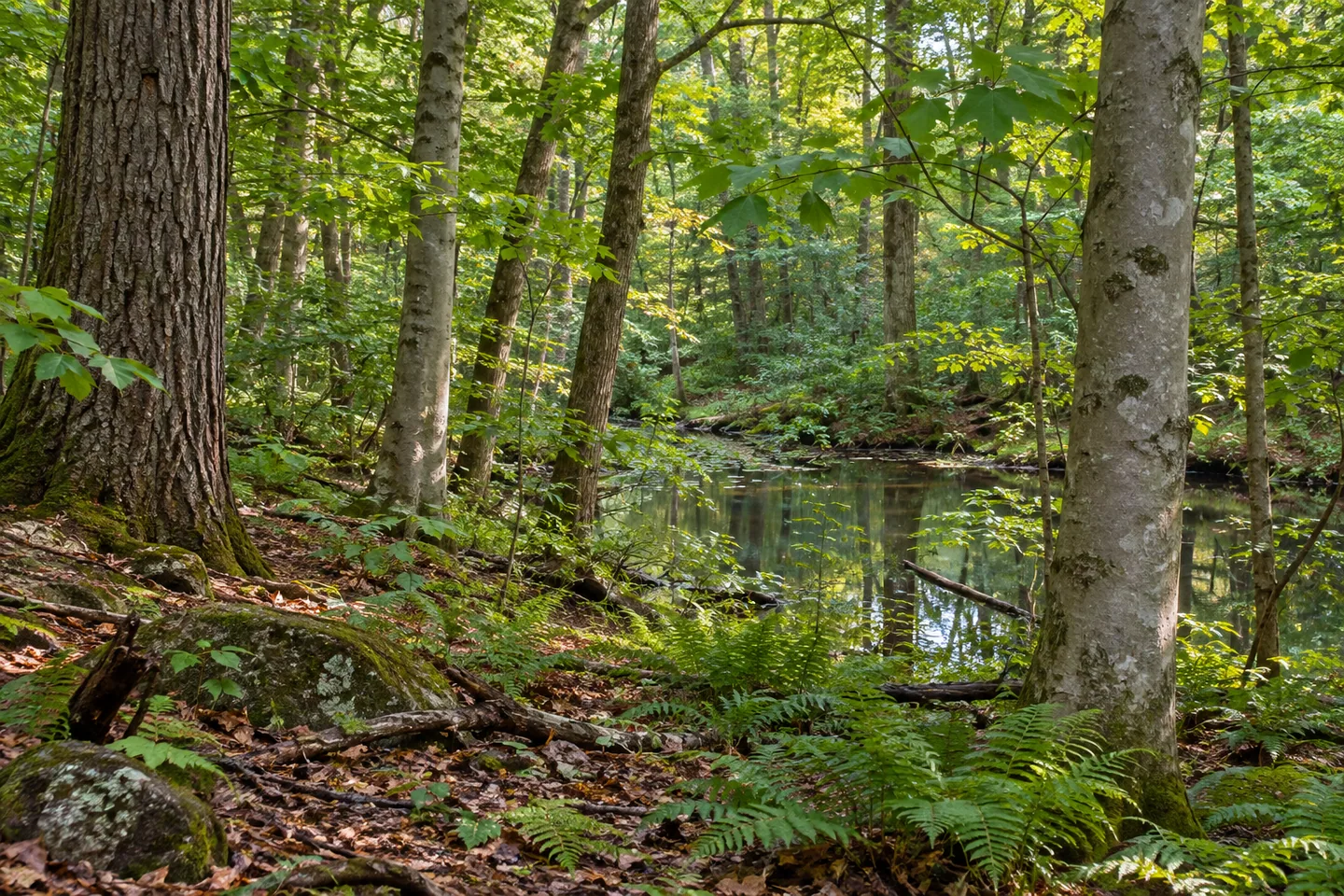
Oak, beech and tulip trees characterize the mature woodland. A wet area with a small pond supports a different collection of vegetation, including red maples, skunk cabbage and cinnamon fern. These details offer a useful observation theme without requiring a long itinerary. Where visible from appropriate access, compare the structure of the trees and the ground cover around wetter places. The pond is one part of that habitat mixture, rather than a developed lakeside recreation area.
The preserve's description also draws attention to its spring woodland plants, including red trillium, native yellow trout lily and European trout lily with larger lavender flowers. Such information gives a reason to notice the forest floor, but flowering depends on the time and conditions of the visit. Observe plants in place rather than expecting every named species to be visible together. The value of the habitat remains even when the most conspicuous blooms have passed.
Other documented observations include box turtles, milk snakes and wood thrushes. Treat those as part of the preserve's recorded natural history, not a list of animals a visitor should try to collect as sightings. There is enough to appreciate in the relationship between canopy, wet ground and smaller plants without pursuing wildlife. A quiet composition of trees and ground cover can also communicate more about the setting than a close photograph obtained by disturbing an animal.
The published access reference is on Oyster Bay Road near the railroad overpass, with parking described beyond the warden's house. Use the preserve's current directions before setting out, keeping the school and other neighboring land distinct. Coffin Woods offers a specific conservation story within a broader sanctuary organization. Let the woodland gift, the mature trees and the smaller wet habitat shape the visit, while respecting the boundaries that preserve their connection.
Fun facts
- Alice Coffin left 73 acres of woodland to the North Shore Wildlife Sanctuary in 1963.
- The former estate’s mansion and outbuildings became Portledge School, separate from the preserve.
- Mature oak, beech and tulip trees characterize Coffin Woods.
- A wet area with a small pond supports red maples, skunk cabbage and cinnamon fern.
Before you go
- Follow the preserve’s current Oyster Bay Road directions and keep neighboring school property separate.
- Observe seasonal plants in place instead of assuming every named flower will be visible together.
- The preserve’s published rules exclude wheeled vehicles and picnics; check current visit instructions.
Capture
- Photograph woodland-floor plants in place without leaving appropriate access or disturbing vegetation.
- Compare mature trees with visible wet-area vegetation where the route permits.
- Do not reconstruct the exact former estate, school buildings, pond shape or a guaranteed wildlife encounter.
 Color Factory
 Carolin's Grove
 Cass Park
Social
Coffin Woods protects woodland once associated with the Coffin estate. #Cre8Travel
Alice Coffin’s 1963 bequest gave 73 acres of woods to the North Shore Wildlife Sanctuary.
The mansion and outbuildings became Portledge School, a separate use rather than a preserve attraction.
Oak, beech and tulip trees help characterize the mature woodland.
A small wet area and pond support red maples, skunk cabbage and cinnamon fern.
The spring plant list provides an observation theme, not a guarantee of blooms on a particular day.
Recorded turtles, snakes and wood thrushes are natural-history details rather than promised sightings.
Keep the property’s history and habitat together while respecting neighboring land and the preserve’s current directions.
Hashtags