 Cre8Travel
CRE8TRAVEL · MAINE PLACES
West Market Square Historic District
West Market Square: Bangor’s Commercial History at Street Level
Discover
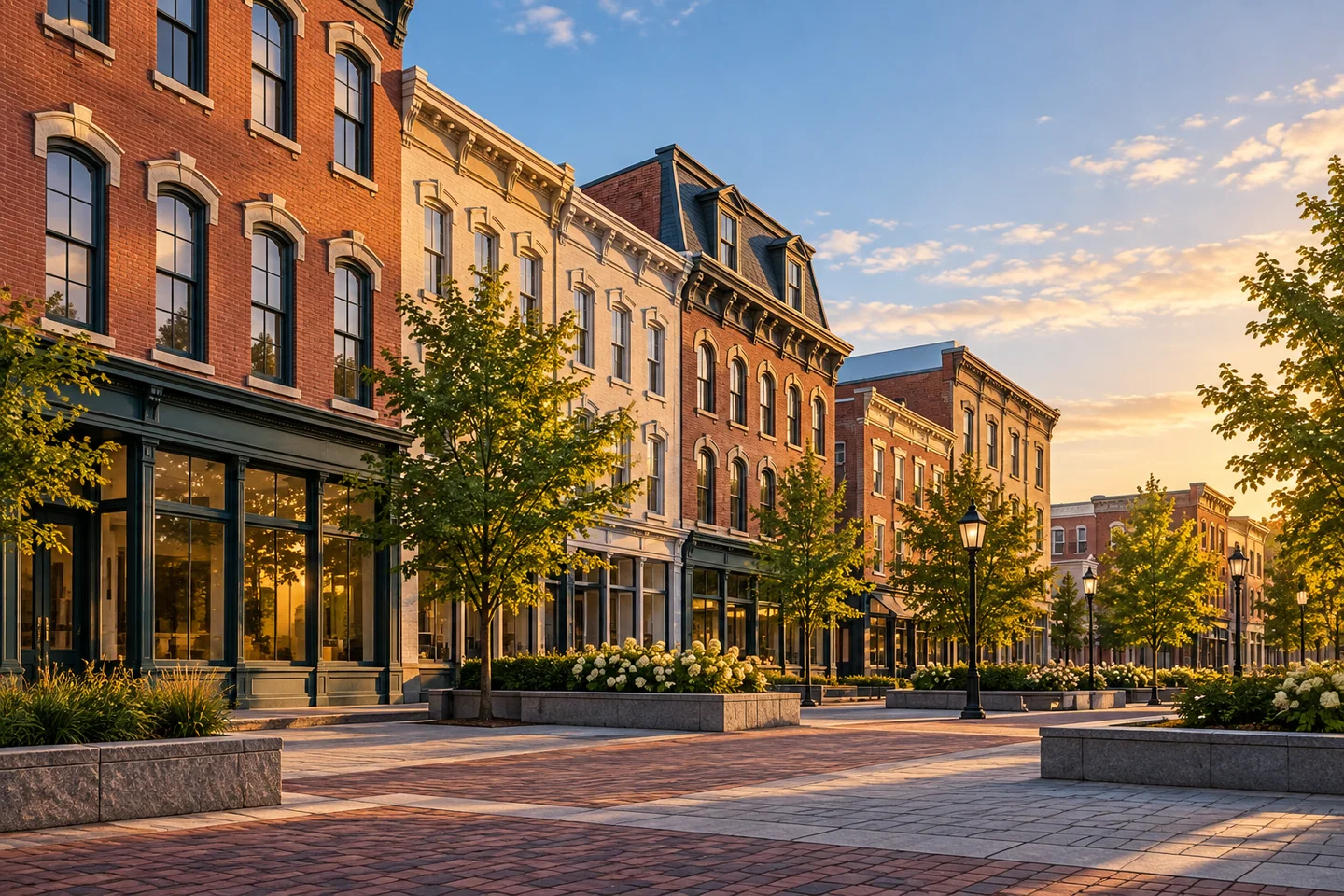
West Market Square offers a way to look at Bangor's commercial history while remaining in a working downtown. Begin on the public pedestrian space and let the buildings define the first part of the visit. Keep shop entrances and crossings clear, and separate looking at an exterior from entering a business. A historic district is not an open-air collection with every room available to inspect. Its interest includes the continuing practical use of places that also carry a long architectural record.
The original National Register account identifies this as Bangor's first open market area. By the city's incorporation in 1834, a directory already listed Market Square at Main and Broad streets. The later distinction between east and west squares helps explain a name that can otherwise sound like a single modern development. Looking at the gathering space, imagine the variety of transactions that gave it a role: buying provisions, arranging services and meeting people whose work depended on being near other businesses.
The same nomination lists a range of historical occupants, including doctors, attorneys, booksellers, grocers and jewelers. It notes that several banks were based in the square during the later nineteenth century. That mixture is more revealing than treating every surviving facade as simply old and attractive. Different forms of work shared a compact address. The buildings' relationship to one another can therefore be part of the subject, rather than a background for choosing the most ornate individual doorway.
Bangor's recent historic-survey material emphasizes the district's survival through the 1911 fire and the urban-renewal changes of the 1960s. It describes a continuing central gathering-place character, with historic storefronts accommodating present-day uses. The city's district presentation identifies Second Empire commercial, Greek Revival and Late Victorian architecture. Use those terms as invitations to compare broad forms and details, rather than a test you have to pass before enjoying the setting. Notice where rooflines differ, how window rhythms repeat and how the pedestrian space lets several fronts be seen together.
A September 2020 Our Odyssey account gives the square a visitor's scale. Sean, writing after several days exploring Bangor from a river trip, liked the practical, varied downtown and described an outdoor meal in West Market Square. The account's arrangements belonged to the pandemic period and should not become today's dining instructions. Its more durable observation is the pleasure of encountering a city that felt used and lived in, rather than organized solely as a visitor attraction. Read it as one traveler's response, and choose any meal separately from current business information.
For an architectural photograph, start with a group of facades rather than isolating a single building. A second frame can bring one repeating window pattern or material junction into focus while leaving enough context to explain its place. Work from public ground and avoid photographing closely into occupied rooms. You can make the stop substantial without a checklist of interiors or a claim that time has stood still. West Market Square is interesting because change and continuity remain visible together: the form of a business district, the record of its varied occupations and the everyday movements that keep it part of the city.
Fun facts
- An 1834 city directory already identified Market Square.
- Historical occupants included professional services, shops and several banks.
Before you go
- Use public pedestrian space and keep business entrances clear.
- Compare groups of facades before focusing on a single detail.
- Check current business arrangements separately from the architectural walk.
Visitor perspectives
- Sean’s September 2020 Our Odyssey account enjoyed Bangor’s practical, varied downtown and described dining outdoors in West Market Square during a river journey.
Capture
- Pair a group-of-facades composition with a closer window-pattern detail from public ground, keeping occupied rooms and pedestrian movement in mind.
 Paul Bunyan Statue in Bangor
 Coastal Maine Botanical Gardens
 Godfrey–Kellogg House
Social
West Market Square lets a historic commercial district remain part of an everyday city walk.
Market activity helped give the square its name.
Historical occupants combined shops with professional services and banks.
Survival through fire and urban renewal forms part of its story.
A city survey identifies several architectural styles within the district.
One 2020 visitor appreciated the downtown’s practical, lived-in character.
A business exterior and a public interior are different kinds of access.
What helps a historic district feel alive to you: its buildings or the activity between them?
Hashtags