 Cre8Travel
CRE8TRAVEL · MAINE PLACES
Umbagog Lake
Umbagog Lake: Where Forest and Wetland Meet
Discover
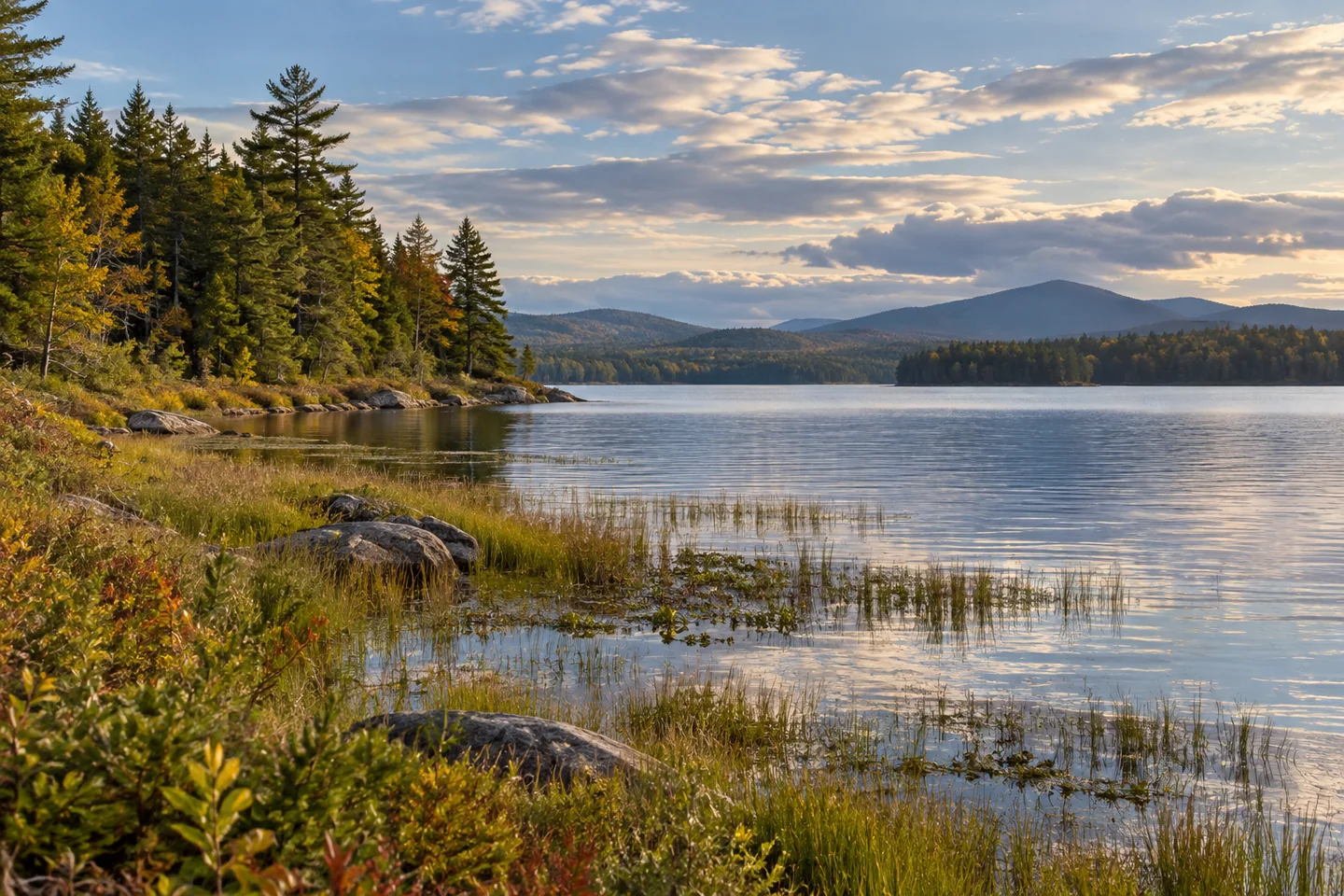
Umbagog Lake sits across the Maine–New Hampshire border, where a lake visit can become a close look at the meeting of forest, marsh, and open water. Much of the surrounding landscape belongs to Umbagog National Wildlife Refuge. The U.S. Fish and Wildlife Service describes the region as a transition between northern coniferous forest and more southerly deciduous forest. That mixture gives the lake a character different from a simple stretch of blue on the map: its edges contain several kinds of habitat, each worth noticing in its own right.
Begin with a current access plan. New Hampshire’s Umbagog Lake State Park provides an established approach, with boating among the activities listed by the park. Check the present launch arrangements, weather, and restrictions for the exact area you intend to visit. A short outing close to a suitable return may be a better choice than crossing the lake. The state line does not divide the wind, but it can mean different land managers and rules at the place you hope to land.
The refuge's history provides a longer view of the scenery. It was established in 1992 through cooperation among public agencies, conservation organizations, and other partners. The region's waterways have an Indigenous history and later served a timber economy; dams and logging helped shape the lake landscape encountered today. This is not an empty place waiting to be discovered. Reading its history before setting out gives the woods and water a human context alongside their ecological importance.
Wetlands are central to that importance. The refuge describes cedar and spruce swamps, bogs, floodplain forest, and upland woods around the water. Common loons use the lake, while different waterfowl and marsh birds depend on other parts of the system. Let wildlife determine the distance of an observation rather than moving closer for a clearer picture. The refuge asks visitors to stay well away from nesting loons and other animals showing signs of disturbance. Binoculars are a better tool for that encounter than a boat aimed toward a nest.
Camping adds another set of decisions. The state park manages both developed and remote options, with some sites reached only by boat. Reserve the appropriate place and confirm its specific rules before travel; a marked site is not automatically available to anyone passing. Pet restrictions differ among areas, including refuge campsites, and outside firewood is prohibited at the state park. Planning for those details helps keep a remote overnight from turning into a search for an unauthorized alternative after the weather or daylight changes.
Tom DeVries's Small Boats account describes five days here in September 2021 with friends using a canoe and kayaks. He appreciated the beauty and quiet, but the trip's opening paddle also brought strengthening wind, whitecaps, and rain. The contrast is a useful way to imagine Umbagog: rewarding water that still deserves preparation and flexibility. Choose a manageable plan, keep wildlife undisturbed, and leave time to notice the different edges of the lake. An attentive visit can be substantial without being an ambitious expedition.
Fun facts
- Umbagog Lake crosses the Maine–New Hampshire border.
- Umbagog National Wildlife Refuge was established in 1992.
- The refuge protects a transition between northern coniferous and more southerly deciduous forest habitats.
Before you go
- Check current refuge and state-park access guidance for your specific launch and intended landing.
- Keep generous distance from loons, nests, and other wildlife; use binoculars instead of approaching.
- Reserve remote campsites and check site-specific pet and firewood rules.
Visitor perspectives
- Tom DeVries’s April 2022 Small Boats article recalls a September 2021 canoe-and-kayak trip with friends. He valued the beauty and quiet, while describing an opening paddle made demanding by wind, whitecaps, and rain.
Capture
- Use a permitted shore position to frame the contrast between open water and a wooded or marshy edge.
- Photograph wildlife only from a respectful distance, allowing the animal to remain undisturbed.
 Mooselookmeguntic Lake
 Hooper Pond Preserve
 Cold Stream Pond
Social
Umbagog Lake crosses a state line and several different habitats.
Northern conifers and deciduous forests meet in the surrounding refuge landscape.
The wildlife refuge dates to 1992; the area’s human and ecological histories go much farther back.
A lake map does not settle permission to land. Check the manager and rules of your intended shore.
Nesting loons need space. Binoculars can improve the view without moving the boat closer.
Remote campsites still require reservations and site-specific planning.
Tom DeVries’s paddling account pairs quiet beauty with the reality of wind, waves, and rain.
Would your Umbagog day center on birdwatching, a modest paddle, or an arranged overnight?
Hashtags