 Cre8Travel
CRE8TRAVEL · MAINE PLACES
Number Nine Lake
Number Nine Lake: Small Water, Lasting Memories
Discover
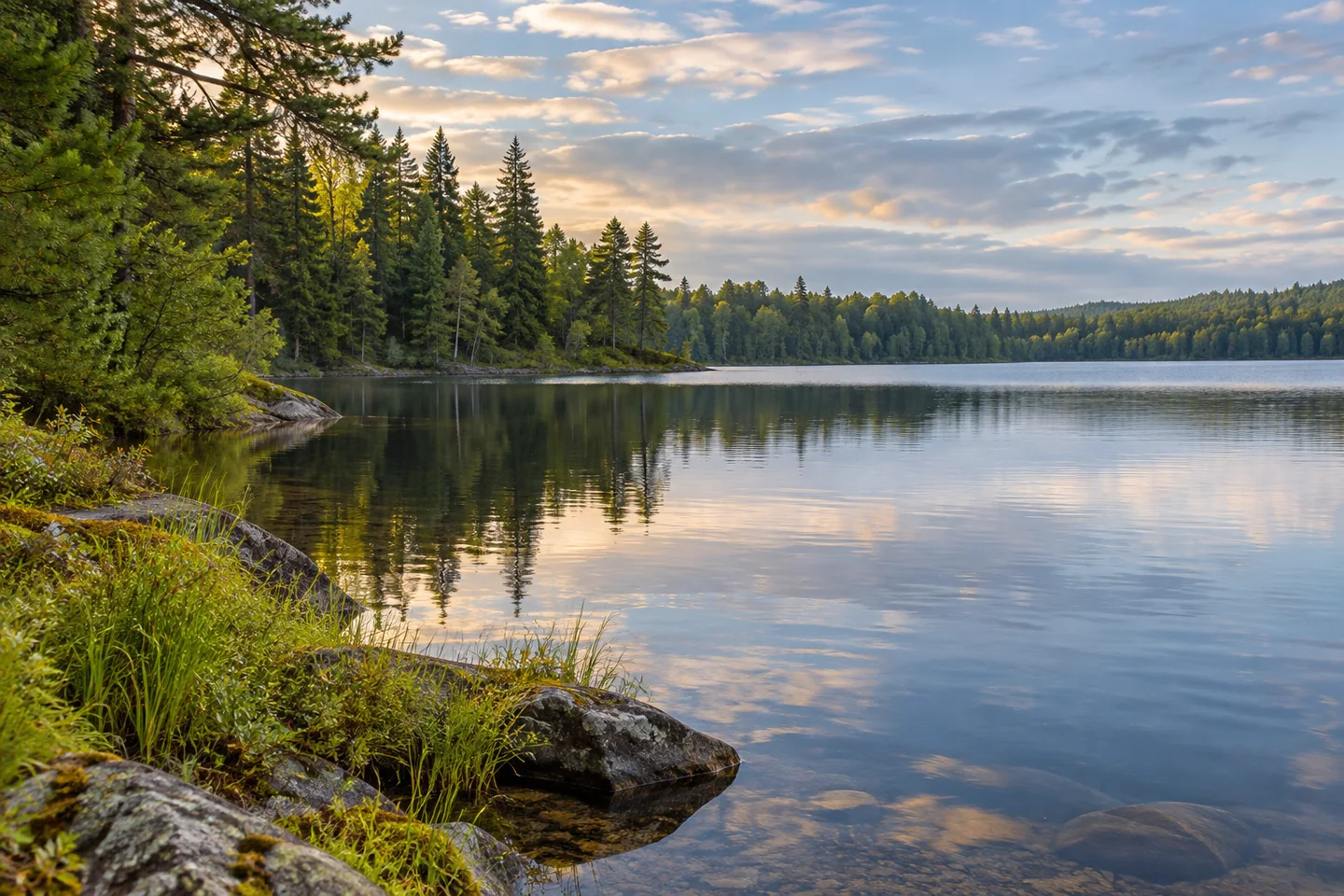
Number Nine Lake offers a small-water alternative to the immense lake crossings often associated with northern Maine. Set in Aroostook County's T9 R3, it has a documented trout-management history and a memorable place in one family's account of returning to the County. Its interest lies in that combination: the physical lake, the care taken with its fishery and the time people have chosen to spend beside it. A short, well-prepared visit can give those stories room to emerge.
IFW currently lists a state landing on Nine Lake. A survey revised in 2001 describes the sportsman's association maintaining the agency landing and picnic area, approached on private forest roads. Use that history to frame current questions about the route and landing conditions. Match the actual facility to the equipment before departure rather than relying on an old small-craft description.
The same survey records chemical reclamation in 1956 for brook-trout management. It describes an outlet dam, inlet nursery habitat and spring seepage providing summer refuge. This ecological history explains deliberate changes to the waterbody and the significance of small habitat features. Keep present-day fishing plans separate from the historical account, and give inlet margins room rather than seeking a closer look through vegetation.
Modern compiled lake information helps establish the setting without turning the visit into a numbers exercise. The Lakes of Maine profile identifies Number Nine as MIDAS 1756 and classifies its fishery as coldwater. It describes a shallow basin, with mapped natural cover dominating the surrounding buffer. That combination is worth considering: shallow does not mean ecologically simple, and a wooded setting can conceal important differences in temperature and habitat. A depth profile provides background, rather than a substitute for navigation or a basis for walking into the water.
Bruce Nelson's original 2022 Easton Courier essay recalls a childhood fishing trip here with his father in the late 1950s. Their cabin time, conversations and ordinary tasks became more important in memory than the number of fish. Insects were part of the experience, too. The story gives the lake a human scale that a contour map cannot supply. It is a historical recollection, with adventurous travel decisions that belong firmly to that account rather than any present route recommendation.
Use that sense of scale when organizing a visit. Decide what the group actually wants to notice, whether the water's wooded edge, a carefully planned fishing session or time together at an authorized resting place. Allow the outing to stay small. A lake does not need an island circuit, an ambitious crossing or a packed schedule to justify attention. Choosing a comfortable turning point can leave more room for the conversations and observations that often become the strongest memories.
For photographs, begin with the relation between trees and water, then consider a closer study of a permitted shoreline detail. Keep private camps outside the landing plan and working access clear. Number Nine Lake is rewarding when approached as a particular place: a modest basin with an unusually clear fisheries record and an enduring reminder that an outdoor trip can matter for reasons that have little to do with distance.
Fun facts
- A historical state survey records trout-focused reclamation in 1956.
- Lakes of Maine identifies the waterbody as MIDAS 1756.
- The historical survey describes spring seepage as summer trout refuge.
Before you go
- Verify the present forest-road route before departure.
- Match craft and equipment to the actual landing conditions.
- Check current angling rules independently of the historical survey.
- Leave inlet habitat and private camps undisturbed.
Visitor perspectives
- Bruce Nelson’s 2022 memoir recalls a late-1950s father-and-son fishing visit, with cabin conversations and shared tasks becoming lasting memories.
Capture
- Frame the meeting of trees and water from an authorized position.
- Try a close shoreline detail without occupying the loading area.
 Lake Wassookeag
 Quakish Lake
 Nesowadnehunk Lake
Social
Number Nine Lake offers a small-water setting in Aroostook County.
Research can make a modest waterbody feel more substantial.
Small habitat features deserve room and attention.
A lake profile can deepen a visit without dictating its route.
A family memoir remembers conversations as much as fishing.
A small outing can leave room for a substantial memory.
Keep inlet margins and private shoreline outside the landing plan.
What would you hope to remember from a quiet lake day?
Hashtags