 Cre8Travel
CRE8TRAVEL · MAINE PLACES
Monmouth Fair
Monmouth Fair: Community Work on Display
Discover
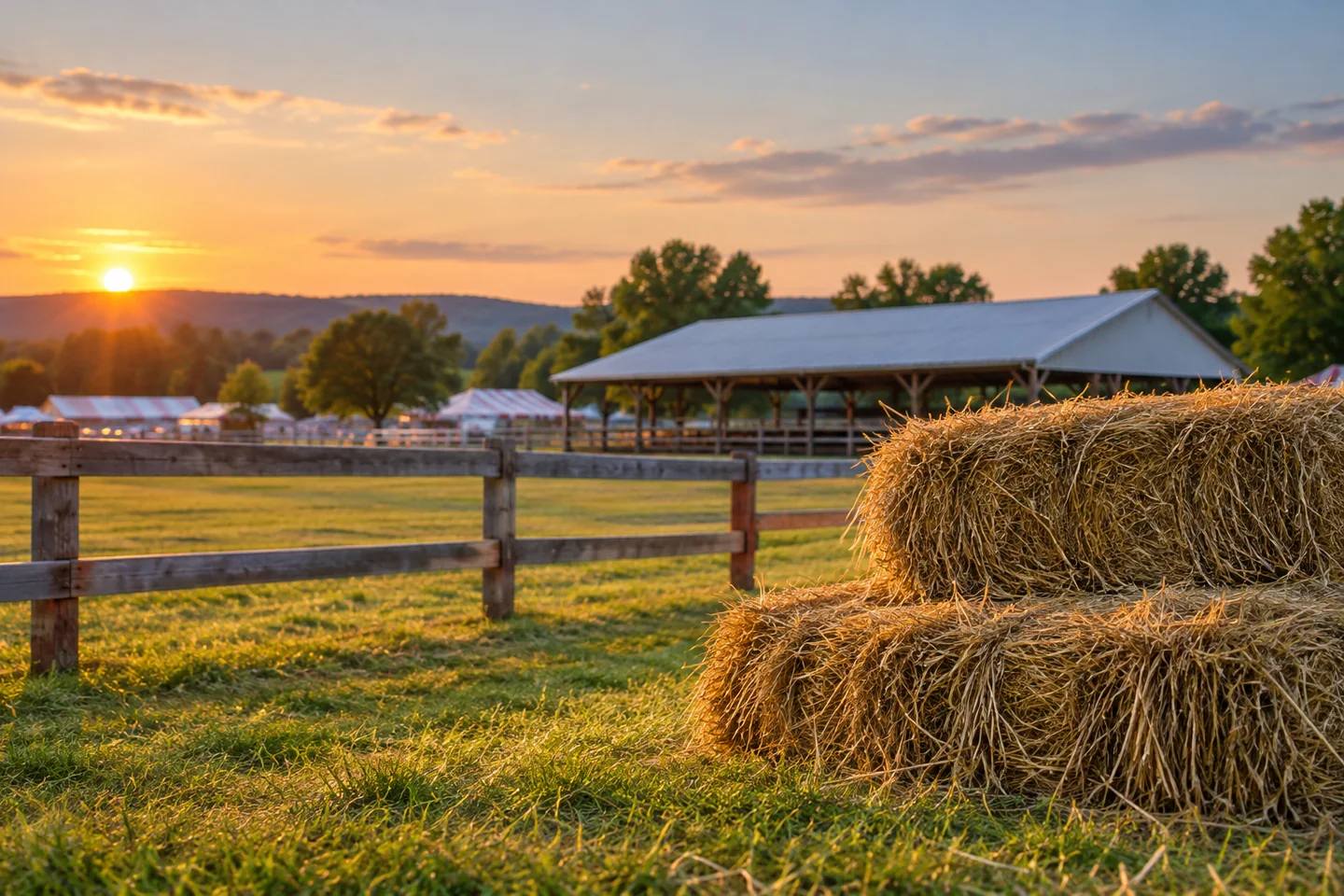
Monmouth Fair turns the grounds on Academy Road into a place for shared rural recreation during its announced fair season. The organizer's programme includes animal-related activities, pedal tractor competition, and contests using familiar objects such as hay bales and frying pans. Choose the edition and a few events that interest the group before planning the day. Their timing and participation arrangements belong to that particular programme, rather than to an ordinary visit to the grounds.
The fair's historical archive makes the exhibition hall a subject in its own right. A newspaper account from September 1909 describes a building erected near the old academy through a combination of a town appropriation, private contributions, and donated labor. Exhibits were arriving almost as the finishing work ended. That account gives a hall more meaning than simply a room to walk through: the community helped create a setting where its work could be shown.
An original family travel journal from August 2005 describes returning to the fair across generations. The writer recalls watching horse and oxen pulling, just as Glenn had done when he was younger. Admiration centers on the animals' strength and training. The brief account supplies a very personal reason for coming back: a familiar activity links an adult's memories with a younger family's visit, without needing an entirely new attraction each year.
Chris Bouchard's June 2022 report finds organizers thinking well beyond the days when the gates are open. Vice president Diana Morgan describes evaluating a finished fair and immediately beginning to consider the next one. Livestock pulling also carries a family history, with responsibility passing between generations. These interviews show how a short public event can depend on year-round attention and knowledge handed from one person to another.
Another item in the historical archive, from 1923, emphasizes apples and other exhibits instead of a large racing programme. The report places Monmouth within an apple-growing district and praises the fruit brought to the fair. Reading that older account can sharpen attention to a present exhibition: a modest display may represent local growing conditions, a season's care, and friendly comparison between neighbors rather than simply something decorative beside the midway.
The organizer's volunteer page names work that is easy for a visitor to overlook: food service, children's activities, announcements, ticket gates, and parking. Those roles make the event function for people arriving with different expectations. Consider that effort while moving between attractions, allowing time for a question and room for others to use shared spaces. An agricultural gathering is also an exercise in cooperation.
For families interested in participating, the contest information makes preparation important. Individual activities can have age groups, registration requirements, and guardian permissions. Watching from the audience is a different plan from entering a competition. Read the current rules together before promising an activity, then leave room for a child to prefer an exhibit or simply enjoy seeing someone else take part.
For a photographic record, choose whether the subject is skilled work, a shared reaction within your own group, or the arrangement of the gathering. Ask before making close portraits of exhibitors. A few purposeful images and one remembered conversation can give the day a shape that does not depend on completing every item on the programme.
Fun facts
- A 1909 report describes the exhibition hall being built with public funds, subscriptions, and donated labor.
Before you go
- Check the current programme and participant requirements before choosing activities.
- Ask permission before close portraits of exhibitors.
Visitor perspectives
- The family journal recalls returning to Monmouth Fair across generations and admiring the strength and training of horses and oxen.
Capture
- Show a chosen activity through its setting and one detail.
- Keep family photographs focused on your own group.
 The Narrows Preserve
 Litchfield Fair
 Clinton Lions Fair
Social
The exhibition hall’s history includes a community building effort.
A family travel journal recalls returning to watch horses and oxen pull.
Organizers describe work that continues after the fair closes.
Volunteers support everything from announcements to parking.
Entering a contest calls for a different plan from watching it.
Let one good conversation become part of the visit.
Leave room for an unexpected exhibit.
A focused day can hold more than a crowded checklist.
Hashtags