 Cre8Travel
CRE8TRAVEL · MAINE PLACES
Michael Klahr Center
Michael Klahr Center: A Place for Remembrance and Learning
Discover
The Michael Klahr Center on the University of Maine at Augusta campus brings Holocaust remembrance into a setting for learning and conversation. The university describes a place with a theater, classroom, and galleries, where survivor testimony connects historical events with questions of human rights and civic responsibility. Plan a visit around the center's current arrangements and the material you hope to understand, allowing time for reflection rather than treating the rooms as a quick sequence of displays.
Michael's Story introduces the person whose name the building carries. The center describes a mixed-media installation combining murals, archival photographs, objects, and a short original film about a child hidden during the Holocaust. The individual life gives the wider history a particular point of entry. An object or photograph can become a reason to pause and listen, rather than a detail to collect before moving on.
Were the House Still Standing preserves testimonies of Holocaust survivors and liberators who lived in Maine. Commissioned from sculptor Robert Katz in 2005, the installation was developed with sound designer Douglas Quin and videographer Matt Dibble. Its combination of synchronized video, sound, lighting, and portraiture places personal voices within a carefully composed environment. Ask about the current viewing arrangements if this work is central to the visit.
Another permanent exhibition presents photographs by Judy Glickman Lauder. In her artist's statement, she describes visiting sites in Poland and elsewhere in Europe and finding that the history became intensely personal when she stood at Auschwitz. Her account explains photography as a form of attentive witness. Looking at these images invites attention to what the artist chose to record, and to the histories that ordinary-looking places and objects can carry.
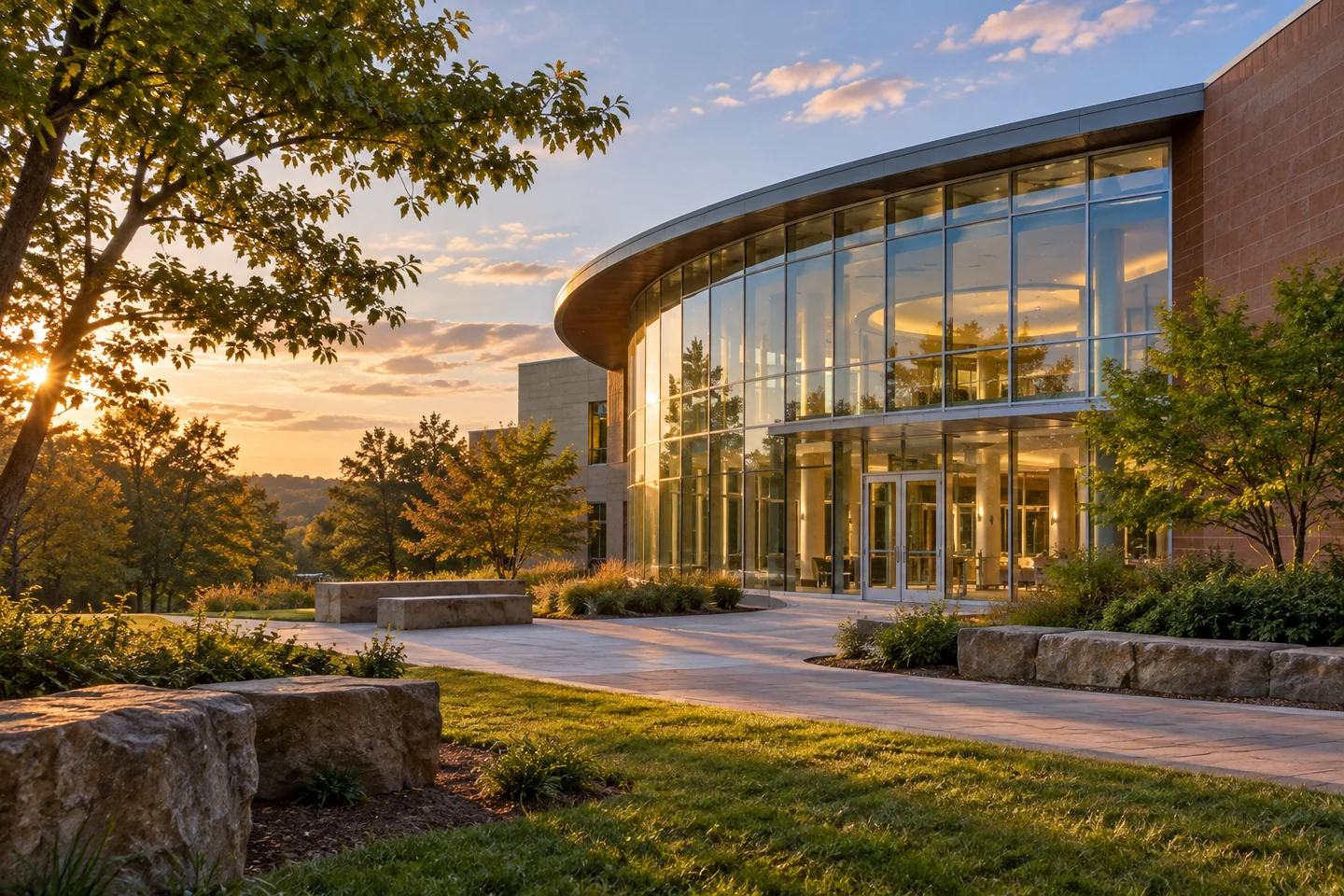
The architecture gives that work a distinctive home. The university's account identifies curved exterior forms, a glass facade, and a combination of brick, wood, and glass. It interprets them in terms of remembrance, resilience, and the protection of human rights. Consider those ideas as a reading offered by the institution, then look closely at how the building shapes your own arrival and the transition into its exhibits.
The center's visitor introduction describes a three-story glass atrium, an amphitheater, a classroom, and a gallery. It also identifies artifacts displayed in cases and portraits around the rotunda. These different spaces make it possible to approach the institution through architecture, individual testimony, or visual art. Choose a starting point that fits the interests and preparation of your group, without expecting every medium to communicate in the same way.
The center states that complete, unedited video testimonies associated with Were the House Still Standing can be viewed there. That possibility offers a deeper path for someone whose questions extend beyond an exhibition introduction. Contact staff about access and the time needed before planning to use those materials. An installation and an extended testimony are related experiences, but each deserves its own attention.
For a personal record, write down a question or an insight after leaving a display, preserving a speaker's name accurately when you refer to their testimony. Ask staff about photography before making interior images, and respect other visitors' privacy. A photograph of the architecture, where permitted, can recall the setting while leaving room for the human accounts to remain the central memory.
Fun facts
- Were the House Still Standing combines synchronized video and sound with portraits and theatrical lighting.
Before you go
- Contact the center about current access and the exhibits important to your visit.
- Ask staff before photographing inside and allow others room to reflect.
Capture
- Where permitted, frame the architecture without including other visitors.
- Use a written reflection when an image would interrupt listening.
 Pittston Fair
 Woodbury Pond and Woodbury Pond Park
 Hallowell Museum in the Streets
Social
Michael’s Story gives Holocaust remembrance an individual point of entry.
Survivors and liberators who lived in Maine speak through preserved testimony.
Judy Glickman Lauder’s photographs approach places as witnesses to history.
The university connects the center’s architecture with resilience and remembrance.
The visitor introduction describes an atrium, gallery, classroom, and amphitheater.
Let listening set the pace of a visit.
A carefully recorded question can become a meaningful keepsake.
Plan enough time to reflect after an exhibition.
Hashtags