 Cre8Travel
CRE8TRAVEL · MAINE PLACES
Madrid Village Schoolhouse
Madrid Village Schoolhouse: A Room for Local Memory
Discover
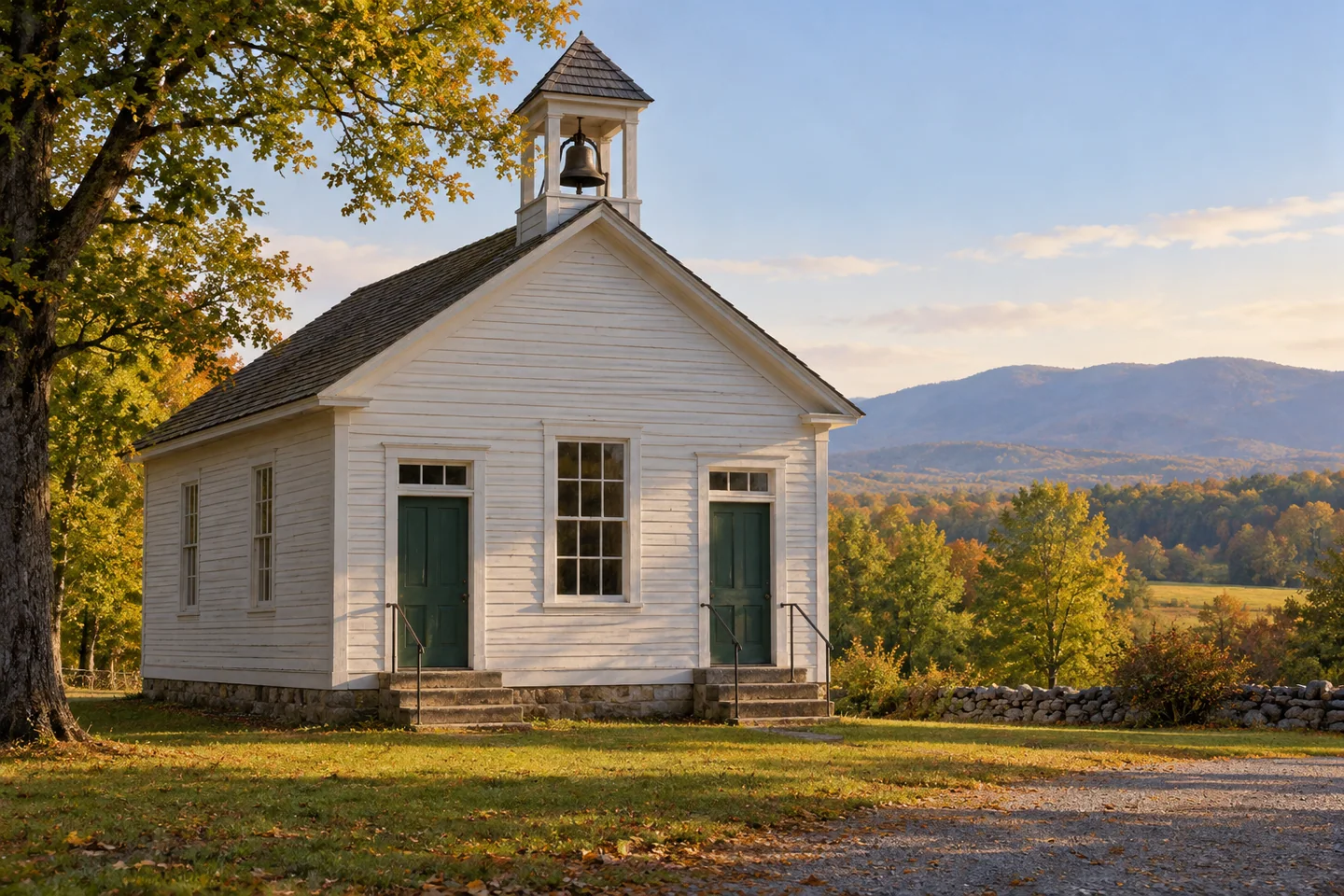
Madrid Village Schoolhouse turns a small Franklin County building into an introduction to a rural community. On Reeds Mill Road, the former classroom offers an alternative scale to the broad mountain and river views that draw travelers through the region. Its interest lies in the ordinary work of education and the later decision to keep a place for local memory. Arrange a visit with the historical society and bring a question about what a one-room school can reveal about the people around it.
The National Register documentation places construction around 1872, supported by a land transaction and a contemporary newspaper reference. It identifies the building as the community's last school, which closed in 1959. Those dates frame a long period of change in rural education. The school can be approached as a record of local life across generations, with the building providing a concrete starting point for understanding how children learned near home before schooling became more centralized.
The same nomination describes a wooden building with two front doors flanking a central window, and a small bell tower above. Inside, separate entrance vestibules lead to one main room. Look at how the compact plan organizes arrival and shared activity. The details need not be grand to be informative. A doorway, a window and a room large enough for a class can make educational history feel more immediate than a list of institutional dates.
The Madrid Historical Society uses the building as a schoolhouse museum. A published 2025 open-house notice specifically described a schoolroom display and the museum, showing how the place is presented to visitors. Contact the society for current arrangements before making it the purpose of a journey. An old event announcement establishes a history of welcoming the public; it does not supply a standing opening schedule. Give volunteers a clear idea of any particular school or family-history interest when making an inquiry.
During the visit, compare what the room can show directly with what needs explanation. The arrangement of entrances and light can be observed; a pupil’s daily routine requires records or recollection. Ask how the museum brings those kinds of evidence together. This makes interpretation an active part of the stop. A familiar classroom shape becomes more specific when someone explains which details belong to this community and how they know.
A rewarding visit can connect those aims with the smaller evidence inside an old schoolroom. Ask how the display distinguishes original materials from objects brought in later, and how local memories have contributed to the interpretation. The answers may change the meaning of a familiar-looking desk or classroom feature. Let the guide's knowledge shape the encounter, and avoid treating a heritage building as a setting that exists only for photographs.
For a visual record, begin with the paired entrances and the building's overall proportions from an authorized position. If indoor photography is permitted, choose a detail explained during the visit and record why it mattered. Keep the outing focused on the schoolhouse rather than assume additional facilities or an extended trail experience. Madrid's school offers a thoughtful pause in which education, volunteer care and a community's account of itself occupy the same modest space.
Fun facts
- The nomination places construction around 1872.
- The museum preserves the community’s educational history.
- The historical society presents a schoolroom display and museum.
Before you go
- Arrange present access directly with the historical society.
- Ask which materials are original and which were collected later.
- Ask which evidence supports the classroom interpretation.
- Request permission before indoor photography.
Capture
- Frame the paired entrances and overall proportions from authorized ground.
- Connect an interior detail with its interpretation if photography is permitted.
 St. David Catholic Church
 Little Red Schoolhouse, Farmington
 Together Place Mural at Shaw’s, Bangor
Social
Madrid Village Schoolhouse offers a different scale of discovery in Franklin County.
A one-room classroom can carry generations of local history.
The paired front entrances are a useful starting point for looking closely.
Arrange a visit directly with the historical society.
The room’s visible arrangement and the stories explaining its use provide different kinds of evidence.
Ask how original materials and later collections work together in the display.
A good photograph can record the meaning of a detail as well as its shape.
What would you ask a guide about an old rural classroom?
Hashtags