 Cre8Travel
CRE8TRAVEL · MAINE PLACES
Little Pennesseewassee Pond
Little Pennesseewassee Pond: A Small Waterbody with a Wider Story
Discover
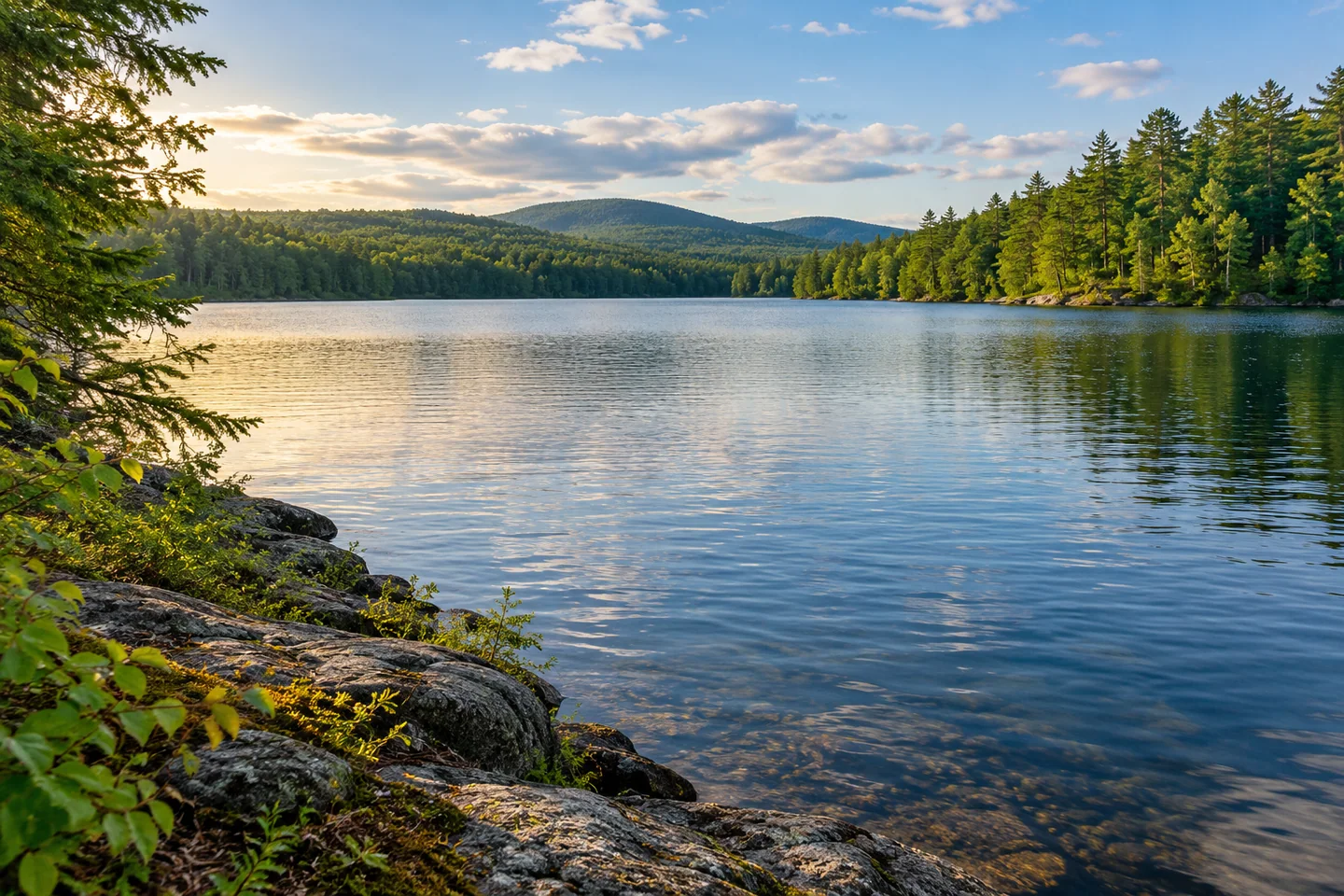
Little Pennesseewassee Pond, also called Hobbs Pond, is a smaller part of Norway's lake landscape with a name that is easy to confuse with its larger neighbor. Begin by matching the town and the Route 118 rest area, not simply searching for a shortened lake name. The municipality identifies carry-in access here. A shore-side pause and a small-craft outing require different preparations, so inspect the actual entry before unloading and be willing to make the view from land the focus of your visit.
The Lakes Association of Norway describes Hobbs Pond as feeding Lake Pennesseewassee. That connection gives a modest stretch of water a role beyond its own banks. An outing can begin with a simple question: what comes into this pond, what happens around its edges, and where does the water go next? You do not need to follow an outlet to make that relationship meaningful. Look across the pond as one link in a local network, while respecting the private properties that share its shore.
The state fisheries survey adds an underwater perspective. Its historical description identifies a predominantly rocky, developed shoreline and a pond managed for both cold-water and warm-water fish. Summer layering creates different temperature and oxygen conditions below the surface. These are useful ideas to keep in mind rather than an invitation to read a dated biological sheet as today's measurements. Water that looks uniform from a picnic place may contain quite different living conditions only a short distance below what the eye can see.
Protection also begins on land. In June 2024, local volunteers worked with Maine's environmental agency on a watershed survey documented by the lake association. They examined roads, driveways, developed properties, and trails, identifying places where eroded soil could carry nutrients into the pond. The summary records fifty-four contributing sites across the watershed. That is a concrete reason to treat even the approach as part of the lake visit. Keeping to durable surfaces and avoiding damage around the water is connected with what happens in the pond, not a separate concern.
Stan's August 2026 Amazing Fish-a-Metric account provides a detailed small-craft perspective. He found the immediate bank by the picnic structure difficult for entering his canoe, then used a shallower position. His fishing was slow before a brook trout and a larger brown trout rewarded changes in his approach. The account conveys pleasure in a quiet morning while also making the entry complication clear. It does not establish that an alternative shore is suitable or permitted for every visitor; choose your own route only from the current authorized access and conditions.
If boating, use a craft you can handle at a carry-in site, prepare a return plan, and consult the pond's current rules. For a shore visit, allow enough time to notice the transition between near-bank detail and the wider water. Photograph from a stable, lawful position without trampling vegetation for a clearer foreground. A small lake can hold a substantial story when you give its connections, habitat, and care the same attention as the scenery. Hobbs Pond offers that kind of interest at a scale that encourages looking closely.
Fun facts
- Little Pennesseewassee Pond is also known as Hobbs Pond.
- Hobbs Pond feeds the larger Lake Pennesseewassee.
- A 2024 watershed survey identified fifty-four sites contributing polluted runoff.
Before you go
- Match the Route 118 rest-area carry-in access to the correct pond before traveling.
- Inspect the bank and entry conditions before unloading; a public access point does not promise an easy canoe launch.
- Keep to authorized durable surfaces and check current pond-specific rules for your activity.
Visitor perspectives
- Stan’s August 2026 Amazing Fish-a-Metric account describes a quiet canoe-fishing morning, with a difficult immediate shoreline entry and slow fishing. Changing his approach eventually produced a brook trout and a larger brown trout.
Capture
- From stable public ground, include a little bank detail to establish the pond’s scale.
- Study water texture and shoreline vegetation without moving onto private land or fragile ground.
 Pleasant Lake
 Horn Pond
 Province Lake
Social
Hobbs Pond is another name for Little Pennesseewassee Pond in Norway.
This smaller pond feeds the larger Lake Pennesseewassee.
The town identifies carry-in access at the Route 118 rest area.
A 2024 survey looked at the roads and properties contributing runoff to the pond.
Stan’s 2026 account found the immediate canoe entry difficult before enjoying a quiet fishing morning.
Inspect access as carefully as you plan time on the water.
A view from shore can be the whole purpose of a visit.
Would you notice Hobbs Pond’s shoreline, underwater habitat, or connection to neighboring water first?
Hashtags