 Cre8Travel
CRE8TRAVEL · MAINE PLACES
Horne Pond
Horne Pond: Two Names and a Lake Full of Local Connections
Discover
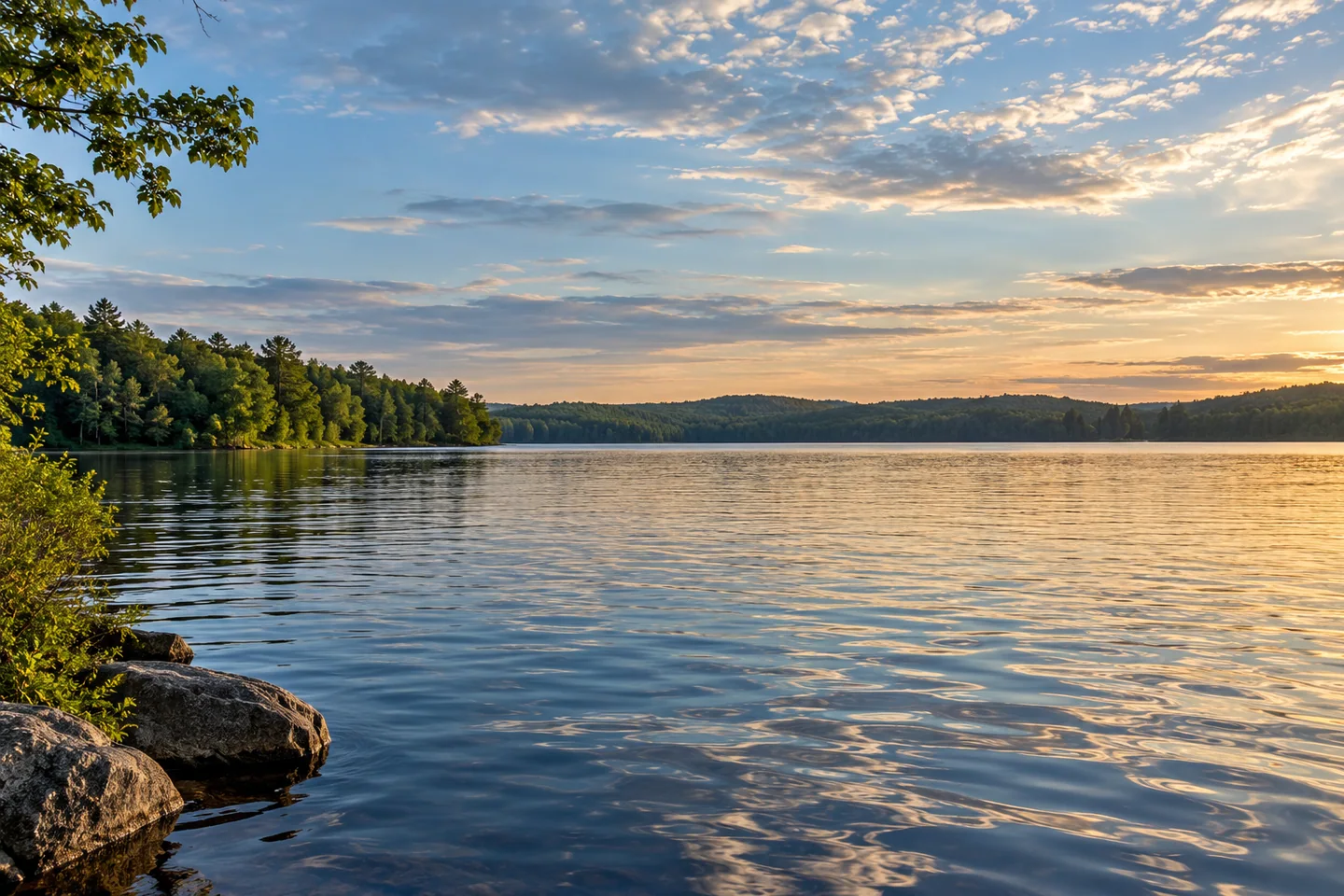
Horne Pond in Limington is also known as Pequawket Lake, a useful pairing of names to recognize before traveling. The town's Moy-Mo-Då-Yo recreation area provides a boat launch and dock, with other shore facilities arranged around a sandy beach. Begin by confirming the current arrangements for the activity you want. A boating departure and a beach visit should each be planned on their own terms. This is a different destination from Horn Pond on the Acton and Wakefield border, despite the very similar name.
The local association's history explains why more than one name persists. It describes a 1917 effort by Camp Moy-Mo-Dä-Yo co-founders Elizabeth Moody and Helen Mayo to use Pequaket Lake, while Horne Pond remained in official documents and maps. This is a local naming history, not proof that the modern lake name reproduces a documented Indigenous name for this exact waterbody. The association itself acknowledges gaps in that earlier record. Paying attention to the uncertainty can make a name more meaningful than a neat story repeated without its limitations.
Water here is connected to a wider landscape. The association identifies spring-fed water and several brook inflows, with overflow leaving through Horne Pond Brook toward Webster Mill Pond. A spillway at the southern end developed from an earlier dam, with later changes allowing more natural fluctuations in water level. Treat that as context rather than a route to follow through the outlet. From a lawful position, you can think about the pond as a pause in moving water without approaching an engineered structure or needing to trace the downstream course.
Maine KayakGirl's June 2016 outing offers a candid personal view. She initially misread the name as Home Pond, then enjoyed clear-looking water, ducks, dragonflies, and loons during her paddle. She also noted that a shore lined with camps offered fewer nooks and secluded stretches than the places she usually favored. Her account illustrates how an enjoyable outing can differ from a favorite kind of paddle. The calm conditions and visible wildlife belonged to that day; they are not a guarantee of quiet water or a reason to assume the pond is suitable for every beginner.
Behind the scene is repeated observation. The Pequawket Lake Preservation Association describes volunteer monitoring of water clarity, chemistry, dissolved oxygen, and temperature, with information supplied to Maine's environmental agency. A surface that looks inviting cannot tell you all of that by itself. You need not become a water scientist to appreciate the effort, but knowing it exists gives another dimension to the view. Leave vegetation undisturbed, clean equipment between waterbodies, and use current official advisories when deciding which activities suit your visit.
For a simple outing, allow time to inspect the launch, settle into the setting, and choose a route with an easy margin for returning. Keep private camp shores outside your landing plan and give wildlife room rather than approaching for a closer image. A wide photograph can show the pond within its inhabited shoreline; a second might study changing water texture from stable public ground or a stationary craft. Horne Pond's interest is not dependent on finding wilderness. Its names, recreation, water connections, and continuing care offer plenty to notice in a familiar-looking lake landscape.
Fun facts
- Horne Pond and Pequawket Lake are names for the same Limington waterbody.
- The association recounts a 1917 naming effort by camp founders Elizabeth Moody and Helen Mayo.
- Volunteer monitoring includes clarity, chemistry, dissolved oxygen, and temperature.
Before you go
- Confirm the current arrangements for your launch or beach visit before traveling.
- Stay clear of spillway structures and private camp shores.
- Clean equipment between waterbodies and check current advisories for your planned activity.
Visitor perspectives
- Maine KayakGirl’s June 2016 Horne Pond post describes clear-looking water and sightings of ducks, dragonflies, and loons. She enjoyed the outing but found fewer secluded corners than in her preferred paddling locations.
Capture
- Frame the pond within its inhabited shoreline from a safe, lawful position.
- Study water texture without approaching wildlife or obstructing launch users.
 Crystal Pond and Nelson-Butterfield Park
 U.S. Customs House
 Sand Pond
Social
Horne Pond is also called Pequawket Lake.
Limington’s town recreation area provides an established shore arrival.
A local naming history connects the lake with early camp founders.
Water leaves through a spillway toward Horne Pond Brook.
Maine KayakGirl’s 2016 outing enjoyed wildlife while finding fewer secluded corners than she preferred.
Volunteer readings reveal aspects of a lake that a surface view cannot.
An inhabited lake can be an interesting landscape to notice closely.
Would you remember Horne Pond for its names, the water, or the shoreline life?
Hashtags