 Cre8Travel
CRE8TRAVEL · MAINE PLACES
Gardiner Common
Gardiner Common: A Public Green with a Long Memory
Discover
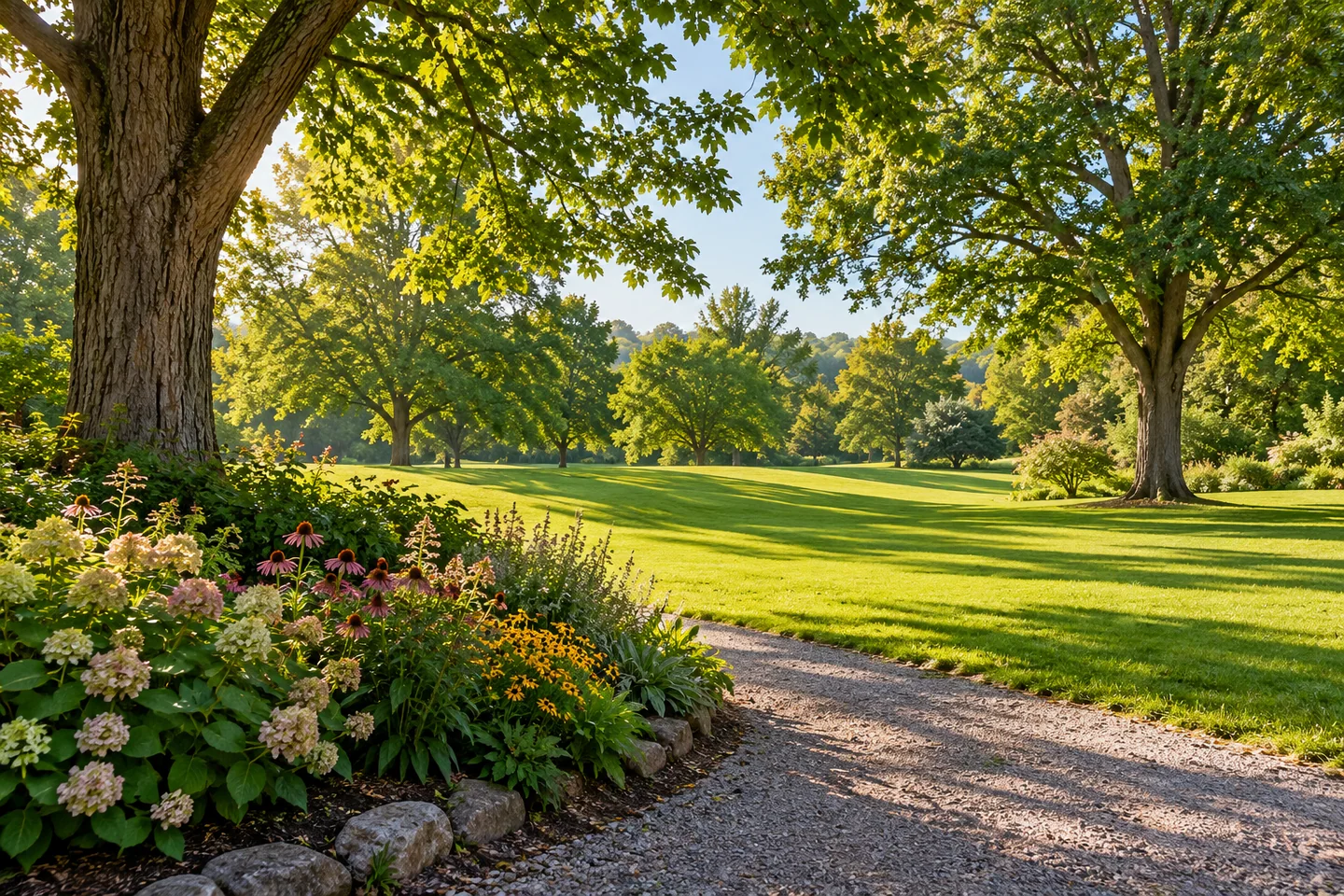
Gardiner Common offers a compact landscape of paths, memorials, and everyday recreation on Brunswick Avenue. The city describes open space, a children's playground, and a perimeter walk, framed by houses, churches, and a school. A visit can be as simple as a short stroll and a pause, with enough time to notice how a public green accommodates play, commemoration, and ordinary movement through town.
Originally called Brunswick Square, the land was donated by Robert Gardiner in 1824 for a public walk and parade ground. The city's account explains that his conditions included keeping rows of trees, separating paths from roads, and avoiding permanent buildings. Those intentions help explain the Common as a deliberately shaped civic landscape rather than an unused piece of ground left between streets.
The state Historic Preservation Commission documents the Civil War memorial as a shaft of Hallowell granite, made by C. H. Clary of the Hallowell Granite Company. Funding came from the city and the Ladies' Sanitary Society. These details make the monument a record of local materials and collective support as well as remembrance. Read the inscription closely enough for an individual phrase or date to become part of the visit.
Two original Tripadvisor accounts approach the Common through its fountain. Russell W, writing in April 2024, notes the informational plaques and treats the fountain as one among several things to see. Syndi04345, recalling an August 2015 visit, emphasizes the combination of sculptures, playground, gazebo, and surrounding buildings. Their observations suggest looking at relationships between features, rather than treating the fountain as an isolated destination.
A Jane's Walk programme marking the Common's bicentenary in 2024 proposed a stroll with the public library director and local historians. The organizers encouraged participants to contribute their own memories as well as listen to historical accounts. Although that scheduled event has passed, its premise remains a useful way to approach the place: ask how a designed public space becomes part of many different people's lives.
The memorial record also illustrates why a single date can need careful reading. Its transcribed inscription names 1875, while the commission records a dedication in May 1876. Keeping those distinct preserves the difference between what a monument says and the documented occasion when it was dedicated. A small park can therefore offer an exercise in reading historical evidence as well as a pleasant break.
The walk organizers describe the paths as fairly level but potentially uneven, muddy, or soft after rain. That qualification is more useful for planning than assuming a small urban green is equally easy in every condition. Choose an approach that suits the people in your group, follow current street notices, and leave space for others using the paths for their own purposes.
For photographs, consider how a memorial sits within the open space before choosing a close detail. Keep children's play and other visitors' conversations private. A written note about one historical question, paired with a view of the setting, can make the outing more personal than a collection of every feature. There is room to enjoy the Common without turning a short visit into a checklist.
Fun facts
- The Civil War memorial uses Hallowell granite and was supported by the city and the Ladies’ Sanitary Society.
Before you go
- Check current city street notices when choosing an approach.
- Allow for uneven or soft ground after rain.
Visitor perspectives
- Russell W notes the fountain’s information plaques and recommends looking at other parts of the Common.
- Syndi04345 recalls the fountain, sculptures, playground, gazebo, and surrounding homes and churches as a unified green.
Capture
- Place a memorial within the wider green before selecting a close detail.
 Castonguay Square
 Benton Riverside Park
 Hallowell Museum in the Streets
Social
Gardiner Common began as a public walk and parade ground.
Local granite connects the memorial to regional craftsmanship.
One visitor recommends reading the fountain’s information plaques.
Another remembers the Common as a combination of recreation and surrounding buildings.
A bicentenary walk invited people to share memories of this public space.
Let one historical detail give shape to a short stroll.
An open green can hold many different uses at once.
Leave room for the everyday life of the park.
Hashtags