 Cre8Travel
CRE8TRAVEL · MAINE PLACES
Conroy Lake
Conroy Lake: A Small Surface above a Deep Basin
Discover
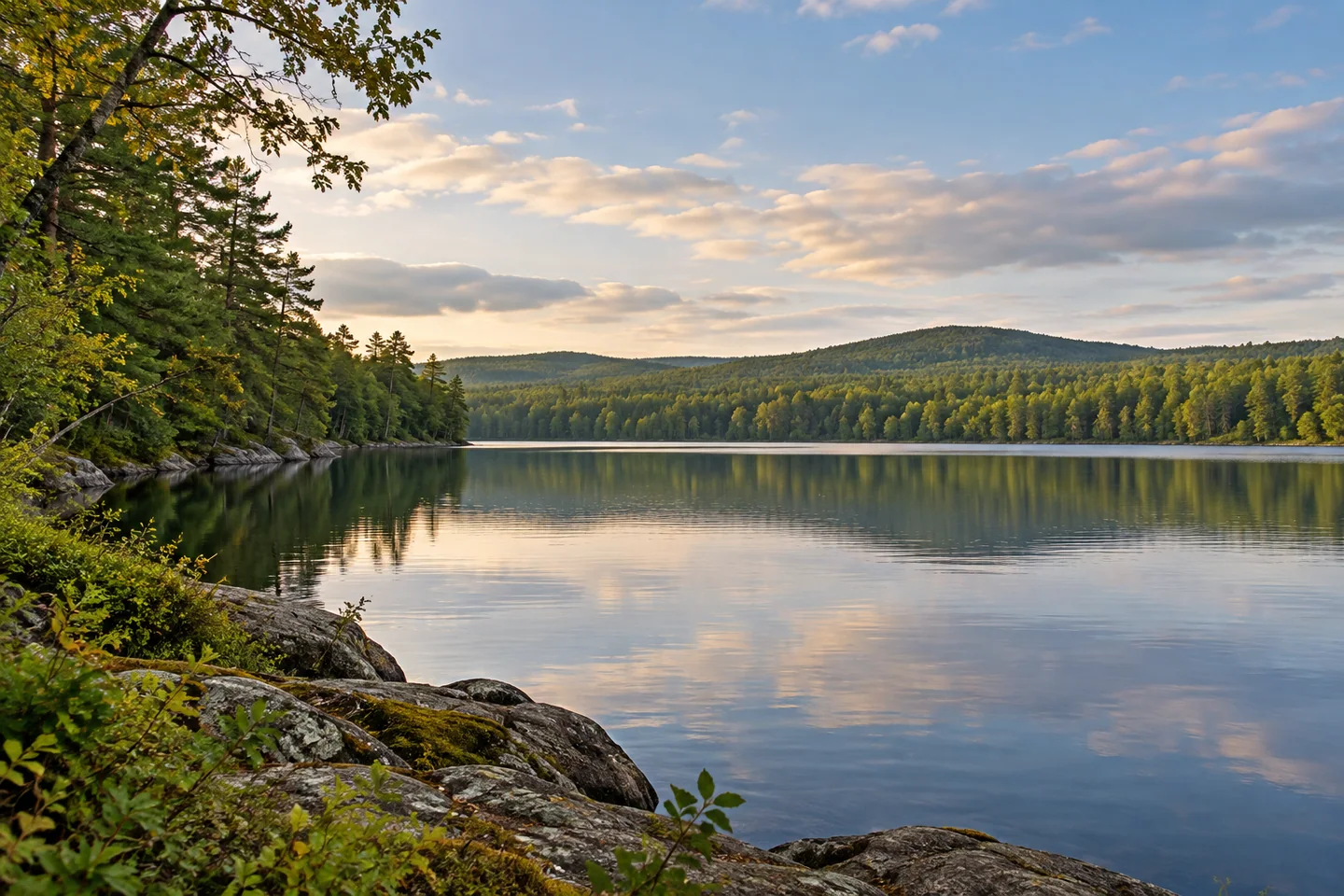
Conroy Lake in Monticello rewards a visit with a striking difference between its surface footprint and its underwater dimensions. The state fisheries survey records just 25 acres, yet a maximum depth of 108 feet. Its public right-of-way and gravel launch lie on the western side, off Lake Road. Approach it as a small lake with substantial depth beneath your boat, allowing the compact shoreline to hold your attention rather than measuring the outing by distance traveled.
The fisheries history makes that depth more interesting. In the state’s 2000 survey revision, the water suitable for trout in late summer occupied a limited band: cold enough and sufficiently oxygenated between roughly 12 and 25 feet. Deeper water held too little dissolved oxygen for those fish. A very deep basin therefore did not provide unlimited coldwater habitat. That distinction gives an angler, or simply a curious paddler, a richer understanding of the lake beneath an apparently modest expanse.
A historical water-quality summary adds another layer. Samples collected in 1999 showed conductivity rising sharply with depth, suggesting that water-density differences could interfere with the usual spring and autumn mixing. The report raised the possibility that Conroy was meromictic, a lake in which deeper water resists complete mixing. The observation offers a way to think about an unseen landscape: separate layers can persist beneath one continuous surface, with consequences for oxygen and the material settling to the bottom.
Scientists have also investigated what that bottom can preserve. In his 2010 American Chemical Society research report, Brad Hubeny described a regional project using sediment cores, water chemistry and sediment traps to study the origin and accumulation of organic matter in Maine lakes. Conroy and Tea Pond, far apart geographically, showed corresponding long-term patterns in organic deposition. Such similarities suggested influences operating across the region, rather than a history belonging only to one shoreline. The comparison connects this small northern basin with a broader scientific inquiry.
The project examined annually layered sediments and used radiocarbon dating to improve its timeline. Those methods turn quiet lake mud into evidence of environmental change over long periods. For a visitor, the value is interpretive: the water in front of you has a history far longer than the afternoon you spend beside it. Let that thought add interest to a slow outing without disturbing the shore or collecting material.
For travelers considering an overnight base, Maine’s tourism directory lists Wilderness Pines Campground on West Conroy Lake Road, a short walk from the lake, and advertises canoe, kayak and paddle-boat rentals. Contact the operator about present arrangements before relying on rental equipment or campsite availability. The campground is an optional commercial service; the public right-of-way described by the fisheries agency is a separate basis for approaching the water.
Choose the scale of the day to suit this compact setting. A considered launch, an unhurried look at the shore and time to imagine the basin below can form a complete visit. Return with a clearer sense of how a small lake can contain a surprisingly complicated world.
Fun facts
- The historical fisheries survey records a maximum depth of 108 feet.
Before you go
- Use the documented western public right-of-way off Lake Road.
- Confirm rentals and accommodation directly with the campground before traveling.
Capture
- Make a simple shoreline composition from a stable position, keeping your equipment secure.
 Kingsbury Pond
 Square Lake
 Fish River Lake
Social
Conroy’s modest footprint conceals a deep basin.
Historical conductivity measurements suggested persistent differences between water layers.
Sediment research links Conroy with larger questions about regional environmental change.
Nearby campground rentals may help travelers who arrive without a boat.
Lake mud can preserve a much longer story than a single afternoon.
A short outing can leave room for close attention.
Plan the return before extending the day.
Enjoy the water without disturbing the shore.
Hashtags