 Cre8Travel
CRE8TRAVEL · MAINE PLACES
Cambridge Woodlands Preserve
Cambridge Woodlands: Meadow, Brook and Community Paths
Discover
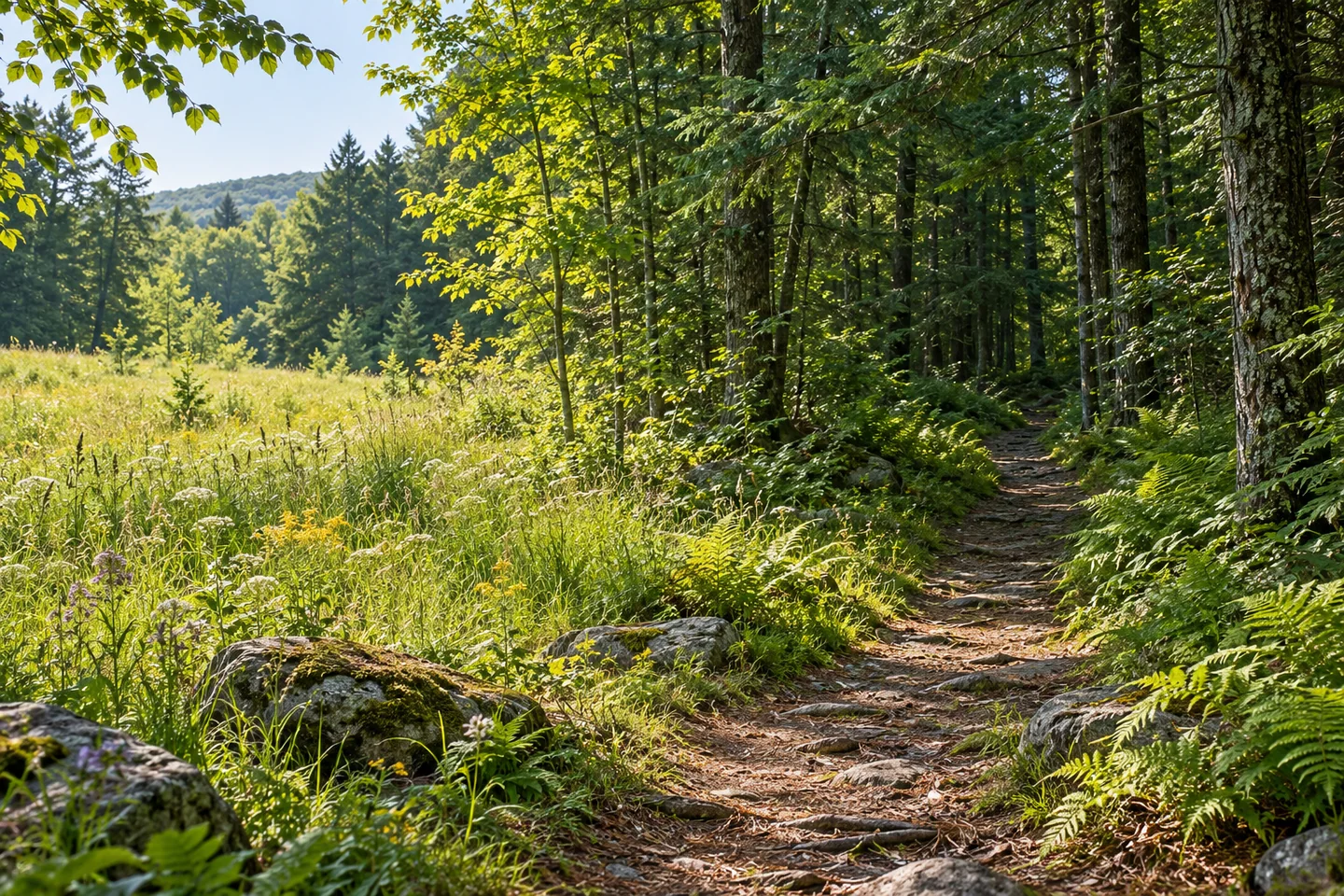
Cambridge Woodlands Preserve begins with a meadow and draws its walk gradually into the trees. On Leavitt Road in Cambridge, this Sebasticook Regional Land Trust property offers a manageable introduction to a working woodland’s quieter details. An old woods road crosses the open ground before continuing into mixed forest and hemlock stands beside a small stream. The sequence gives a short outing several distinct settings, without needing a distant summit as its destination.
The 90-acre property was a gift from Jack Daggitt in 2013. Its paths reflect another kind of contribution: A local Boy Scout troop began developing the trail system in 2015, two years after the land itself had been donated to the trust. That community history gives a simple woodland circuit another dimension. The route is something people made together so that the conserved land could be experienced on foot.
Maine Trail Finder describes the blue-blazed approach across a field and onto an old skidder route. Farther in, the loop alternates a narrower path over rocks, stumps and a dry streambed with a wider woods track. Ferns and grasses form part of its understory setting. A short branch approaches the brook near the loop junction. Use those changes in surface to set your pace: the listing’s easy classification still includes natural, uneven ground.
Rebecca Goldfine’s September 2023 account captures the experience at a particular moment. She found a mowed circuit around a meadow, wet patches in the woods and a bench beside the stream. Her recorded walk was about 1.4 miles. The pleasure she describes comes from the combination of open space, woodland and water on a compact route. Treat her account as an invitation to notice those contrasts, with conditions and maintenance varying between visits.
The preserve has also served as an outdoor classroom for woodland management. A June 2024 land-trust event brought together a U.S. Fish and Wildlife Service biologist and a Maine wildlife biologist to discuss habitat practices here. Topics included standing dead trees, cavities, fallen woody material, pollinators and invasive plants. The announcement also dates the last timber harvest to 2015. That history encourages a richer reading of the forest than simply dividing it into untouched nature and human disturbance.
Carry that management perspective into your walk without turning it into a species checklist. A fallen branch, a hollow or a change in vegetation can prompt questions about how woodland structure serves different inhabitants. The event’s teaching themes provide a way to look; they do not promise a particular animal encounter. Staying with observation rather than a tally allows the smaller features to hold your attention even on a visit when wildlife remains out of sight.
For the approach, use the manager’s Leavitt Road directions and the signed preserve entrance. Winter parking is described as being on the shoulder, so arrangements deserve a fresh check before a cold-season outing. Once there, allow the walk to unfold from meadow to forest rather than rushing straight to its farthest point. A pause on the return can make the opening landscape feel different after time among the trees.
Fun facts
- A local Scout troop began the trail system in 2015.
- A habitat-management walk was organized here in June 2024.
Before you go
- Follow Leavitt Road entrance signs rather than an unchecked map pin.
- Expect natural surfaces, including rocks and stumps.
Visitor perspectives
- Rebecca Goldfine records a meadow circuit, a stream-side bench and wet patches during her roughly 1.4-mile walk. These are observations from her own outing.
Capture
- Frame the transition from open meadow to the enclosing woods.
- Study a brook-side composition from the existing path.
 Parkman Hill Farm
 Orbeton Stream Conservation Easement
 Whistle Stop Rail Trail
Social
A meadow-to-forest sequence gives Cambridge Woodlands its walking rhythm.
Jack Daggitt’s 2013 gift protected this Cambridge woodland.
Blue blazes guide the preserve’s approach through fields and forest.
The loop combines a woodland footpath and an old skidder route.
Goldfine’s account noticed a stream-side bench and wet woodland patches.
Dead wood and tree cavities were themes of a habitat walk here.
A short outing can leave room for careful observation, without a wildlife tally.
Pause again on the return: the beginning of a walk can look different the second time.
Hashtags