 Cre8Travel
CRE8TRAVEL · NEW YORK PLACES
West Side Community Garden
West Side Community Garden: Flowers with a Lasting Home
Discover
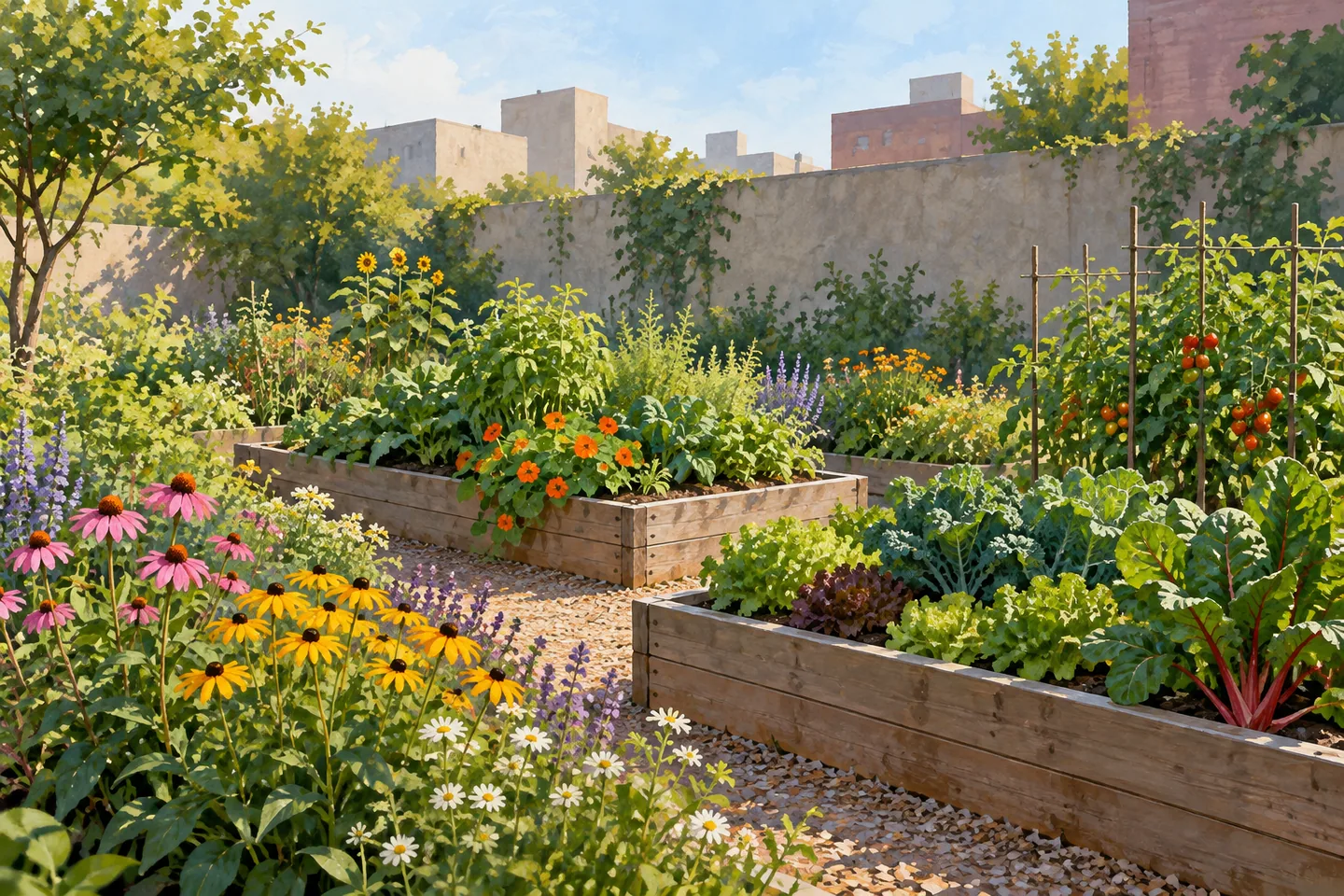
Flower beds, vegetable plots and a floral amphitheatre give West Side Community Garden several ways to be a public landscape. At 123 West 89th Street, between Amsterdam and Columbus Avenues, it is a place for growing as well as gathering. Its present form is the result of decades of neighborhood effort, with ownership and design becoming as important to the garden's story as the plants themselves.
Neighbors began gardening here in 1976 after gaining access to vacant land from the city. Clearing the site made room for flowers and vegetables, but the first garden did not yet have a secure future. The operator's history describes a larger area than the garden occupies today, extending toward Columbus Avenue. Keeping those stages distinct matters: the earliest growing space and the present designed garden are chapters of the same story, not identical footprints.
A later development agreement gave the garden a more permanent shape. Plans for the site approved in 1985 led to negotiations over how growing space could remain within a changing block. The arrangement that followed provided for a 16,000-square-foot garden, with the developer funding the design and half the construction cost and the garden organization raising the rest. Water and electricity below ground were part of the work. Their presence is a useful reminder that a flourishing urban garden relies on infrastructure that may be far less visible than its flowers.
The ownership question reached a decisive point in 1988. Rather than receiving only a long-term lease, the garden learned that it would receive the deed under conditions preserving its nonprofit function and public access. That step helped turn a temporary neighborhood project into a lasting landscape. The space remains volunteer-run and supported by grants and donations, according to the operator, so permanence of land does not remove the need for continuing care.
Landscape architect Terry Schnadelbach designed the multipurpose garden. Its floral amphitheatre and public seating areas sit alongside flower beds and vegetable plots, combining display, cultivation and shared use. The garden received the Philip N. Winslow prize in 1991 for community restoration and landscape design. Look at the relationship between these elements rather than searching for a single central feature: a planted display and a useful growing bed can contribute different kinds of interest within the same small property.
A visit can follow that mix of purposes. Begin with the pattern of planting, then notice how the setting allows people to sit or gather without making the whole space a performance venue. Flowers are only one stage in a planted landscape, so let the actual season shape what attracts attention. Leaf forms, repeated beds and the contrast between cultivated ground and surrounding buildings can provide a visual theme even when a particular display is absent.
Check the operator's current access and calendar before planning around a named activity. Older photographs and event pages record earlier moments rather than today's conditions. The enduring story is simpler: neighborhood gardeners obtained a lasting place to grow, then designed it for more than one use. West Side Community Garden invites a close look at that combination. Its flowers may change, while the relationship between cultivated space, public enjoyment and repeated volunteer work continues to give the place its character.
Fun facts
- Neighbors began the garden in 1976.
- The later development agreement provided for a 16,000-square-foot garden.
- The garden learned in 1988 that it would receive the deed under nonprofit and public-access conditions.
- Its landscape design received a Philip N. Winslow prize in 1991.
Before you go
- Use the operator-listed address, 123 West 89th Street.
- Check current access and events rather than treating old photo-gallery dates as current conditions.
- Allow attention for vegetable plots as well as flower displays.
- Distinguish the larger early garden footprint from today’s designed space.
Capture
- Compare repeated planting shapes with the surrounding urban setting.
- Use leaf and bed textures when the day’s flowers do not provide the main subject.
- Keep public seating and gathering areas available while composing photographs.
 Sixth Street and Avenue B Community Garden
 Watkins Glen State Park
 Storm King Art Center
Social
West Side Community Garden combines flowers, vegetables and a shared public landscape. #Cre8Travel
Neighbors began gardening on the site in 1976.
The original garden extended over a larger footprint than today’s space.
A later agreement provided for a 16,000-square-foot designed garden.
Water and electricity below ground were part of the practical construction story.
In 1988, a deed under nonprofit and public-access conditions gave the garden a lasting home.
Its floral amphitheatre, seating and cultivated beds received design recognition in 1991.
Which part of a shared garden would you explore first: flowers, vegetables or the spaces between them?
Hashtags