 Cre8Travel
CRE8TRAVEL · NEW YORK PLACES
Soundview Park
Soundview Park: Where the Bronx River Meets a Wider Waterfront
Discover
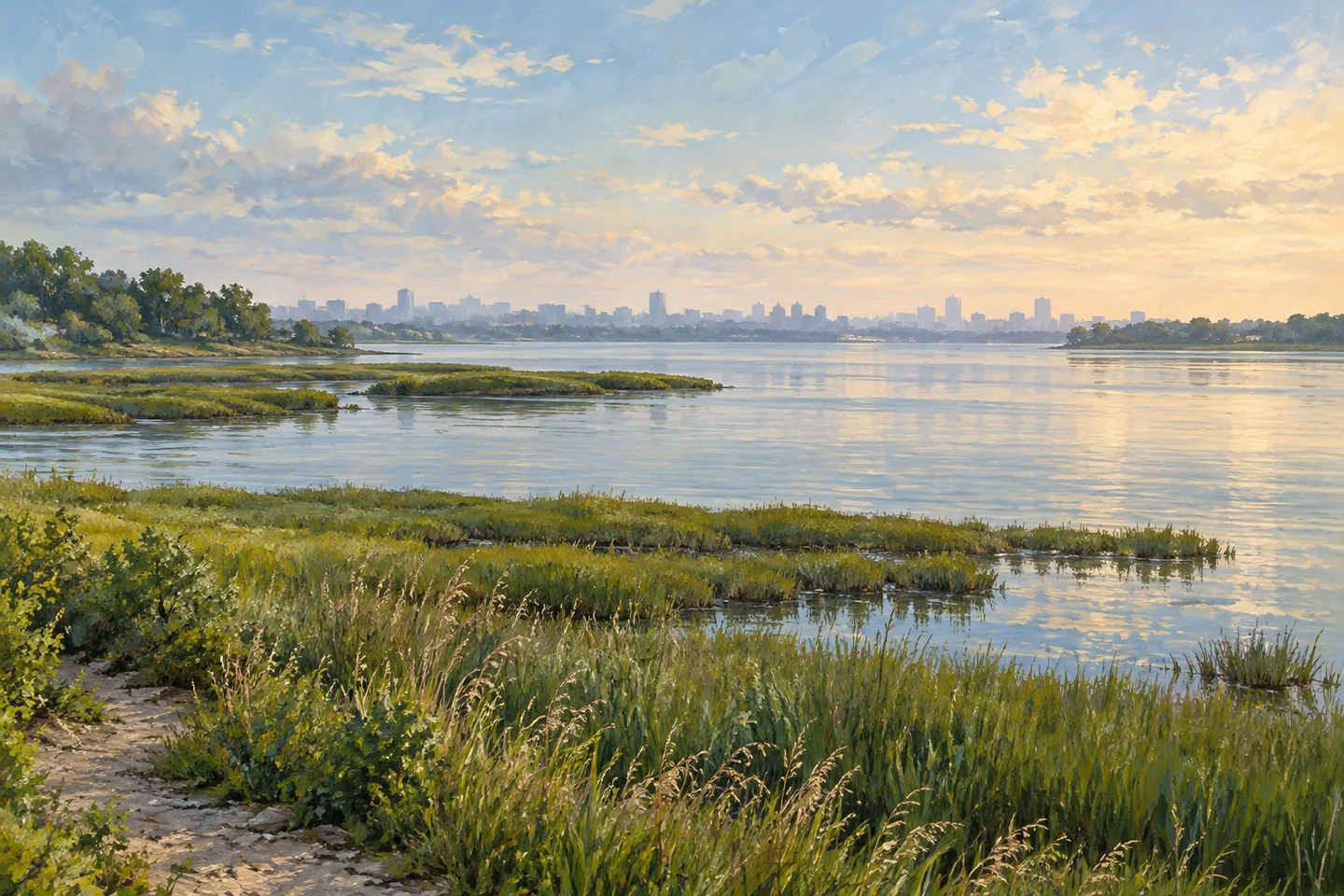
Soundview Park opens toward the place where the Bronx River meets the East River. The scale of the water changes the feeling of a walk: neighborhood recreation gives way to broad views toward Manhattan and Queens, while a restored salt marsh draws attention back to the shoreline. The park offers both an expansive outlook and details best appreciated slowly.
The landscape has been transformed more than once. When the city acquired the original 93 acres in 1937, the site consisted of marshland and open water. Landfill operations, begun in the 1920s and continued for decades, changed the elevation and shape of the shore. Much of the present park therefore occupies ground made through twentieth-century filling, rather than an untouched natural edge.
That history helps explain the importance of restoration. A compilation of Parks Department and Harbor Estuary Program material preserved by New York Sea Grant describes efforts to recover salt-marsh and coastal-upland habitat. The projects sought to reconnect areas of shoreline with tidal conditions and establish vegetation suited to different levels of the marsh. The design addressed the living processes at the water's edge as well as the appearance of the park.
The difference between low and high marsh is a useful theme for a visit. Earlier restoration plans specified salt-marsh cordgrass for lower tidal ground and other planting for the higher margins. Plants, water levels and the shape of the bank work together to support habitat. From the public paths, look for changes in texture and height instead of expecting every part of the shoreline to look the same.
The Bronx River Alliance describes a waterfront path of about 1.5 miles leading to the restored marsh at the park's southeastern corner. Its account emphasizes the role of the restoration in supporting wildlife and improving water quality. For visitors, that gives the path a clear purpose: it is a route for enjoying the view and a way to approach an area where ecological work has reshaped the shore.
The broader park supports many kinds of recreation. Fitness equipment, ballfields and playgrounds sit alongside walking and cycling routes. A sports visit and a birdwatching walk need not cover the same ground. Choose the section that fits your interests, allowing time to move from the activity of the playing areas to a quieter stretch overlooking the water.
Older descriptions of Soundview also tell the story of a large dark boulder associated with the area's former Black Rock Farm. The rock was identified as gneiss, whose alternating light and dark bands record geological change. That background adds another scale to thinking about the landscape: older rock, twentieth-century fill and more recent habitat restoration all contribute to the story, even when a visit centers simply on a waterfront walk.
Check the current park map and facility notices before setting out, and use designated paths around the restored shoreline. Bring binoculars if watching birds interests you, with time to wait and observe rather than expecting a particular sighting. The park's strongest experience may be this combination of scales: a bench or path close at hand, a marsh responding to the tide, and a broad city waterfront stretching beyond it.
Fun facts
- The city acquired the park’s original 93 acres in 1937.
- The site once included tidal marshland and open water.
- Restoration has returned habitat to part of the shoreline.
- The Bronx River Alliance describes a waterfront path leading to the southeastern marsh.
Before you go
- Choose a route using the current park map.
- Observe the restored marsh from designated public paths.
- Bring binoculars and allow time for wildlife observation.
- Plan sports and playground stops around the facilities your group wants.
Capture
- Compare the nearby marsh textures with the broad water and distant city skyline.
- Use a public path or bench area for a layered composition of planting, shoreline and open water.
 Starlight Park
 Brower Park
 Carroll Park
Social
Soundview Park looks across the meeting of the Bronx and East Rivers. #Cre8Travel
Its shoreline was reshaped by decades of twentieth-century landfill.
The city acquired the original 93 acres in 1937.
Salt-marsh restoration reconnects part of the park with the waterfront’s living processes.
A waterfront path leads toward the southeastern marsh.
Ballfields, playgrounds and fitness areas add another rhythm to a visit.
Observe habitat from designated paths and allow time to watch the water.
Which catches your attention first: the close marsh or the distant skyline?
Hashtags