 Cre8Travel
CRE8TRAVEL · NEW YORK PLACES
Shu Swamp Preserve
Shu Swamp Preserve: A Thoughtful Visitor Guide
Discover
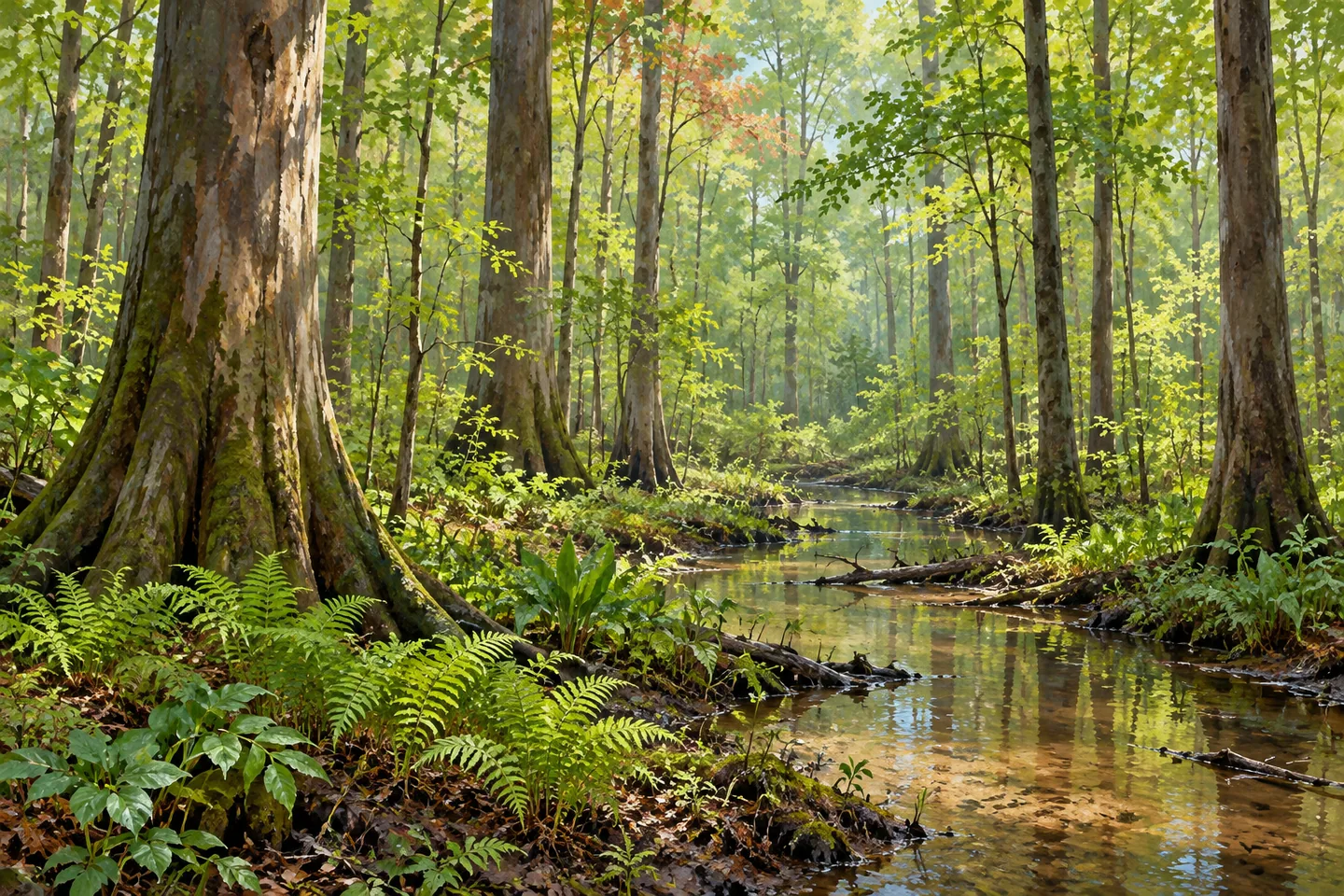
Shu Swamp Preserve is shaped by water moving through woodland. At this Mill Neck preserve, springs and seeps feed a wooded wetland of tulip trees, red maples and tupelos. Beaver Brook runs through the setting, while a shallow pond adds another kind of water margin. The result is a place where a slow look at trees, low-growing plants and changing ground can give a visit its focus.
The operator traces Shu to the old Dutch word “Sheogh,” meaning cascading waters. The name is a useful introduction to the springs and brook, rather than a promise of a dramatic waterfall. Begin with the current visitor information and the entrance on Frost Mill Road beside the railway tracks. The preserve's rules and conditions matter more to the day's plan than an expectation formed from its name alone.
The plant sequence is particularly interesting. Skunk cabbage can flower as early as February or March, followed by ferns and other seasonal growth. The operator identifies marsh marigold, spring beauty, dwarf ginseng and marsh violets among the wetland's spring flowers. Their timing varies, so choose a visit for the woodland setting as a whole. A particular bloom can be a welcome detail without being the sole reason for the journey.
Beaver Brook is described as habitat for brook trout, sticklebacks and American brook lamprey. Fishing is prohibited, so this information belongs to understanding the waterway rather than planning an angling stop. Similarly, the shallow pond's mudflats support shorebirds, but their presence and visibility depend on the conditions you find. Observe from appropriate paths rather than entering wet ground for a closer view.
The preserve account mentions snapping turtles, nesting wood ducks and occasional use of the waterways by mink, muskrats and river otters. These are habitat observations, not a list of animals every visitor should expect to see. Give any wildlife room, especially near water or nesting areas. A photograph of reflected trunks or emerging fern fronds can work without disturbing an animal to complete it.
The organization behind the preserve has its own unusual history. North Shore Wildlife Sanctuary began as a local preservation effort in 1929. After the project fell into neglect, a map discovered during renovations at a Frost Mill Road home in 1960 prompted residents to investigate the earlier refuge. They formed a new sanctuary organization in 1963, and it took the North Shore Wildlife Sanctuary name in 1968. Those dates concern the parent organization, not a claim that every current preserve parcel was acquired at the same time.
That parent now cares for several properties with different habitats, while Shu Swamp offers its own wooded-wetland experience. Keep the two scales distinct: the organization's regional conservation story explains the stewardship context, and the brook, trees and seasonal plants provide the subjects for this particular visit. Neither requires treating nearby private land as an extension of the preserve.
Check current opening information before departure, including the regular Friday closure and seasonal gate arrangements. Heavy rain or dangerous storms can close the preserve. Dogs and bicycles are not permitted, and plants should remain undisturbed. Plan to stay on the established paths and let the wetland's conditions set a comfortable pace. Shu Swamp is best approached as a place for careful observation, with water connecting its woodland structure and seasonal changes.
Fun facts
- Shu Swamp is a wooded wetland of tulip trees, red maples and tupelos.
- Springs and seeps feed the preserve, and Beaver Brook flows through it.
- The operator traces Shu to the Dutch Sheogh, meaning cascading waters.
- Skunk cabbage and spring ephemerals are part of Shu Swamp’s seasonal plant story.
Before you go
- Check Friday and seasonal gate arrangements before travelling.
- Stay on established paths and keep plants in place.
- Do not bring dogs, bicycles or fishing equipment for use here.
- Keep your distance from wildlife and respect storm closures.
Capture
- Try reflected trunks or a fern detail from the path.
- Use a longer lens for wildlife and avoid wetland entry or nest approaches.
 Shore Road Sanctuary
 Sweetbriar Nature Center
 Wawapek Preserve
Social
Shu Swamp is a wooded wetland of tulip trees, red maples and tupelos. #Cre8Travel
Springs and seeps feed the preserve, and Beaver Brook flows through it. #Cre8Travel
The operator traces Shu to the Dutch Sheogh, meaning cascading waters. #Cre8Travel
Skunk cabbage and spring ephemerals are part of Shu Swamp’s seasonal plant story. #Cre8Travel
Brook trout, sticklebacks and American brook lamprey are listed for Beaver Brook; fishing is prohibited. #Cre8Travel
The North Shore Wildlife Sanctuary organization was re-established in 1963 and renamed in 1968. #Cre8Travel
Shu Swamp does not permit dogs or bicycles on its trails. #Cre8Travel
Check current seasonal gate information and Friday closure before visiting Shu Swamp. #Cre8Travel
Hashtags