 Cre8Travel
CRE8TRAVEL · NEW YORK PLACES
Madison Square Park
Madison Square Park: Garden, Art and a Long Urban History
Discover
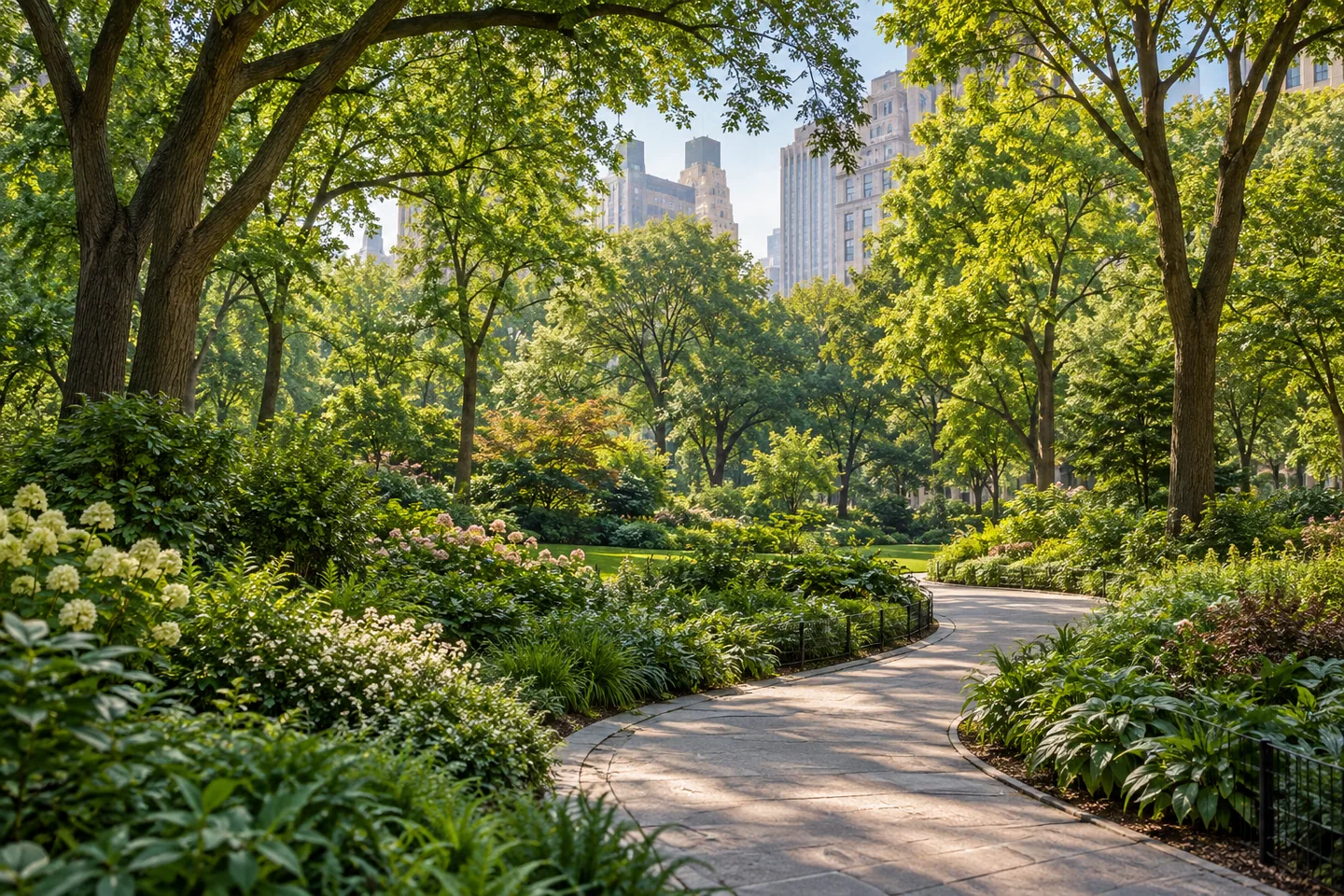
Madison Square Park brings gardens, trees and public art into a 6.2-acre space in Manhattan's Flatiron and NoMad setting. Fifth and Madison avenues frame its sides, with 23rd and 26th streets marking its southern and northern edges. Within that city grid, the park has a scale that invites a focused visit: a particular planting, a water feature, an exhibition or simply time spent looking at how the different parts fit together.
The park officially opened in 1847. Its present form has roots in an 1870 redesign by civil engineer William Grant and landscape architect Ignatz Pilat. Those dates provide a framework for the setting without requiring every visible element to belong to the same period. The place has continued to change, with later restoration and programming adding new layers to the nineteenth-century public park.
The living collection is a central part of that continuing story. Madison Square Park received Level 1 arboretum accreditation in 2018 and Level 2 in 2021. The conservancy links the later recognition with the diversity of its trees, collection policies and public programming. These distinctions give tree cover a significance beyond shade alone. A visit can pay attention to the variety of forms within a small urban space, alongside the gardens maintained around them.
Water contributes another point of focus. The fountain south of the Oval Lawn was restored in 2015, returning a historic park element to prominence. The Reflecting Pool is a separate feature identified in the visitor guide. Keeping those names distinct helps when choosing a stopping point or reading the park map. A water feature, a lawn and the surrounding trees create different subjects within a short walk, with their appearance shaped by the actual conditions of the day.
Public art adds a changing layer. The park held its first public art exhibition in 2001, beginning a continuing program rather than establishing one permanent installation to represent every visit. Check the current exhibition if art is the main reason for coming. The relationship between a work and its outdoor setting is part of the experience, but the particular artwork present belongs to its own exhibition dates.
Since 2003, Madison Square Park Conservancy has managed the park and raised its operating budget. That ongoing care connects horticulture, maintenance and public programming with the physical setting. The playground and Jemmy's Dog Run serve different visitors, while lawns have their own current access status. Choosing among these spaces makes more sense than assuming the whole park functions identically at all times or for every activity.
The visitor information describes step-free connections between the sidewalk and park pathways, with ramp access where needed. It also notes that there are no bathrooms inside the park. Those details help shape a short city stop without turning it into a complex itinerary. Follow the current access guidance for the lawn or facility intended, then allow the park's different stories to remain visible together: nineteenth-century design, restored water features, a recognized tree collection and art that changes over time. Madison Square Park's appeal comes from that combination within a compact Manhattan setting.
Fun facts
- Madison Square Park officially opened in 1847 and was redesigned in 1870.
- William Grant and Ignatz Pilat were responsible for the 1870 redesign.
- The park received Level 1 arboretum accreditation in 2018 and Level 2 in 2021.
- The fountain south of the Oval Lawn was restored in 2015.
Before you go
- Check the current exhibition and lawn status for the intended visit.
- The park has no internal bathrooms; plan accordingly.
- Keep this park distinct from the Madison Square Garden arena.
Capture
- Photograph visible relationships among trees, gardens and the surrounding city from public paths.
- Follow current photography rules for temporary artwork and avoid reproducing commissioned art in an illustration.
- Use a generic urban-green-space concept rather than an exact park layout, statue or installation.
 Powder Mills Park
 Natural Stone Bridge & Caves
 Mohonk Preserve
Social
Madison Square Park brings gardens, trees and art into a compact Manhattan setting. #Cre8Travel
The public park opened in 1847.
Its 1870 redesign involved William Grant and Ignatz Pilat.
Arboretum recognition in 2018 and 2021 highlights the living tree collection.
The fountain south of the Oval Lawn was restored in 2015.
The Reflecting Pool is a separate named feature in the visitor guide.
Public art has been part of the park’s program since its first exhibition in 2001.
Check what is open or on display, then enjoy the different layers of care and design within this small city space.
Hashtags