 Cre8Travel
CRE8TRAVEL · NEW YORK PLACES
Henry Hudson Park
Henry Hudson Park: A Bronx Hillside in Several Layers
Discover
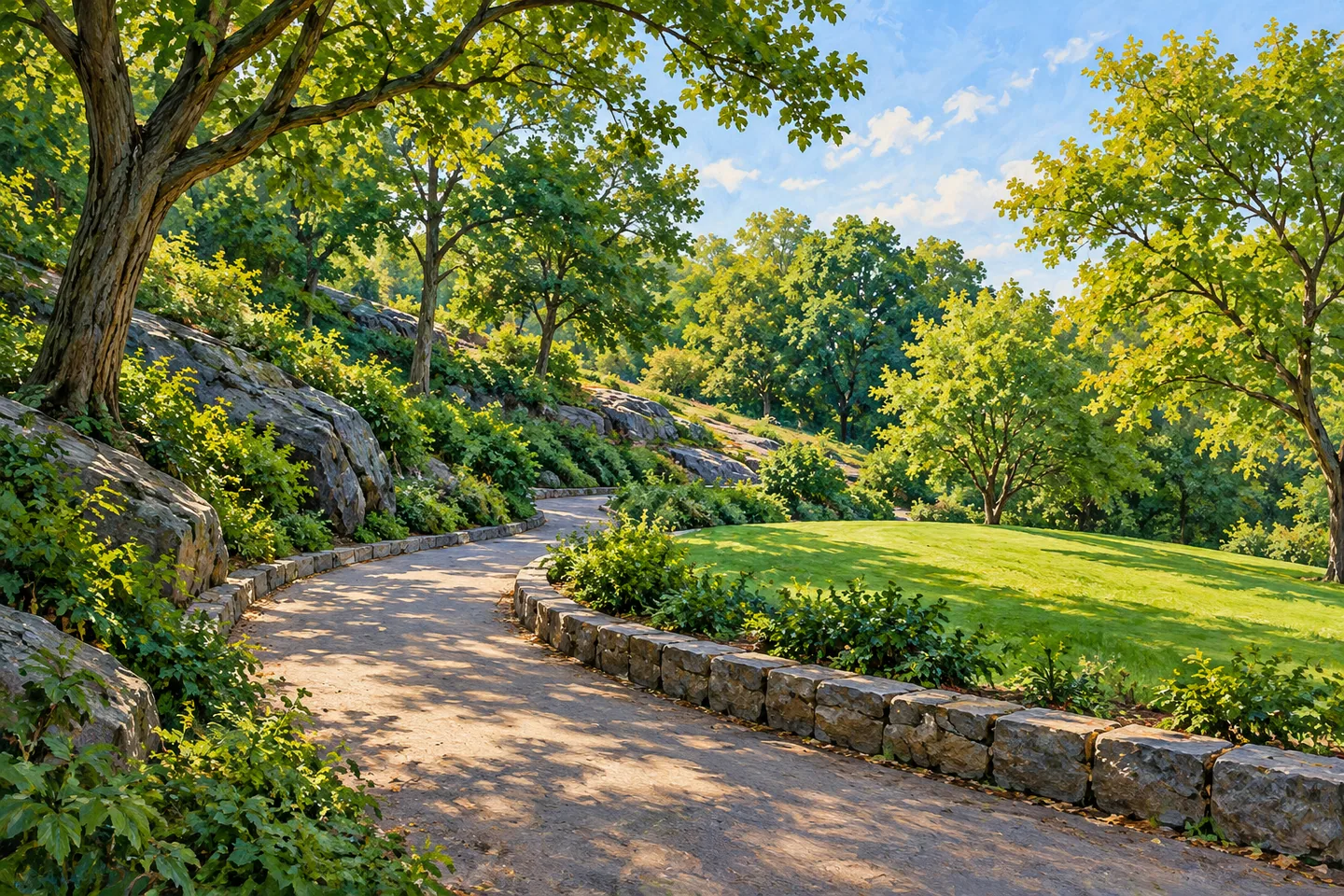
Henry Hudson Park uses the slope of Spuyten Duyvil to create several kinds of outdoor space. Around Kappock Street, Palisade Avenue and Independence Avenue, its paths, planted ground and recreation areas occupy different levels of the hillside. The result is a neighborhood park that invites both a closer look at its landscaping and a broader sense of the surrounding terrain.
Long before the park took its present form, the bluff had a varied landscape of estates and recreation. One property belonged to William C. Muschenheim, proprietor of the Hotel Astor, whose floral garden was known as Nipnichsen Terrace. The lower ground included the Berrian homestead, while a level area on the estate of foundry owner David B. Cox was used for baseball as early as the 1860s. The contrast between gardens and playing space therefore has deep local roots.
The making of the public park developed alongside a larger bridge proposal. In 1906, organizers began planning a Hudson-Fulton anniversary celebration, including a monument on the promontory and a bridge linking the Bronx with Inwood. Ground was broken for the monument in 1909, and its large Doric column was erected in 1912. The sculptural figure remained unfinished when the money ran out.
Parkland acquisition followed a different timetable from the original celebration. Land intended for the proposed bridge approach was acquired for public use, and further property came into the park between 1935 and 1937. Landscaping, paths, benches, iron fences and a playground turned the hillside into a more complete public setting. Those elements helped connect the monument site with spaces used for ordinary neighborhood visits.
The monument itself was completed in 1938. Sculptor Karl H. Gruppe, a student of Karl Bitter, redesigned the bronze figure after Bitter's earlier model and created the reliefs at the column's base. The column acts as a strong vertical reference within the sloping landscape. Looking at its relationship to the surrounding paths and planted areas can be more revealing than treating it as an isolated object.
Later work renewed the park's practical facilities. Projects from 1989 through 2018 improved playgrounds, courts, paths, stairways and ballfields, as well as restoring the monument and its plaza. The sequence shows the demands placed on a small urban park: surfaces and play equipment change, while the landform and major organizing features continue to shape each visit.
The natural areas form another part of the story. A Parks Department survey conducted in 2007 mapped ecologically distinct plant communities, recording differences in vegetation, topography and use. That approach suggests a useful way to walk here. Notice where the hillside is wooded, where paths define a garden space and where level ground supports recreation. The variety of surfaces and planting is part of the park's character.
Plan your route around the section you want to use, especially if steps or gradients will affect your group. Check current facility information and follow the public paths between recreation and planted areas. A quiet circuit can take in the changes of level, the stone and iron details, and the ways trees frame the hillside. The park offers a compact view of how old estate ground, a long-delayed landmark and everyday outdoor activities came together in this corner of the Bronx.
Fun facts
- The hillside once included an estate garden called Nipnichsen Terrace.
- The monument’s Doric column was erected in 1912.
- The completed monument was dedicated in 1938.
- Later projects renewed paths, stairs, play areas, ballfields and the monument plaza.
Before you go
- Choose the upper or lower section according to your planned activity.
- Account for steps and gradients when choosing a route.
- Use current facility information for the playground or sports area you want.
Capture
- Use a public path to show how planting and recreation spaces occupy different levels.
- Look for ironwork, stone and canopy details without entering landscaped beds or interrupting play.
 Powell's Cove Park
 Bush Terminal Park
 Starlight Park
Social
Henry Hudson Park follows the hillside of Spuyten Duyvil in the Bronx. #Cre8Travel
The site once combined estate gardens with lower ground used for baseball.
A Doric column went up in 1912, before the monument was completed in 1938.
Paths, planting and recreation areas give the park several distinct levels.
Karl H. Gruppe completed the monument’s figure and reliefs after Karl Bitter’s earlier work.
Later renovations renewed play areas, courts, paths and the monument plaza.
Choose a route that suits your group’s needs on this sloping landscape.
How do gardens and playing spaces share the same hillside?
Hashtags