 Cre8Travel
CRE8TRAVEL · NEW YORK PLACES
Hemlock-Canadice State Forest
Exploring Hemlock-Canadice State Forest: A Conservation Landmark
Discover
Hemlock-Canadice State Forest spans 6,849 acres across Livingston and Ontario Counties, encompassing the watersheds of Hemlock and Canadice Lakes. These lakes have been vital sources of drinking water for the City of Rochester and nearby communities for over a century. The land surrounding them was acquired by the city to protect water quality, leading to a landscape that has largely reverted to forest. Remnants of past agricultural use, such as stone walls, still mark the terrain.
The source confirms 14 miles of marked hiking trails but does not describe the natural environment as 'diverse.' Remove the term 'diverse' or provide evidence. These trails traverse varied landscapes, including areas of dense forest and open spaces. While hiking, visitors are encouraged to respect posted boundary lines and adhere to regulations designed to protect the sensitive watershed. The trails provide a chance to observe the interplay between natural regeneration and conservation efforts in this historically significant area.
Hemlock and Canadice Lakes are unique in their role as protected drinking water sources. Special regulations are in place to ensure the preservation of water quality, making this state forest distinct among New York’s public lands. The lakes are surrounded by forested areas that act as natural filters, safeguarding the purity of the water. This dual role of the lakes—as both recreational spaces and vital resources—underscores the importance of responsible visitor behavior.
The Hemlock-Canadice Unit Management Plan outlines the DEC’s approach to managing the forest. This comprehensive document includes information on the area's geology, habitats, wildlife, and human history. It also details the recreational infrastructure available to visitors. The plan reflects a balance between conservation and public access, ensuring that the forest remains a sustainable resource for both ecological health and community enjoyment. Public input has been incorporated through comments on the management plan’s addendum.
The forest is part of Wildlife Management Unit 8N, which includes nearby state lands such as Conesus Inlet Fish & Wildlife Management Area and Honeoye Creek Wildlife Management Area. These neighboring sites expand the opportunities for observing diverse habitats and wildlife. Although they are managed separately, their proximity to Hemlock-Canadice State Forest allows visitors to explore a broader range of ecosystems and landscapes within the region. Each area contributes to the ecological richness of western New York.
Hemlock Park, located at the northern end of Hemlock Lake, is managed by the Town of Livonia and offers additional recreational opportunities. While distinct from the state forest, the park complements the surrounding area’s focus on conservation and public enjoyment. Visitors should be mindful of the different management rules that apply to the park and the state forest. This separation highlights the collaborative efforts of local and state entities in preserving the region’s natural resources.
The forest’s history is reflected in its landscape, which bears traces of past human activity. Stone walls and other remnants of former agricultural use are scattered throughout the area, offering a glimpse into its historical transformation. Over time, much of the land has reverted to forest, showcasing the resilience of natural ecosystems. This historical context adds depth to the experience of exploring the trails, as visitors can observe how nature has reclaimed the land.
Visitors to Hemlock-Canadice State Forest are encouraged to plan their trips carefully, taking into account current conditions and regulations. The area’s role as a drinking water source necessitates strict adherence to rules designed to protect its ecological integrity. Whether hiking the marked trails or exploring the lakes, visitors should prioritize environmental stewardship. By doing so, they contribute to the ongoing preservation of this vital natural resource for future generations.
Fun facts
- Hemlock and Canadice Lakes are the only Finger Lakes without residential development along their shores.
- The source mentions that the land has few remaining traces of its former uses except for stone walls, which implies that there are remnants of stone walls, but does not explicitly confirm their prevalence or significance.
- Hemlock and Canadice Lakes have been protected as drinking water sources for over 100 years.
- The Hemlock-Canadice State Forest spans two counties: Livingston and Ontario.
- The lakes and surrounding forests act as natural filters, protecting water quality.
Before you go
- Respect posted boundary lines to help protect the sensitive watershed area.
- Plan your visit by reviewing the Hemlock-Canadice Unit Management Plan for detailed information.
- Avoid disturbing wildlife and adhere to regulations protecting the drinking water source.
Capture
- Capture the interplay between forest and water by framing Hemlock or Canadice Lake against the surrounding trees.
- Photograph the historical stone walls to highlight the area’s agricultural past amidst the forest.
- Use the marked hiking trails to find vantage points for wide-angle shots of the lakes and their natural surroundings.
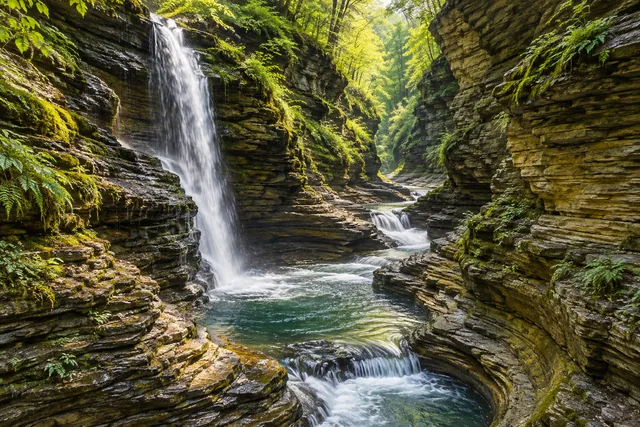 Watkins Glen State Park
Social
Hemlock-Canadice State Forest protects Rochester’s drinking water while offering 14 miles of trails to explore. #Cre8Travel
Discover Hemlock and Canadice Lakes, the only Finger Lakes without residential development. #Cre8Travel
Stone walls in Hemlock-Canadice State Forest tell stories of its agricultural past. #Cre8Travel
Explore 6,849 acres of forest and lakes in Hemlock-Canadice State Forest. #Cre8Travel
Hemlock-Canadice State Forest blends conservation with recreation—plan your visit today! #Cre8Travel
Hike through history and nature at Hemlock-Canadice State Forest. #Cre8Travel
Protect the watershed while enjoying the beauty of Hemlock-Canadice State Forest. #Cre8Travel
Hemlock and Canadice Lakes have safeguarded drinking water for over 100 years. #Cre8Travel
Hashtags