 Cre8Travel
CRE8TRAVEL · NEW YORK PLACES
Chittenango Landing Canal Boat Museum
The Canal’s Workshop Side
Discover
Canal history is often told through boats in motion. Chittenango Landing Canal Boat Museum offers a view of what happened when that motion stopped for work. Along the Enlarged Erie Canal, the site interprets a nineteenth-century dry dock complex and the activities around it. For travelers, it is an opportunity to consider the maintenance, skills, and community life that kept a transport route useful.
The operator dates the working three-bay dry dock to 1855–1917. After its closure, the site deteriorated before local enthusiasts rediscovered its remains in 1985. Archaeology and research informed the recreation of the earlier complex. That later work is part of the museum's story: visitors are encountering recovered evidence and interpretation, not a complete boatyard that remained untouched from its operating years.
The three bays provide a useful starting point. The museum identifies deep, middle, and shallow dry docks, with reconstructed buildings helping explain the wider setting. Look from designated visitor areas and use the interpretation to understand their different roles. Rather than treating the bays as striking shapes alone, ask how the arrangement made work possible and how it related to the canal running alongside the site.
Associated reconstructed spaces include a general store, blacksmith shop, boat shop, and mule stable. Each can open a different question about the activities needed around a canal. A visitor might follow materials, tools, supplies, or the relationship between human and animal work. Confirm which buildings and displays are available, and do not assume a reconstructed workshop means a craftsperson is demonstrating there continuously.
The distinction between surviving evidence and recreation makes the visit especially interesting. Ask what archaeology established, what documentary research added, and how the museum communicates an element whose original form no longer survives fully. A reconstruction can help make a complex understandable, provided its status remains clear. It should invite questions about the evidence rather than erase the gap between an operating nineteenth-century site and a museum today.
Plan museum access and any separate recreational activity independently. The operator identifies the Empire State Trail across the canal, but a museum visit does not establish a particular trail connection, crossing route, rental, or guided excursion. Check current directions and conditions for the route you intend to use. Likewise, group education programs and special events have their own arrangements, distinct from ordinary entry through the visitor center.
For photographs, stay within authorized areas around the docks and workshops. A permitted wider frame can show the relationship between a bay, a building, and the canal, while a detail may help explain a particular task. Identify reconstructed buildings accurately and keep barriers in the scene when they communicate visitor boundaries. Chittenango Landing rewards a shift from journeys to the work behind them. Its recovered ground and interpreted structures make maintenance visible, showing that a canal's history depended on repeated acts of repair, supply, and skilled labor as much as on the boats passing along it. A useful final question is what had to happen between journeys to make the next journey possible, and how the site helps explain that work.
Fun facts
- The three-bay dry dock operated from 1855 to 1917.
- Local enthusiasts rediscovered the site in 1985.
- Archaeology and research informed its later recreation.
- Reconstructed shops, a store, and a stable help interpret the working complex.
Before you go
- Confirm the accessible buildings and current museum format.
- Arrange group programs and separate recreation independently.
- Use authorized routes around docks and verify any trail connection directly.
Capture
- From permitted positions, show the relationship between docks, buildings, and canal.
- Identify reconstructed workshops accurately and do not cross barriers for a clearer view.
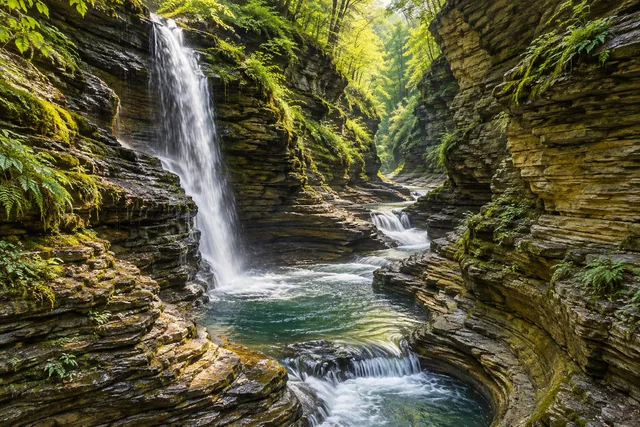 Watkins Glen State Park
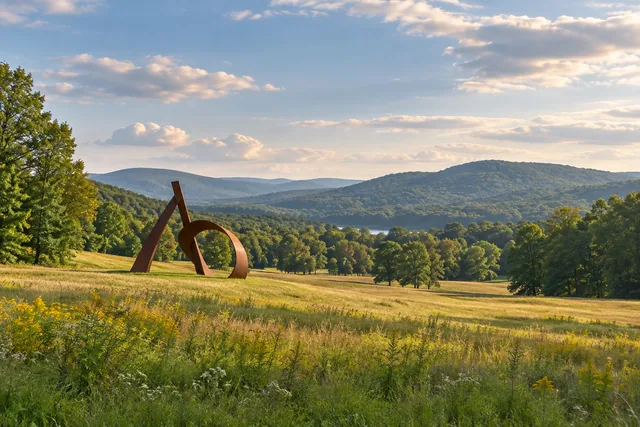 Storm King Art Center
Social
Chittenango Landing shows the workshop side of canal history.
Its three-bay dry dock operated from 1855 to 1917.
The site was rediscovered in 1985.
Archaeology and research informed the recreated complex.
Shops and a stable help explain the work around the canal.
Reconstruction should remain visible in the story.
Confirm building access and separate recreational plans.
Save this for a canal visit focused on maintenance and skilled labor.
Hashtags
#Cre8Travel #NewYorkState #NewYorkMuseums #TravelIdeas #DiscoverMore