 Cre8Travel
CRE8TRAVEL · MAINE PLACES
Thuya Garden
Thuya Garden: Through the Gates above Northeast Harbor
Discover
Thuya Garden makes the approach part of the attraction. Above Northeast Harbor, the garden sits among woods reached by the granite-stepped Asticou Terraces or by the designated drive. Carved gates mark the transition into cultivated borders. Choose the approach that suits the group, remembering that the garden and lodge have a seasonal opening distinct from the year-round terraces.
The garden grew out of an orchard near the summer home of landscape architect Joseph Henry Curtis. Charles K. Savage conceived an expanded garden in 1933, later obtaining plants from Beatrix Farrand's Reef Point with support from John D. Rockefeller Jr. It opened to the public in 1962, turning an idea developed over decades into a place for shared enjoyment.
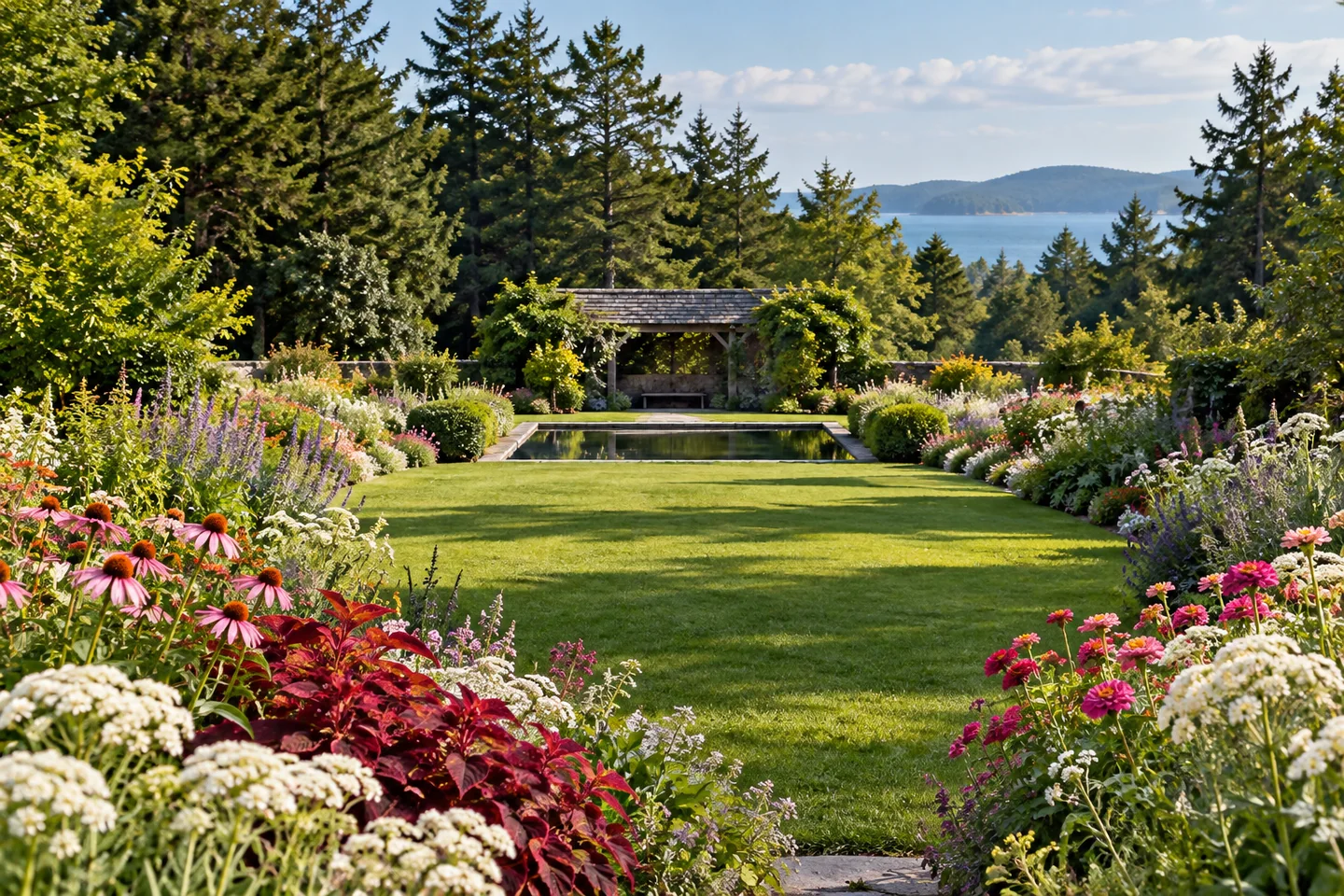
The Cultural Landscape Foundation describes a central lawn crossed by additional axes, with a rustic pavilion at one end and a shallow reflecting pool at the other. That structure gives the flower borders a clear framework. Step back from a favorite bloom to notice how the enclosing beds guide the eye along the green and toward its contrasting ends.
The gates deserve a slower look too. Savage and Augustus Phillips designed their carvings of Maine plants and animals in cedar and mahogany. They provide an introduction to the relationship between crafted objects and living nature. Comparing their carved forms with the plants beyond can make entering the garden an experience in its own right.
Thuya Lodge adds a history of learning to the horticultural setting. Curtis's house was constructed between 1912 and 1916; Savage later expanded its botanical library, now called the Herbals Room. The Preserve distinguishes original objects, including a clock and desk, from replacement period furnishings. When the lodge is open, its interpretation offers a different perspective from the borders outside.
Craig Neff's original Naturalist's Notebook account records a visit with friends in August 2011. His captions move between pollinating flies, parts of lilies, and the patterns of globe thistle. Pamelia's affection for the carved gates appears alongside the flower photographs. Their record shows how an apparently small garden can keep several kinds of curiosity busy at once.
That close attention offers an inviting way to explore. Look for the contrast between a flower's outline and the broader pattern made by a bed; then consider a plant as part of an insect's activity. No particular encounter is required. The question is what becomes visible when a visitor spends longer with one subject instead of moving immediately to the next.
Tripadvisor contributor NieSam recalls an August 2024 visit with striking combinations of color and texture, especially red coleus and a pairing of pink zinnia with airy Queen Anne's lace. These were that visitor's examples from a changing planting, rather than a fixed display to expect. The account encourages looking at combinations as carefully as individual flowers.
Plan the arrival with the Preserve's current guidance. Thuya Drive is a narrow, one-lane approach with passing places, and larger vehicles face restrictions. Parking is limited, so return later if the designated area is full. Choose the terraces for their walking experience rather than assuming they provide the same kind of arrival as parking near the garden.
The name Thuya refers to the northern white cedars around the property. Their presence gives the cultivated garden a wooded setting and links its identity with a tree beyond the flower beds. Between the stepped approach, the gates, and the borders, the pleasure comes from noticing how each transition changes the scale of attention.
Before you go
- Check seasonal garden and lodge access separately from the terraces.
- Follow the narrow-road and vehicle-size guidance before driving up.
- Look for combinations of texture as well as individual flowers.
Visitor perspectives
- Craig Neff’s illustrated visit attends to pollination, lily structures, plant patterns, and Pamelia’s favorite carved gates.
- Tripadvisor contributor NieSam enjoyed the colorful August borders and their striking combinations of coleus, zinnia, and other plants.
Capture
- Frame the lawn toward the pavilion or reflecting pool from a permitted path.
- Compare the pattern of a flower head with the larger arrangement of a bed.
 Asticou Azalea Garden
 Woodlawn
 Wild Acadia
Social
Thuya opened to the public in 1962 after years of planning and plant collecting.
Carved Maine flora and fauna turn the garden gates into a subject of their own.
The terraces and seasonal garden offer different ways to experience the hillside.
A naturalist’s eye can find questions in lilies, insects, and repeated patterns.
One August visitor remembered expressive pairings of color and texture.
Which attracts you first: a single bloom or a whole border?
Plan the narrow approach before the garden visit.
Thuya’s name recalls the cedars surrounding its cultivated space.
Hashtags