 Cre8Travel
CRE8TRAVEL · MAINE PLACES
Skowhegan Fairgrounds
Skowhegan State Fair: An Agricultural Tradition Still Gathering People
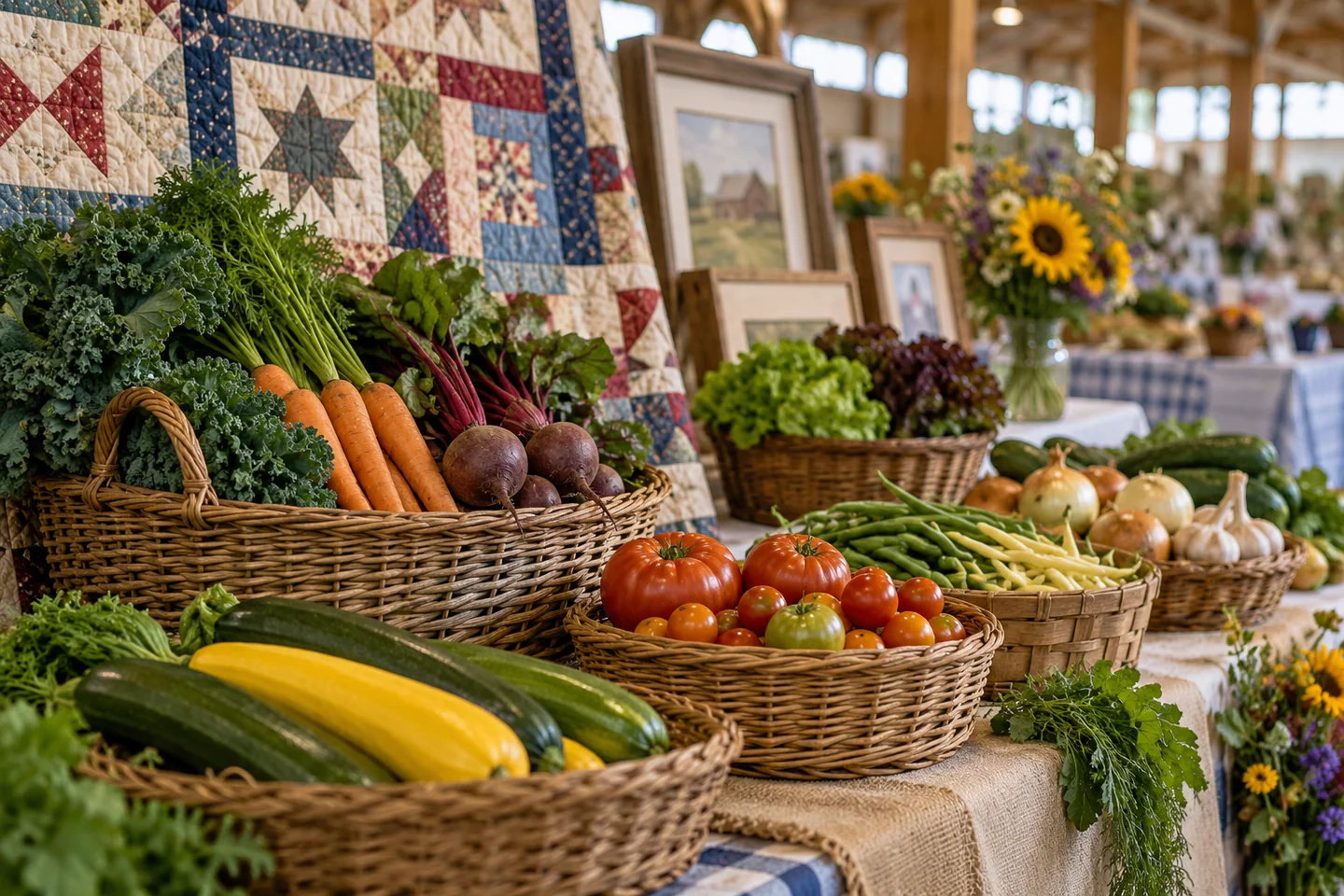
Discover
At Skowhegan State Fair, the midway belongs to a much longer story of exchanging ideas, showing work and gathering with neighbors. Organized in late 1818 as the Somerset Central Agricultural Society, the fair first took place in January 1819, before Maine became a state. Its present name dates to 1942. Those dates give a fairground visit an unusual historical depth, but the continuity also lies in the everyday acts of preparing an entry and bringing it before an audience.
The fair’s own history explains that early agricultural fairs helped spread knowledge before agricultural colleges and extension services filled that role. Breeding horses and cattle, discussing farm methods and seeing new equipment were central to the occasion. Over time, transport changed the event’s reach: better roads and widespread car ownership helped a short local fair grow into a longer gathering. Keeping that background in mind can make an exhibition hall feel like part of an ongoing conversation.
The current organization describes its mission through agriculture, horticulture, livestock stewardship and household and mechanical arts. It combines education and friendly competition with entertainment. The fair is operated as a nonprofit overseen by a board, with revenue reinvested in its activities and facilities. Seen this way, a visit supports more than an afternoon’s amusement. The grounds are part of the machinery that lets exhibitors, organizers and audiences keep making the next fair possible.
A visitor’s account gives that broad purpose a more personal scale. In August 2014, blogger Adrian Crawford described exploring food choices with a companion, visiting animal stalls and looking through ribboned displays of crafts, paintings and photographs. He also watched a tractor pull for the first time and reflected on finding himself enjoying an experience he had never expected to seek out. His account is useful for its openness to surprise, rather than as a guide to today’s vendors or program.
A WABI report from August 2026 adds another layer: the fair as a place for familiar faces. A young attendee identified as Ella valued meeting friends and people she had not seen for a while. Other interviewees favored doughboys, and a returning food vendor emphasized the community that drew him back. Together, the interviews show how an agricultural event can become an annual social landmark, with particular foods and encounters carrying memories from one visit to another.
Planning starts with the edition you intend to attend. The organizer publishes a daily schedule alongside admission, ride and general visitor information, because performances, competitions and exhibits have their own timing within the fair. Select the activities that interest your group before setting the day’s pace. Leave some time between them for an exhibition you did not anticipate, and check the current arrangements before relying on a detail from a previous year.
A good approach is to give equal attention to something someone has made and something you have never watched before. Ask what preparation the entry or performance required, then take time simply to enjoy the occasion. That balance between curiosity and pleasure suits a fair whose identity has always depended on people bringing their efforts together in public.
Fun facts
- The first fair was held in January 1819.
- Skowhegan State Fair operates as a nonprofit.
Before you go
- Match your visit to the current daily schedule and admission information.
- Treat past visitor food and entertainment descriptions as historical experiences.
Visitor perspectives
- Adrian Crawford enjoyed exploring exhibits and watching an unfamiliar tractor pull, while also finding the fair reminiscent of agricultural shows from his childhood.
- Ella valued seeing friends and reconnecting with people at the fair, according to her on-site WABI interview.
Capture
- Ask exhibitors before photographing them or their work closely.
- Make an overview that shows the relationship between an exhibit and its audience.
 Whistle Stop Rail Trail
 New Portland Lions Fair
 Manson Park
Social
Skowhegan’s fair began before Maine became a state.
Agricultural education remains part of the fair’s mission.
A nonprofit fair reinvests in the next chapter of its community gathering.
Crawford’s 2014 account shows the pleasure of trying an unfamiliar fair event.
Ella’s 2026 interview describes a fair as a place to reconnect with friends.
Choose your must-see activities from the current daily program.
Give one handmade entry as much attention as a headline attraction.
Leave a little room in the itinerary for something you did not expect to enjoy.
Hashtags